25 July 2009

Grilled Lemony Sardines

I like small fish. Little tiny ones: sardines and smelts and rainbow trout and lots of other varieties I don't know the name for. In Beirut one summer, a group of friends and I stopped in one of the large fish houses at the lower end of the Corniche. After ordering drinks, the waiter asked us what we would like, though no menus had been presented. After some confusion, we were lead to a large display of fish on ice, where we could pick what we wanted and how it would be prepared. Most of the fish were tiny, about ten different varieties of fish ranging from the size of your pinky to the length of a pencil. We ordered haphazardly and hoped for the best.

Everything that came out of the kitchen was excellent, particularly the little fish which had been battered and deep fried, but also the smokier grilled ones. Ever since then, if I see little fresh fish in a market (sadly rare in the States), I'm tempted to buy them.

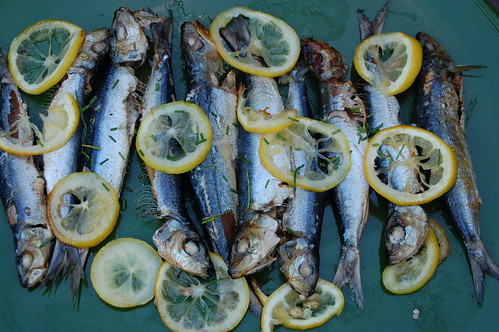
Fresh sardines are in season now, and I couldn't resist picking some up. Sardines are also one of the few undebatedly sustainable fish left to eat (although I fear someone will dispute me in the comments). I grilled them with whole slices of lemon and a bath of garlicky olive oil.

Having been over-zealous, I faced a week of sardine sandwich eating for lunch. This is not a bad thing: a toasted bun layered with a few leaves of spinach, sardines, grilled whole lemon slices, and goat cheese is a pretty good thing. However, most of my colleagues eat Thai take-out for lunch, and I was sheepishly assembling my sardine sandwich for lunch when a colleague stopped me. He loved sardines he said, and was eager to know where to get fresh ones and how to cook them. Relieved, I explained the following recipe to him.
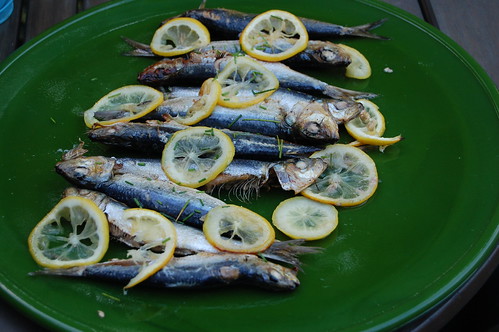
Grilled Lemony Sardines

1 lb fresh sardines, gutted and rinsed
2 large thin-skinned lemons, sliced as thinly as possible
3 tbl olive oil
1 garlic clove, pressed
1 pinch Aleppo pepper
sea salt, to taste

1. Preheat a grill, or preheat your oven to 475 F. If you're using a grill you'll want some sort of grill pan.
2. Combine oil, garlic, pepper, and 1/4 teaspoon salt in a large bowl. Add the sardines and toss to coat.
3. Grease your grill pan or baking sheet. Scatter half the lemon slices on the pan. Spread the sardines over top- try not to crowd them so they cook evenly. Sprinkle with some more salt. Top with remaining lemon.
4. Grill the sardines for about 10 minutes, tossing everything around mid-way through, until sardines are done and lemons are soft. If using the oven it may take 12-15 minutes.

15 July 2009

Halva Mousse


I tried to make halva once, the sesame-paste sweet that is ubiquitous across the Middle East. It was a disaster, a sticky gooey, too soft mess that stuck all over every pan and surface it touched. Sometimes it's better to leave the candy making to the professionals. I often describe halva (halvah/helwa/halaweh) as the Middle Eastern equivalent of peanut butter fudge, only made with sesame seeds and slightly more crumbly. Halvah is made by mixing sesame seed butter (tahini) with a sugar syrup and cooking it to the hard crack stage, but it is a delate operation that involves just-right temperatures and constant even mixing.

Though popular all over the Middle East, halva is often associated with Israel where it has an entire section in every grocery (and where I'm sure Israelis an Arabs argue over the origins of the food, much like the do felafel and hummus). Likewise, halva mousse is found on nearly every menu in Israel, as common as chocolate cake, they range from dense and thick to light and fluffy.

This recipe is my own spin on halvah mousse, concocted out of my kitchen and imagination. While I normally dislike gelatin in mousses, it seems fussy and funnily textured, it is necessary in this recipe. As I found out in my first attempt, simply combining halva and whipped cream does not a dessert make. The gelatin works to make it smooth, an the texture is light and fluffy with a nutty flavor. The recipe here s a basic one, and you could experiment with adding a touch of honey or cinnamon, or folding in things like chopped apricots or toasted walnuts. Just make sure to visit a Middle Eastern or Mediterranean grocery and leave the halva-making itself to the professionals.

Halva Mousse

8 oz halva (preferably pistachio variety, or add a 1/4 cup of pistachios)
1/3 cup milk
2 tsp plain powder gelatin
1 pint heavy cream
3-4 tablespoons powdered sugar, to taste

1. Beat the cream to stiff peaks. Add the powdered sugar. Refrigerate until ready to use.
2. Place the milk in a small bowl and sprinkle the gelatin over top and let sit 10 minutes. Heat the milk in the microwave and stir to dissolve gelatin. Combine milk with the halva in a food processor and pulse until fairly smooth.
3. Fold halva mixture into whipped cream. Divide among serving glasses, refrigerate at least an hour before serving.

08 July 2009

Shrimp, Avocado, and Mango Salad

I have been so busy cleaning out and packing up my mother's house I've barely had time for anything else. During the week it's work and the gym and miles of paperwork and bills, and every ounce of the weekend is clean, sort, box, pack, throw away. I welcomed the fourth of July weekend not as a holiday but as an extra day to work. I skipped fireworks to sort through miles of photographs. I marked my birthday on the calendar (today), so I wouldn't forget.

This makes it sound like I haven't been cooking, but I have. Mostly everyday things, I'm trying to whittle down my pantry in the spirit of the new economy, lots of beans and grains and lentils finally being put to use. I've had a few salads of my homegrown (!) spinach and homegrown tomatoes, I made a batch of this white nectarine compote and used it to make turnovers.

There is nothing like hauling boxes and moving furniture all day to work up an appetite, and while slogging through mom's house is a pain (goodness she kept everything), I've found some real treasures too. Like pictures of my mom as a baby, or of the family making homemade ice cream. That's the part I like best, finding things I've never seen before.

This past weekend, between sorting my mother's collection of Wedgwood and boxing up her 18 figures of Ganesh, I made this salad. It's a chopped salad of shrimp, avocado and mango inspired by what I had on hand and what looked good in the store. It's delicious, really, served on a bed of lettuce as dinner for one, and I bet it would make an excellent pot luck contribution or filling for a sandwich.

Shrimp, Avocado, and Mango Salad

1 mango
1/4 of medium-sized red onion, finely diced
2 tbl finely diced red bell pepper, or hot chili pepper
a few cilantro leaves, finely chopped
3 tbl fresh lime juice
1 avocado, chopped
1/2 lb shrimp, peeled
salt and cayenne pepper to taste

1. Set a large pot of salted water to boil.
2. Peel and slice the mango, working over a bowl. Squeeze the juice from round the pit of mango into the bowl. Add the onion, pepper, cilantro, lime juice and toss to combine.
3. Adjust the heat so the pot of water is just simmering. Add the shrimp and cook until just opaque and curled in 3/4 circles. For goodness sake do not overcook the shrimp into pink rubber bands. Immediately transfer shrimp to a colander and run cool water over them to stop cooking. Dice the shrimp.
4. Add the shrimp and avocado to the mango mixture. Season with salt and pepper to taste. Serve as desired.

28 June 2009

Maacouda (Tunisian Potato Omelette with Olives and Mint)

A maacouda is a sort of Tunisian potato omelette, similar to the Spanish tortilla, but made with eggs beaten into smooth mashed potatoes and then baked. I'll admit I don't know much about Tunisian cuisine, other than a prediliction for fish dishes, but I have noticed that Tunisian food contains more egg dishes than other Middle Eastern cuisines. Eggs are not used as often in Middle Eastern cooking as in the West, and cakes, breads, and desserts rarely contain egg. Tunisian food, however, has spiced eggs and chicken with eggs and egg tagine.


Anyway, maacouda by itself is a fine but somewhat plain dish, so I've spiced mine up with chunks of black olive and a hint of mint. It's best if you mash your potatoes until they are completely smooth, which makes the omelette fluffier and moister. The olives give it the right salty tang, and it's a good thing to pack in your lunch or for a light dinner with a salad.


Maacouda (Tunisian Potato Omelette with Olives and Mint)

1 lb potatoes (about 2 small russets), peeled, cooked, and mashed until smooth
1 onion, sliced
olive oil
1/4 cup good quality black olives, pitted and chopped (measure before chopping)
6 leaves of mint, slivered
6 eggs, beaten
1/2 tsp salt

1. Heat some olive oil in a saucepan, add the onions and cook over medium heat, stirring occaisionally, until the onions are golden. This usually takes 20-40 minutes, during which time I prep the rest of the ingredients.
2. Preheat the oven to 450 F. Place the potatoes in a bowl and beat in 1 tbl of olive oil and the salt. Beat in the eggs. Add the caramelized onions, olives, and mint and stir to combine. Grease the skillet or casserole dish you will be using. Add the potato mixture and bake for 20 minutes, until puffed and golden.

17 June 2009

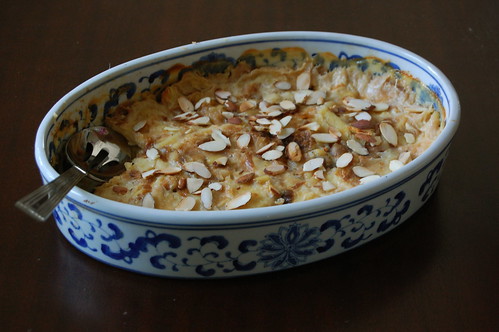
Umm Ali (Egyptian Bread Pudding)

There are so many iterations of Middle Eastern desserts that involve pastry, cream, and sugar that after a while they start blurring together. Myriads of types of kunafe, aish el saraya, shaaibiat, baklava muhallabia, othmallia, halawet el jibn, and on and on it goes until I stop paying attention. I'd heard of an Egyptian bread pudding recipe called Umm Ali (literally, Ali's Mother), but I'd never investigated. But when someone raved about a version they had recently, I thought I'd try my hand at yet another Middle Eastern bread and cream iteration.

Umm Ali (the dish) dates back to Ottoman era Egypt, when legend has it the sultan stopped in a poor village looking for something to eat and the village's best cook, named Umm Ali, made something akin to this dish. There are other legends too, about a British nurse named O'Malley who may have invented the recipe.


History aside, do not be off-put by the "bread pudding" label, I almost never like bread pudding since many versions are eggy and rich and about the weight of small livestock. But this is just the opposite- light fluffy pastry bathed in sweet milk, sprinkled with tangy dried fruits and nuts. Many versions include toasted coconut but I prefer it without. It's good enough not to get lost in the shuffle of all those other Middle Eastern desserts.


Umm Ali (Egyptian Bread Pudding)
You can choose to stuff the pudding full of dried fruit, nuts, and coconut, or you can have a more simple version with just a slight scattering of fruit and nuts. I prefer the latter, but many people prefer the former. You could also use 3 cups half-and-half in place of the milk/cream.

1 sheet puff pastry, thawed
1/3 cup mixed fruits and nuts (such as raisins, dried cherries, chopped dried apricots, pistachios or pine nuts)
1 1/2 cups whole milk
1 1/2 cups heavy cream
1 tsp vanilla extract
1/4 cup sugar
slivered almonds for serving

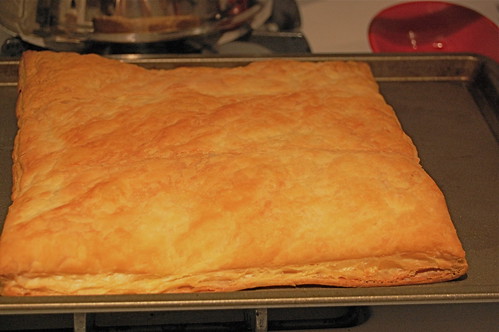
1. Preheat oven to 425F. Spread pastry on a greased baking sheet. Bake for 15 minutes until puffed and golden. Set aside.
2. Meanwhile, heat milk, cream, sugar, and vanilla in a saucepan until small bubbles form around the edge of the pan. Turn off heat and let sit while you proceed with the next step.
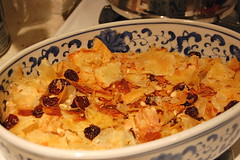
3. Raise oven heat to 475F. Grease a baking dish, crumble/tear apart the pastry and scatter in the baking dish. Scatter the dried fruit and nuts over the dish. Pour the milk/cream mixture over the dish. Bake for 15 minutes, or until golden on top and set. Let cool somewhat before serving.
4. Lightly toast almonds and scatter over top before serving.

10 June 2009

Mint Lemonade

I certainly did not intend to be away from this site for so long. But then again, there are many things in my life that are not going as I intended these days. The day after my mother's funeral I flew to the Middle East. This may seem odd or callous or escapist, but for me it was just right. Something about wandering a souk and hearing the call to prayer is remarkably comforting to me. Plus, there was a certain boy out there that I was excited to see.

It being a short trip, I didn't have time to do much food investigation, but I did have time for plenty of mint lemonade. The mint lemonade (limon nana ليمون نعناع ) you find in the Middle East is not like what you find in the States, but rather a mixture of fresh lemon juice, mint leaves, and plenty of sugar whirled in a blender until a thick green concoction is poured into your glass. It's the most fantastically delicious drink I've ever had, and supremely refreshing in hot weather.

I'll admit I haven't quite mastered this mint lemonade at home- they must use some super high powered blender in the Middle East that blitzes the mint the liquid- my home version always ends up with little chunks of mint that get stuck in your straw or ledges in your teeth (see above photo). It still tastes great, mind you, but the solution I've found is to simply strain out the mint- sure it doesn't look quite authentic, but it still tastes the same.


Mint Lemonade
You absolutely must make this with fresh lemon juice. Don't even talk to me if you don't.

juice of 8 lemons (about 3/4 cup)
3/4 cup sugar
1/3 cup chopped mint leaves, packed
6-8 cups water (to taste)

Place all ingredients in a blender, starting with 6 cups water. Blend well, taste and add more water as necessary.

25 May 2009

Soba Noodles with Eggplant, Garlic, Chilis, and Walnuts

I have a little bit more of an appetite these days. I haven't cooked much, unless toast counts, but my kitchen is somewhat more appealing these days. I've started slowly going through mom's things at the house- old boxes of photographs, telegrams, and correspondances. My mom was the one in the family who saved everything- eighteenth century family photos, my grandfather's manuscripts, two whole shoeboxes full of letters my grandmother wrote her while in college. Dance cards filled out with names of boys, most now forgotten, buttons from every presidential election since 1956. Her divorce papers. Every award, paper, or gold star I ever received in school.

It's exhausting, going through everything. It's all I do- work, clean out the house, deal with bills and debts and credits. All the work, however, does stir up an appetite. I've been trying to empty out some things in the pantry, since I've essentially inherited my mother's pantry as well. Soba noodles (Japanese buckwheat noodles) are great because they cook in minutes and are more nutritious than plain old pasta. Combined with eggplant, chilies, garlic, and walnuts, and drizzled with sesame oil, it's the only thing I've cooked in weeks.

Soba Noodles with Eggplant, Garlic, Chilis, and Walnuts

8 oz soba noodles
peanut or grapeseed oil
2 cups of cubed eggplant
1 clove garlic, minced
1/4 cup finely chopped walnuts
1/2 - 1 teaspoon Aleppo pepper flakes or chili flakes (to taste)
1/2 teaspoon sea salt
sesame oil, to taste
thinly sliced red cabbage, optional (I like the extra crunch)

1. Set a pot of water to boil.
2. Heat a generous splash of grapeseed oil in a skillet. Add the eggplant and garlic and cook over medium-high heat, stirring frequently, until the eggplant is completely tender. Add the walnuts, pepper flakes, and salt and cook a few minutes more, until the walnuts are lightly toasted.
3. Meanwhile, cook the soba noodles according to package directions (about 6-8 minutes). Transfer the noodles with tongs to the pan with the eggplant and add the cabbage if using. Toss everything together to combine. Transfer to a serving bowl and drizzle with sesame oil. Serve immediately.