31 October 2007

The Kibbe Equation


A friend and I were discussing recipes the other day, “wait a minute,” she said as I described a Middle Eastern pumpkin and spinach dish called kibbe yakteen, “I thought kibbe were little meatballs,” she asked. I paused, trying to describe how such a wide variety of dishes could all be called kibbe. Kibbe, one of the most venerated dishes of the Levant, is most commonly defined as a mixture of bulgur and ground meat usually in meatball-form. Bulgur, a by-product of the wheat harvest, is native to the areas of Lebanon and Syria where the dish is most common. But to call kibbe a meatball is to underestimate its crispy moist flavor and bypass its many variations. I think it is more useful to think of kibbe in specific terms, so I’ve come up with the following formula:

KIBBE FORMULA
__________________________________________________________
Outer Layer
Knead together filler+ bulgur + seasoning
filler options: ground beef/lamb, ground fish, pumpkin, potato, red lentils, semolina
_________________________________________________________
Inner Layer
Saute together filler + seasoning + nuts
filler options: ground beef/lamb, caramelized onions, spinach, potato-herb, yogurt
_________________________________________________________
Technique
stuffed meat balls (deep fry or poach)
layered in a tray (bake)
raw kibbe (meat only, omit stuffing)
_________________________________________________________
Other Options
yogurt sauce, cherry sauce, quince-okra sauce, tomato-tamarind sauce, chard and walnut sauce, carrot-pomegranate sauce, beet-plum sauce, kishk sauce, poached in broth as soup, etc.
_________________________________________________________
The most common form of kibbe uses meat in both parts: a meatball with an outer layer of ground meat and bulgur and an inner stuffing of sauteed ground meat and pinenuts. This is probably how you may have encountered kibbe in a restaurant- little torpedo shaped stuffed meatballs (British soldiers joked kibbe were Syria’s missiles during WWII). However, the “kibbe formula” can be extrapolated into all sorts of variations, the city of Aleppo alone claims sixty of them, including little meatballs in cherry sauce. In Tripoli, on Lebanon’s coast, ground fish and bulgur make up the outer shell, which is stuffed with a mixture of caramelized onions and pine nuts. Kibbe can also be baked in a tray, like a meat pie, and a popular version involves a potato crust and meat filling that’s evocative of shephard’s pie. Some kibbe have names associated with cities, like Nablus or Mosul, while others have names like “monk’s kibbe,” or “tank kibbe,” named because it’s so heavy, or “imposter kibbe,” a meatless version. And though somewhat outside the “formula,” no discussion of kibbe would be complete without mention of kibbe nayieeh- raw beef and bulgur pounded together, like a Lebanese tartar.
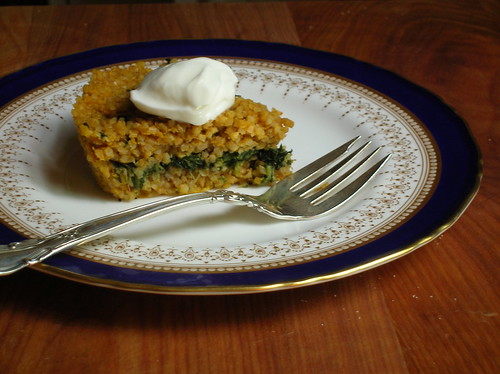
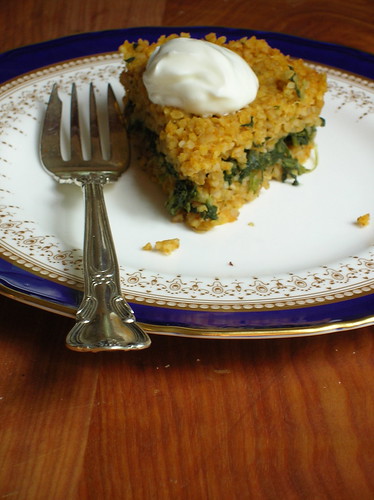
Keep in mind bulgur continues to absorb liquid as it sits- I didn't photograph the pie until several days after making it, hence the slightly more nubby texture seen here.

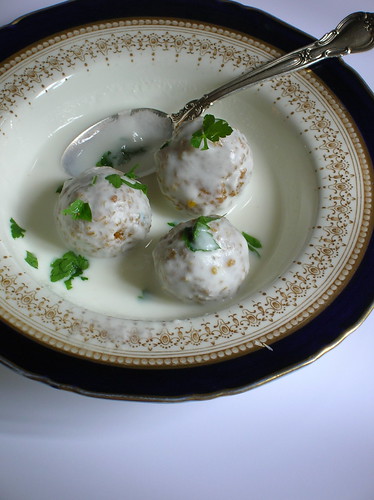
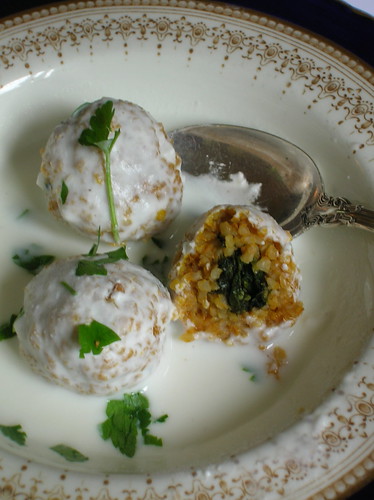
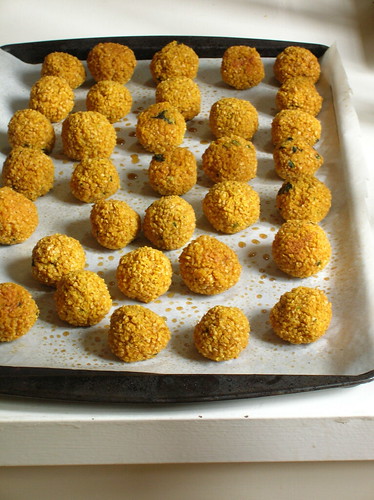
While kibbe is generally synonymous with meat there are many vegetarian versions, they were probably developped by Christians of the region who fast during Lent, but are also a good option for poor families that cannot afford meat. Which brings me back to that pumpkin and spinach recipe I referred to earlier. This unique Lebanese dish is comprised of pumpkin-bulgur dumplings stuffed with spinach and walnuts; I’ve chosen to serve it in a warm yogurt sauce, my favorite tangy counterpart. I realize that this discussion may seem esoteric, but in reality you can find all these ingredients at your local grocery (bulgur is often sold as “tabboule mix”). If you make the dumplings there’s no getting around the fact that it is time consuming, though it’s not particularly difficult. However, you can also make this in a casserole dish (I’ve done both here to demonstrate), in which case it comes together in mere minutes, and it smells wonderfully of pumpkin pie as it bakes. While I love the presentation aspect of the dumplings, the pie tastes equally as good and certainly wins when it comes to ease of preparation. My main piece of advice is not to skimp on the seasonings, it would be a shame to have such a beautiful dish risk being bland.
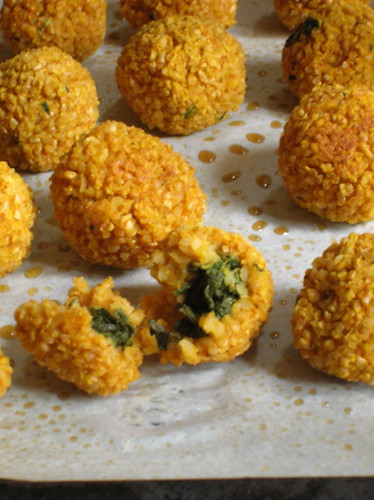

If you're new to kibbe, I suggest you try one of the more classic versions I've linked to above or head to a local Lebanese restaurant, but feel free to dive right in with this seasonal pumpkin version. And if you have a favorite version of kibbe or kibbe experience, please share it in the comments!

Pumpkin-Bulgur Dumplings with Spinach Stuffing in Yogurt Sauce
This is a beautiful and unusual Lebanese dish. You can make it in dumpling form, but it can also be baked like a casserole for an easier version, both are delicious. Bulgur is often sold as "tabboule mix" and is available in most groceries. Make sure to season generously. Serves 6.

for shell:
2 cups (10 oz) fine or medium-fine bulgur (often sold as tabboule mix)
1 1/2 cups pureed pumpkin (canned or homemade)
2 tbl grated onion
3 tbl flour
1 tbl cinnamon, 1/2 tsp allspice, 1 tsp salt
1 tsp Aleppo pepper or paprika
for stuffing:
olive oil
2 cloves garlic, minced
16 oz fresh spinach (can substitute frozen)
1/4 cup chopped walnuts
2 tsp pomegranate molasses or lemon juice

oil for frying

for yogurt sauce:
1 quart plain yogurt
1 clove garlic
1 squeeze of lemon juice
1 egg white
1 tbl cornstarch or flour dissolved in 2 tbl water

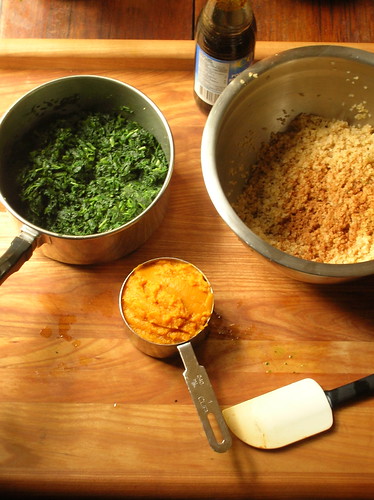
1. Make stuffing: Heat a glug of olive oil in a saute pan. Add the garlic cloves and saute for a minute to soften. Add the spinach (you may have to add it in batches to get it all to fit) and saute over medium heat for several minutes until wilted and dark green. Season with salt and add the walnuts and pomegranate molasses and toss to combine. Set aside to cool.
2. If you have fine bulgur (the consistency of cornmeal) you do not need to soak it. If you have medium-fine bulgur, pour hot water over it to cover. Let sit for five minutes, then drain thoroughly (I drain it in a cheesecloth lined mesh colander).
3. Combine the bulgur with the pumpkin puree, onion, cinnamon, allspice, salt, Aleppo pepper and flour. Using damp hands knead everything together for 5 minutes, until the mixture is cohesive. Let the mixture rest for 10 minutes. Knead the mixture one more time to combine- it should be more cohesive after resting, if it is too dry you can add a touch of water to loosen, or if it is wet add a bit of flour, though neither of these should be necessary.
4. Form the dumplings: Work with damp hands to prevent sticking. Flatten a heaping tablespoonful of the pumpkin mixture in your palm, place a teaspoon of spinach filling in the center, then close up the pumpkin mixture around it. Place on a baking sheet and continue forming dumplings.
5. Place oil in a deep pot for frying. Heat the oil to hot (355 F) and fry the dumplings, a few at a time, for 3-5 minutes, until golden brown. Remove with a slotted spoon and drain on paper towels. Continue frying remaining dumplings.
6. Make yogurt sauce: Using a mortar and pestle or in a small bowl, smash the garlic clove with the lemon juice and a pinch of salt. In a saucepan off the heat, combine the yogurt, garlic mixture, egg white and dissolved cornstarch, stir the mixture gently until it is very well combined, smooth, and shiny. Place the pan on the burner and cook over medium heat, stirring constantly (do not stop stirring or it might curdle). Let the mixture come to a boil and simmer for a couple minutes (at this point you can consider the yogurt stabilized and relax the stirring somewhat). Thin the yogurt sauce with water to your taste (I use about one cup but use your own judgement). Remove from the heat.
7. Combine the yogurt sauce and the dumplings in a large serving vessel, or divide among serving bowls. Sprinkle with chopped parsley and serve immediately.

To make a pie:
Preaheat the oven to 350 F. Grease a 9” round pan generously with butter. Follow directions in steps 1-3 to make the pumkin and spinach mixtures. Place half the pumkin mixture in the bottom of the pan, spread the spinach mixture over top, then cover with the remaining pumpkin mixture. Score a diamond pattern on the top of the pie. Melt four tablesppons of butter and drizzle it over the top of the pie. Bake 30-35 minutes, until fragrant and golden brown. Serve in wedges, with plain yogurt on the side.
________________________________

Weekend Gardening Report


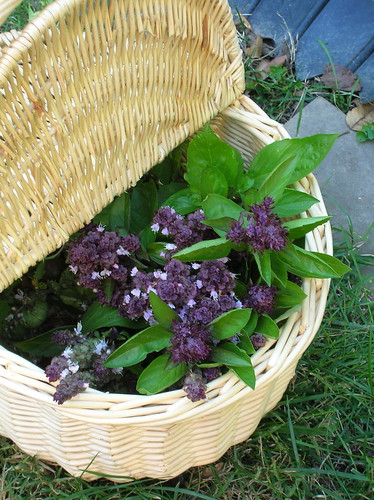
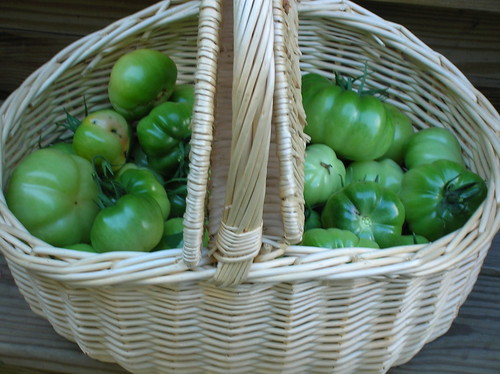
We've been working in a neighbor's garden- lots of overgrown basil. With the first frost imminent, we're putting out own garden to bed- cutting down, mulching. I took out the peppers, eggplant, and tomatoes and now we've got nearly 10 lbs of green tomatoes! Lots of tomatillos, too. Kale, broccoli, and beets are still going strong. The mesclun box has mustard, tatsoi, and 2 kinds of arugula. Don't be surprised if you see some green tomato recipes around here soon!

28 October 2007

Forbidden Rice Pilaf


Every time I walk into New York's Kalustyan's, an international grocery, I'm always entranced by the array of rice displayed along the right side wall. A veritable rainbow of Bhutanese red rice, green Bamboo rice, black japonica, Camargue red, purple jasmine, brown rice, wild rice, basmati, sticky rice, sushi rice, short grain, long grain, oh the possibilities! Of course, I'm always attracted to buy some, but the problem is we aren't really rice eaters. Sure, I stir up a risotto now and again and I'm the first to jump at an invitation for my friend's special Iranian pilaf, but overall we aren't big on the rice front. When my Chinese friend describes the number of rice cookers she has to put into use when her family visits I practically blanch in horror. And yet, everytime I walk into Kalustyan's I'm tempted, which is why I've got four unopened bags of rice in my cabinet.


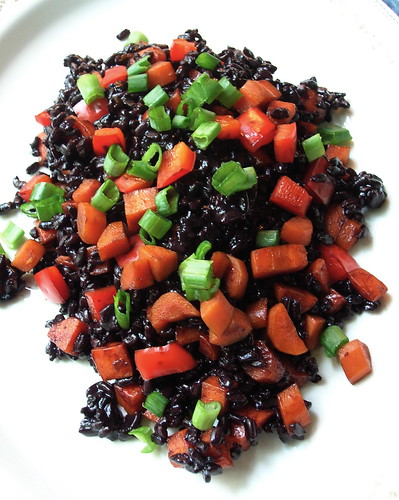
I decided to put some of that rice to good use, "look, this one's called forbidden rice, it says it was prized by Chinese emperors," I said as I pulled it from the cabinet. P. who lived in Hong Kong, just laughs at me, "they call everything in China 'forbidden,' '' he says. Yes, it's probably a marketing ploy, but the fact is this Chinese rice has a lot of other things going for it. The rice is an heirloom Chinese variety whose black color comes from its whole bran exterior. This means it is high in fiber and the deep purple hue it emits hints at a wealth of phytonutrients and iron, another reason you can find it at many health food stores. But most importantly, the rice is delicious, with a deep nutty taste and aroma. I combined it with soy-glazed carrots and red pepper and scallions, not a traditional recipe, but certainly a delicious one. It's one of those dishes that you find yourself shoveling one forkful after another, scooping up soft little grains and salt-edged vegetables in every delectable bite. At dinner there were no jokes about forbidden emperors, only a nice story about traveling in China, told between approving gusty bites. Which was a good beginning, because we still have three and a half bags to go.

With October 31 around the corner, I can't help but think this orange-and-black dish is perfect for the holiday. Happy Halloween!


Forbidden Rice Pilaf
An heirloom variety of Chinese black rice sometimes called forbidden rice, it is available at many health food stores and gourmet markets (do not confuse it with Thai purple sticky rice, which must be handled differently). Serves 4.

1 1/2 cups Chinese black rice
3 cups water
olive oil, salt
1 red bell pepper, diced
2 large carrots, peeled and cut into small dice
3 tbl soy sauce
1/2 cup chopped green onions (scallions)

1. Rinse the rice in three changes of water, until the water begins to run clear (the water will still be a little purple, but should not be cloudy). Bring the three cups of water to a boil with a pinch of salt. Add the rice to the boiling water, cover the pot and simmer over low heat for 35 minutes, until rice is tender and water absorbed.
2. Meanwhile, choose a pan with a tight-fitting lid and heat some olive oil in it. Saute the bell pepper until softened and darkened in a a few spots. Set the pepper aside. Wipe out the pan and heat some more olive oil in it. Add the carrots, stirring to coat them in the oil, then cover the pan with the lid and turn the heat to very low. Sweat the carrots until softened, about 15-20 minutes (you should not need to add any liquid to the pan, but if it looks dry you can add a bit of water). Uncover the pan, raise the heat to medium, add the soy sauce and swirl around so that the sauce reduces a bit and coats the carrots. Remove the pan from the heat and stir in the reserved bell pepper.
3. When the rice is done, combine it with the carrots and pepper and taste for seasoning. You may want to add a bit of red pepper, or a few more drops of soy sauce. Turn rice out onto a platter. Top with the scallions. Serve immediately.

27 October 2007

Pumpkin Gingerbread


The other day I was working on a recipe and I Googled the words "pumpkin dumplings" and among the results that came up was a recipe for pumpkin gingerbread. Hmmm, I don't know if Google needs a cooking lesson, but I immediately thought that pumpkin gingerbread sounded really good. Now is the season for winter squash gluttony, everything from pumpkin soup, pumpkin cannelloni, pumpkin butter, pumpkin pancakes, but somehow the idea of a pumpkin gingerbread had never crossed my mind before (I usually make this pumpkin loaf). So later that week after I had made the dumplings, there was leftover pumpkin puree sitting in the fridge and I saw my opportunity.

It's been horribly rainy and cold here, I've come home with soaking wet shoes and pants every day this week, and telling myself it's good for the plants does not make my toes feel any warmer. And after arriving home I get to go back outside and stand in the rain some more with our new little puppy saying, "please, please just pee so we can go back inside now." She, apparently, would rather roll in fronds of wet loriape than go inside and make gingerbread. I need to work on that.

Back inside, I turned the space heater directly towards my wet toes, warmed fingers over the heating oven, and stirred together the batter. As it baked, the house filled with its sumptuous smell, soothing frazzled weekday nerves and melding with the patter of rain outside. Judging by how fast it was devoured (less than 48 hours?) and the fact that it comes together in mere minutes, I'd say this recipe is a keeper. I'd even withstand a few more rainy days, and look forward to the coming cold nights, if this gingerbread is on order.


Pumpkin Gingerbread
Moist with pumpkin and warm with spices, this autumn quick bread comes together in minutes. We like it sliced and spread with cream cheese.

2 cups flour
1/2 cup brown sugar
2 teaspoons baking powder
1/2 teaspoon baking soda
1 tsp each cinnamon, allspice
1/4 tsp each cloves, nutmeg, ginger
1 cup pureed pumpkin (homemade or canned)
1/2 cup molasses
2 eggs
1/3 cup vegetable oil
1/4 cup milk

1. Preheat oven to 350 F. Grease a 9" loaf pan. Combine dry ingredients (flour, sugar, leavening, spices) in a large bowl. Combine the wet ingredients (pumpkin, molasses, egg, oil milk) in another bowl. Add the wet ingredients to the dry ingredients and stir with about 10 vigorous strokes to combine.
2. Pour into prepared pan. Bake ~45 minutes, or until a toothpick inserted into the center emerges clean. Cool on a rack.

23 October 2007

To Chinatown and Back


Is it possible to be homesick for a place that isn’t home? When I was in college I went off to the Middle East for the first time, to study in Beirut for the summer. I came back to New York, to my usual routine, terribly nostalgic for the world I had discovered. Where were the sidewalks pockmarked by rubble and bomb holes, where were the collapsing Ottoman mansions, the crusader castles, the artichoke fields, the night clubs built into converted bunkers? I missed the markets teeming with gorgeous produce, fish flapping in the market in Tripoli, the array of sweet biscuits in Saida, the call to prayer. Back in the U.S. I wanted desperately to feel like I was somewhere else, in a city that prides itself on anonymity, I wanted to feel like an outsider.


I found what I was looking for on the streets of New York’s Chinatown: sure the culture was different, but there were the bustling street vendors, the piles of unusual vegetables. Everything was written in a different alphabet, people bargained fiercely in a foreign language, and I was the only American around- I felt right at home. A stroll through Chinatown became part of my regular Sunday routine, I even started noticing similarities between the two cuisines, the mooncakes that resembled Middle Eastern date cakes (mamoul). Often, I stopped for a puffy roast pork bun, char siu bao, or did my grocery shopping, stocking up on Chinese buns for the freezer or uber-cheap fresh bok choy and seafood.

Fast forward several years, I was living and working in Damascus, and as much as I love Middle Eastern food, I was craving something different. I missed all the different ethnic eateries New York has to offer. I missed those puffy Chinese-style buns, and with no Dynasty supermarket nearby, I decided to try and make my own. With little access to pork in a Muslim country, I made a simple spinach filling, and I was happy to find that since the buns are steamed I didn’t have to fiddle with my troublesome (fear-of-death inducing) oven.


Since that first time I’ve made many batches of Chinese-style buns, and though my bun-shaping skills have improved, they never look like the gorgeous ones of Chinatown (maybe if I got a proper bamboo steamer). It doesn’t matter, because we love the supremely light texture of the bread that comes from their long rise, they’re the perfect partner to soup or something saucy to dip them in. I actually prefer the spinach filling, but you can use any mixed vegtables or shredded meat, I once saw a version that used whole-wheat flour and mushroom-cashew filling. Though these are a bit of a time investment to make, they freeze beautifully, I often keep a bunch in the freezer for those nights when you get home late and want something quick. I had to go half-way around the world more than once to discover these homemade buns, hopefully you’ll discover their joys right at home.


Chinese-Style Spinach Buns

for the dough:
1 cup warm water
1 package dry yeast
3 tbl sugar
3 cups cake flour, plus more for kneading
1 1/2 teaspoons baking powder
for the filling:
12 oz fresh spinach (can substitute frozen)
2 tbl vegetable oil
1 clove garlic, sliced
red pepper, to taste
3 tbl soy sauce

1. Make filling: Wash the spinach and leave some of the water clinging to it. Roughly chop the spinach. Heat the oil in a saute pan and saute the garlic until beginning to soften, about a minute. Add the spinach and toss over moderate heat (you may have to add the spinach in batches to get it all to fit in the pan). Toss the spinach until wilted and dark green, but not completely collapsed, several minutes. Remove the pan from the heat and stir in the soy sauce and season with red pepper. Set aside.
2.Make dough: Place the warm water in a large bowl, add the sugar and yeast and set aside until foamy, about 5 minutes. Add the 3 cups of flour and knead in the bowl until the flour is incorporated (if it is very sticky you can add 1/4 cup more flour). Turn out the dough onto a floured surface and knead for 5 minutes, until elastic and smooth but still soft. Place the dough in an oiled bowl, turning the dough to coat, cover with plastic wrap and let rise until doubled, about 1 1/2 hours.
3. Punch down the dough and flatten it into a disk. Sprinkle the baking powder over the dough, then fold the dough over and knead to incorporate the baking powder. Let rest covered 30 minutes (meanwhile, cut 12 squares of parchment paper).
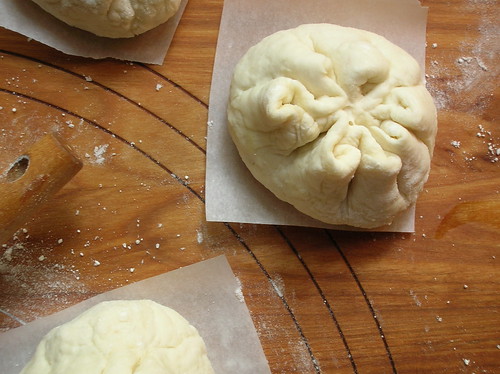
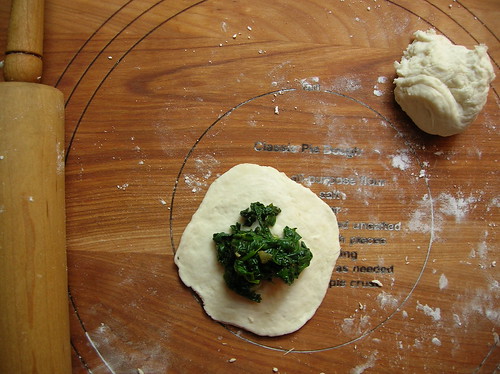
4. Form buns: Form the dough into a log and pinch off 12 equal pieces. Roll the dough pieces into a circle, using the rolling pin to make the edges of the circle thinner than the middle. Fill the dough with a spoonful of spinach. Gather up the edges of the dough, pleating them as you gather, then form a circle with your thumb and forefinger and squeeze the pleats closed. Place on a parchment square. Repeat to form remaining buns. Let the buns rest, covered, for 20 minutes, until puffed. Meanwhile, prepare a vegetable steamer.
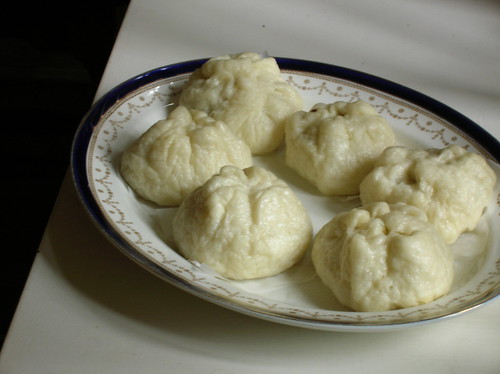
5. Place the buns (on their parchment squares) in a steamer. Cover and steam 10-15 minutes, until puffed and heated through. Serve immediately.
________________________________

19 October 2007

Morning of Roses


In Arabic one says good morning “sabah al khair,” and in response one says “sabah al-noor,” which literally translates as “morning of light.” You never say sabah al-kheir in response to the first greeting. Besides the standard sabah al-noor, there are many other possible responses to say good morning, including: sabah al-ward- morning of roses, sabah al noum- morning of sleep, and even sabah al ashta- morning of cream. Sometimes Arabic is so cool.

I love exchanging morning greetings with my Arabic-speaking colleagues, and of all the expressions, “morning of roses” is my favorite (it's also the title of an Egyptian short story). And if my mornings aren't always rosy (more like a hectic rush of trying to get everything organized before running out the door), they are at least full of rose petal jam. Of all the foods I’ve discovered in my travels, rose petal jam is probably the one that has captivated me the most. There is something magical about eating a mouthful of flowers, and the taste is sweet and thick with a slightly-squeaky texture of petals and a fragrance unmatched by any perfume. Rose petal jam is one of the items I always make sure to have in my pantry, as essential as bread and butter. Most often, I slather a thin piece of flatbread with some yogurt and rose jam and then roll it up for a spiraled pink breakfast on the run. But I’ve also been brainstorming ideas for desserts using rose jam:

Rose-Yogurt Mousse: rose jam + thick yogurt + whipped cream.
Rose Trifle: cake cubes + rose jam + custard
Rose Linzertorte: classic linzertorte except made with a pistachio crust and rose jam


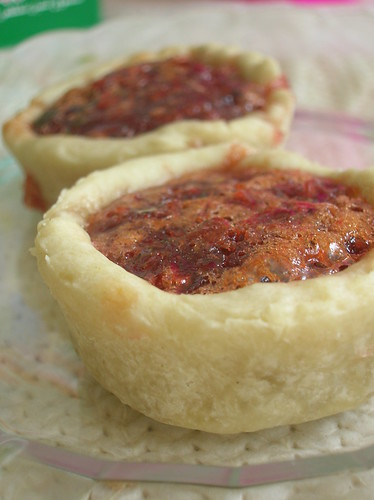
In my experience not all rose petal jams are created equal, and their quality can vary widely. The best I’ve ever had was from Baleed, a specialty store in Damascus, while Paris’ Hediard charges $10 for one that is watery and disappointing. Most import stores carry a decent Greek or Lebanese version, and in New York Kalustyan’s house-made version is quite good. I had hoped to have a rose jam recipe for you today, but I haven’t quite perfected one yet, so in the meantime you can pick up some jam (or order it) and make these little tartlettes.

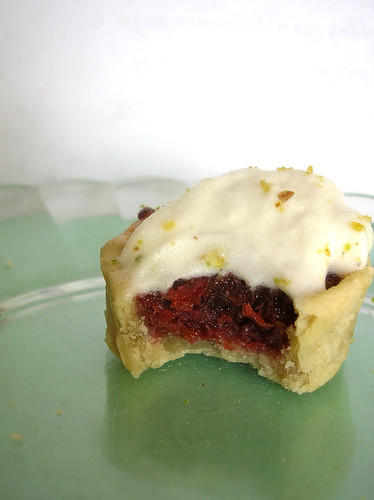
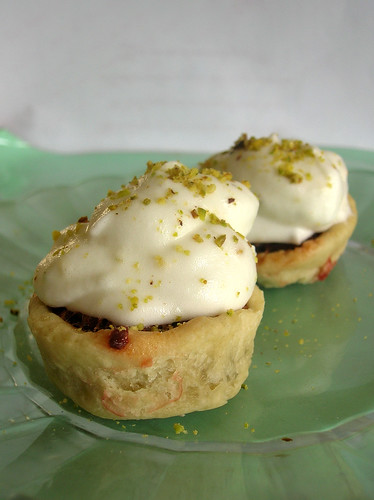
Of course, jam tarts are nothing new, but I think the rose jam gives them a special spin. I originally topped these with ‘ashta- a kind of Lebanese clotted cream. Ashta is almost always purchased from pastry shops, and though there are recipes for a homemade imitation, it doesn’t whip up like the real thing. Instead, simple whipped cream with a bit of mascarpone makes a great substitution, accented with a bit of pistachio. You could make these with any jam you like, but with rose jam you can have mornings, or evenings, of roses.


Rose Jam Tartlettes with Cream Topping

1/2 recipe Pâte Brisée or pie crust
1 cup rose petal jam
1 egg
1 tbl orange zest
for topping:
1 cup heavy cream
1/4 cup mascarpone
2-3 tbl sugar
1 tsp each orange flower water and rose water
1/4 cup finely chopped pistachios

1. Preheat the oven to 350 F. Prepare the crust and fit it into mini-muffin cups or tartlette pans.
2. Stir together jam, egg, and orange zest and fill tartlettes. Bake 10-15 minutes, until set. Let cool thoroughly on a rack.
3. Meanwhile, use an electric mixer to beat together cream and mascarpone until they hold stiff peaks. Beat in the sugar, flower water, and two tablespoons of the pistachios. Before serving, dollop cream over tartlettes. Sprinkle the remaining two tablespoons pistachios over the top of the tartlettes.

* 'Ashta is a kind of clotted cream similar to the Turkish kaymak.
**Rose jam is usually made from roses like beach roses, rosa rugosa, or rosa damascena. Here's a rose jam recipe. Flower jams can also be made with other edible flowers like jasmine petals, violets, orange blossoms, or almond blossoms.

16 October 2007

Squash, Fig, Fennel, and Chestnut Ragout


Now is the time of year when the bees die right on the flower. I saw one the other day, curled tightly in the petals of a butterfly bush, and I wondered if it died in a final exultation of pollinated pleasure or simply passed away in its sleep. The temperatures are finally dropping, we have several potted plants that don't like below 50F, so I brought them in last night and they crowded by the front door like children waiting for recess. They'll migrate indoors and out for a while before finally coming inside for the winter.

I've been gathering fall ingredients around me: pumpkins for carving and eating, apples from our neighbor's tree, chestnuts that went into a cake you will hear about soon. I got some dried figs too, unlike other dried fruits dried figs have a specific season, usually fall and early winter. Due to their high residual water content, dried figs only last a few months and the best kind are those from Turkey.

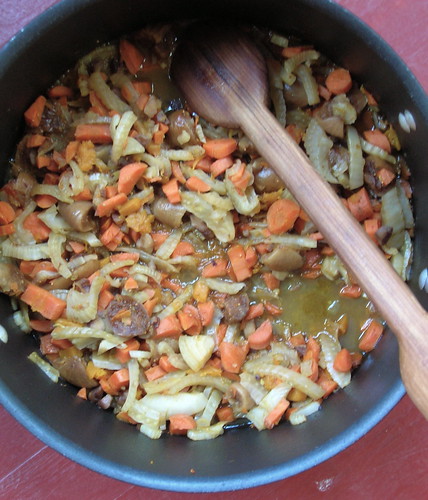
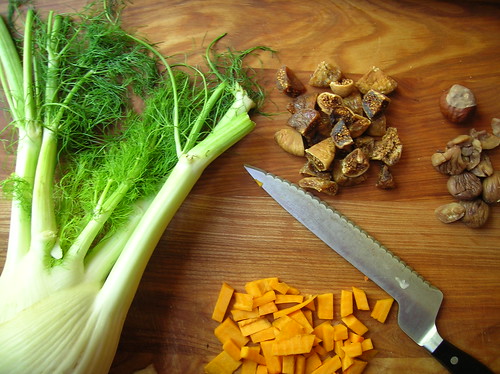
As I surveyed our provisions this weekend, I decided to turn those squash, chestnuts, and figs into a simple autumn ragout- it needed something else savory and I chose fennel bulb, with its sweet onion-like taste and hint of spice. I love a good ragout, in the spring with favas, in the summer a ratatouille-esque mixture, and now this one for fall. And though I just threw it together in its simplest form, this ragout is really a winner, I'm already considering it for a place at the Thanksgiving table. I had in mind to post something else today but the ragout just had to be shared, vying for attention like those plants by the front door.

I really love this dish in its five-ingredient simplicity, but it is welcome to interpretations. A splash of Riesling wine at the beginning would be the perfect accent, a few shredded apples a nice touch, use dates or raisins in place of figs, onions in place of fennel, a drizzle of pomegranate molasses, you get the idea. But I like this dish just as written, it reminds me of scarves and jackets and crunchy leaves and mostly, it tastes like fall.


Squash, Fig, Fennel, and Chestnut Ragout
This wonderful autumn ragout is welcome to all sorts of additions and substitutions, but I love it just as written. I use both squash and carrots because the squash will fall apart in the long cooking, while carrots hold their shape.

1 small fennel bulb (or half a very large one), cored and sliced
2 cups diced winter squash (such as pumpkin, butternut, acorn squash)
3 carrots, cut in small dice
6 dried figs, stems removed and quartered
1/3 cup finely chopped cooked chestnuts
optional for serving: pomegranate seeds

1. Heat a glug of olive oil in a skillet or wide pan. Add the fennel and carrots and saute until the fennel is softened. Add the squash, chestnuts and dried figs and add enough water to half-way cover the vegetables. Season with salt, stir everything around to combine, then cover the pan and turn the heat to low. Simmer over low heat, covered, for 45 minutes, stirring occasionally. Serve warm, garnished with pomegranate seeds if desired.
____________________________