05 August 2007

I Should Have Warned You.


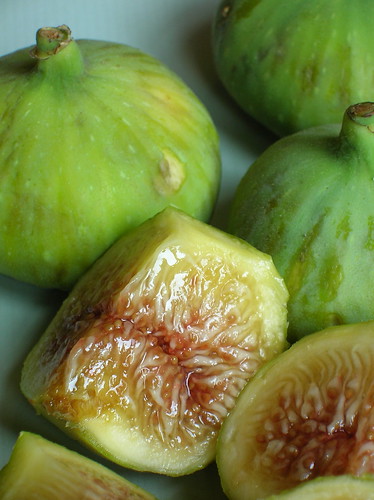
I really should have warned you. About the figs. Actually, I meant to, I was going to give you all a little heads up, that fig season was on it’s way, and what with my obsession, this blog may turn into an all-out fig-a-palooza. But I didn’t get around to it, and the other day I spied to first figs in the market and when I literally rushed over to their small baskets, the grocer actually laughed at my excitement.

My love of figs has not always been as such. It was not until I went off to Beirut that I even remember contemplating fresh figs. There, my friend Lina, who was raised in Brooklyn but whose family are conservative Shiites from south Lebanon, told me about the figs. “They’ll be coming in soon,” she said, “any day now. My family will bring some up from the south, and I’ll eat so many I’ll make myself sick, but they are sooo good.” The next weekend, I came home to find two huge flats of figs left on the table that separated our two desks. Each flat piled high, one with light green figs and another with dark brown ones, they were a kings ransom of figs.

That night, Lina showed me how to peel the thin skins off the figs and we sat eating one after another after another (the peeling is traditional for hygenic reasons). In a matter of a few days, we’d finished off most of the two flats, and thankfully no one was ill. Since then I don't think I've turned down any fresh fig that's crossed my path, and I look forward to the rumors and anticipation of fig season each year.


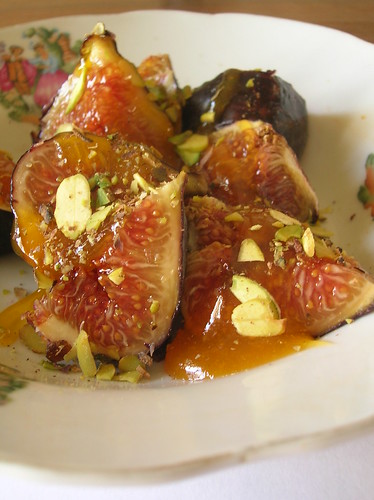
I’ve also made my fair share of fig recipes: fig salads, fig tarts, prosciutto-wrapped, goat-cheese-stuffed, bruléed with port, over yogurt, with ice cream, baked into a clafoutis. And while they have all been delicious, my absolute favorite way to enjoy a fig is to cut it into quarters and then to eat it. Simply. I like them best for breakfast, drizzled with a little apricot honey and sprinkled with some chopped nuts. It’s the ideal summer breakfast, one which should be followed by a lunch of summer tomatoes with a bit of basil, and then a dinner which might involve corn on the cob and maybe some sautéed zucchini, or some little cherry tomatoes tossed warm with pasta, or some stewy ratatouille. You know what I’m talking about, summer food.


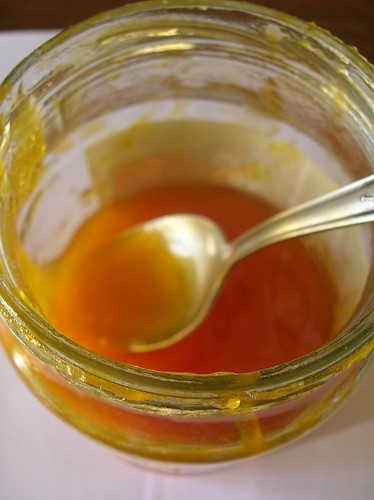
Oh wait, I said something about apricot honey, didn’t I? You didn’t think I was going to leave you without an explanation of this ambrosia that elevates my figs to heavenly heights? Apricot honey is not honey at all, but simply a name I invented for a jar of some wonderful syrupy stuff that Umm Hana shoved into my hand as I was leaving her house one day. I never quite knew what it was, except that I devoured it repeatedly, until I saw a little one phrase side-note in Claudia Roden’s “Book of Middle Eastern Food” about an apricot syrup recipe from Damascus. I immediately set to fiddling around with a recipe, and finally found one that was just right. What I love about this technique is that you can apply it to just about any dried fruit, I once made a version using dried cranberries that produced a wonderful kind of cranberry jam, and you can even do it with lemon juice.

As for the figs, quite frankly they are just as good when drizzled with regular honey and sprinkled with nuts. And though I love them for breakfast, they’re good just about any time of day. I’m afraid it’s not much of a recipe, but when figs are in season, you don’t need much else.
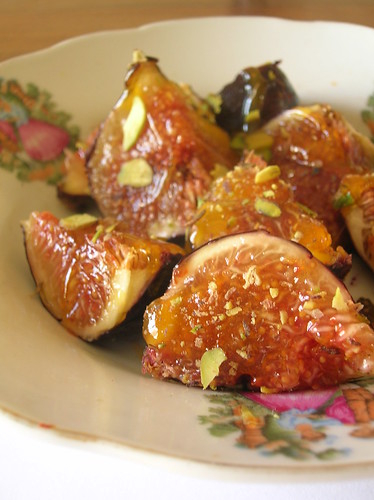


Figs with Apricot Honey and Pistachios
This simple preparation is one of my favorite ways of enjoying fresh figs. You can have it with yogurt for breakfast, or place on top of a bed of greens with a squirt of lemon juice as a salad. Tip: when figs are ripe there is a tiny drop of dew on the bottom of the fruit. However, eat them soon because they can quickly go from ripe to moldy.

8 ripe figs, quartered
4 tbl apricot honey (recipe follows) or regular honey
3-4 tbl finely chopped pistachios

1. Drizzle the figs with the honey and sprinkle with the nuts. Serve as desired.

Apricot Honey
Not a honey at all but a wonderful syrup made from dried apricots. This preparation can also be made using different dried fruits.

1 lb dried apricots
3 cups boiling water
1 tbl orange blossom water (optional)
1 tsp lemon juice
2 tbl sugar
2 tbl cornstarch dissolved in 1/2 cup water

1. Place the apricots in a bowl and pour the boiling water over them. Let soak overnight.
2. Drain the apricots and purée them in a food processor, add the orange blossom water, lemon juice, and sugar and purée until completely smooth.
3. Put the mixture in a saucepan and add the cornstarch mixture. Bring the mixture to a boil, then lower the heat and simmer, stirring constantly, until the mixture is very thick and syruppy. Pour into a jar and store in the refrigerator.
____________________________________

03 August 2007

A Soup Made of Ladies

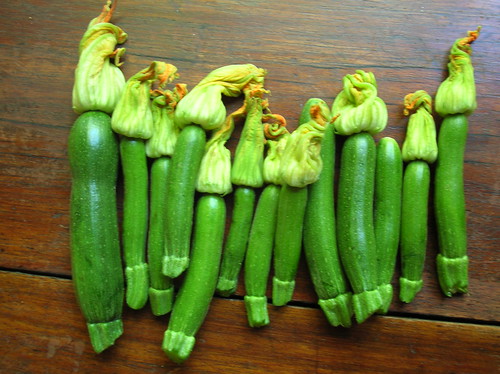
female zucchinis
Title IX: We are female zucchinis, we demand equal rights!

I’ve been pining away for weeks now for a good squash blossom fritter. It’s one of the things I love this time of year, when everyone else is going zucchini-crazy, I’m foraging for the blossoms. Since I don’t grow my own squash, I don’t have my own blossoms to pick, and I haven’t found any at the market yet that look viable (like this). I always stuff them with a little cheese-egg mixture (Boursin cheese works well), then batter and fry them.

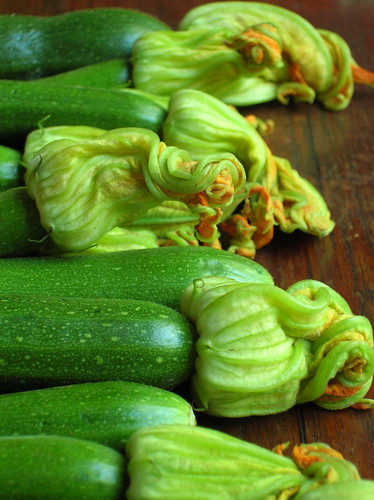
Dear M., who’s been hearing me go on about the squash blossoms I cannot find, sweetly brought me some squash from the market the other day. They were beautiful, but I quickly recognized they weren’t the kind I use for stuffing. Then I remembered: squash are male and female. The large male blossoms are the ones used for stuffing, while the female blossoms grow attached to the little squashes. Today’s anatomy lesson.


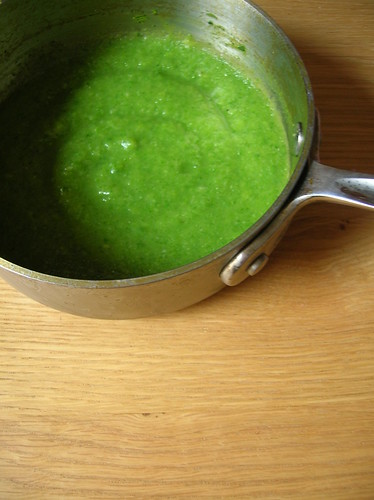
Here’s a tip from our farmer: start picking your zucchini as soon as possible. Picking your zucchini early will prevent the glut of baseball-bat-sized zucchini later in the season. And not only will you have fewer zucchini to deal with, but the tiny zucchini are the most flavorful, tender, and beautifully green. Small squash with their flowers still attached are often used in cooking, in Greece they might be folded whole into an omelet, or used in Mexico as a filling for quesadillas. I made simple soup that is really just a purée of baby (female) zucchinis and their flowers. It’s simple in the way that summer food can be: bursting with flavor and color. I like to call this a soup made of ladies, or a soup for ladies, but I think both sexes will enjoy it.

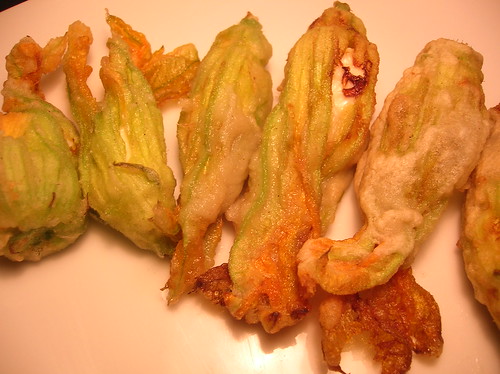
After making the soup, I finally got hold of those blossoms I was coveting, so I made a little composed dish: purée of (female) zucchinis topped with (male) blossom fritters. Both components are delicious on their own, but they also go together perfectly. Equality of the sexes and all.

Eeek, I know, horrible picture, but check out that oozy cheese.

Purée of Female Zucchini
Squash blossoms are both male and female, the females produce fruits, while the male do not. Whole female zucchini, with both squash and blossoms, are puréed together in this simple but wonderful summer soup. Adding a few fresh basil leaves is also a nice touch.

10-12 baby female zucchini with their blossoms still attached
2 tbl olive oil
water or stock
salt to taste

1. Slice the zucchini, discard the nubby top piece, and dice the flowers. Heat the olive oil in a wide saucepan and sauté the zucchini rounds over medium heat, until they begin the soften and have some brown spots. Add the zucchini flowers and toss just to combine. Immediately add just enough water or stock to cover the bottom of the pan by about one inch and season with salt. Bring the mixture to a boil, then simmer until everything is soft and combined, only about 3-5 minutes. Let the mixture cool slightly, then purée in a blender until smooth.

Male and Female: Purée of Zucchini Topped with Squash Blossom Fritters
Whole female squash are used in the purée, while male squash blossoms are used to make delectable fritters.

purée of female zucchini, as above
for the fritters:
4 large male squash blossoms
1/4 cup Boursin cheese
1 egg
1 cup flour
1 cup very cold mineral water
oil, for deep frying

1. Prepare the zucchini purée as directed above.
2. Heat the oil in a deep pot. In a small bowl, beat together the egg and the Boursin cheese. Stuff each blossom with about a tablespoon of cheese mixture. In another bowl, combine the flour and the cold water in a few swift strokes (it’s ok if it’s lumpy). Dredge the flowers in the batter, then fry in the hot oil for a few minutes until crisp and browned. Drain fritters on paper towels.
3. Ladle the purée in four shallow bowls. Top each bowl with a squash blossom fritter, serve immediately.
________________________________________
31 July 2007

The Best Cashews, and Why I Love the Kurds

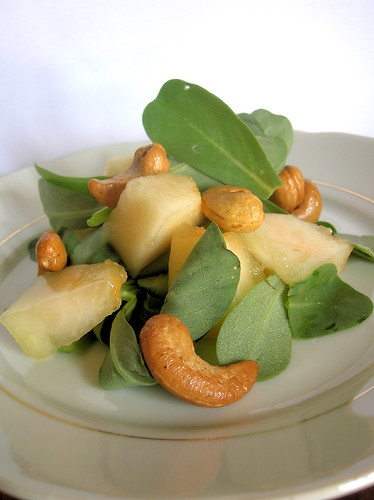
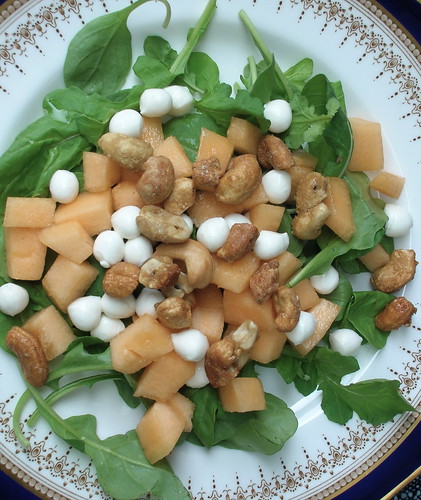
summer salad with melon and cashews
Summer Salad with Melon, Mozzarella, and Cashews

There are a lot of great things I love about my old neighborhood in Damascus, called Muhajereen. Nestled up into the mountain-side, it's got a fabulous market, well-priced rents and apartments that offer beautiful views. Muhajereen means "the immigrants," referring to immigrants from Crete that settled the area long ago, although these days the neighborhood is home to middle class families that have been in Damascus for hundreds of years. It boasts an ancient winding street with Mamluk-era buildings and a Sufi gravesite where local pilgrims come and bring picnic lunches to eat in the cool basement shrine. Bordering on Damascus’ chicest neighborhood, Abu Roumaneh, it's a short-walk to my office and nice shops.

the view

However, it's also a conservative neighborhood, and while that means there aren't many other foreigners around (a plus), there are also some minuses. Many women wear extremely conservative dress: black coats, stockings, black gloves, and a double black face-veil with no eye-holes. Before you ask: yes, it's difficult for them to see through it, and no, I don't have to wear a veil, Damascus women wear a wide range of dress based on personal decisions. But let's move on to that other negative, the complete absence of restaurants in Muhajereen. Conservative households always eat at home, together, and much of the structure of the day revolves around the family meal. So while there are plenty of take-out shops, juice bars, and ice cream parlors, including the best felafel stand in the whole city, there are no sit-down restaurants.


This brings me to why I love the Kurds. At the edge of Muhajereen, off a little side street across from the French embassy, is a bright pink sign reading "The Journalists Club." At one time it was a meeting place for journalists, but these days it’s just a slightly shabby restaurant and cafe. The walls are decorated with florid seventies-era wallpaper and gaudy swirled paintings; weak florescent lights reveal a clientele of older Arab men and a smattering of young ex-pats and Syrians. But what draws us is the single fact that the Journalist’s Club sells alcohol. Don’t get me wrong, I’m not a big drinker, but after a tough day navigating Damascus’ busy streets and bureaucratic struggles, a little glass of wine is a nice way to relax. Though wine and alcohol are available for purchase, the only restaurants and bars with alcohol are in the Christian neighborhoods, far across town from where we live.

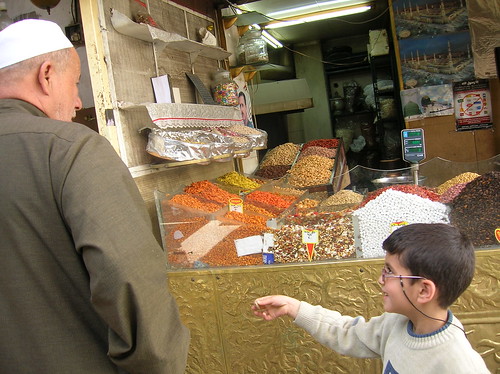
The Jounalists Club serves alcohol because it is run by Kurds. I have several Kurdish friends, and though everyone is extremely welcoming in Syria, the Kurds have a unique sense of joy and fun. The other thing that draws us to the Journalist Club is the laid back atmosphere: in a lot of trendy Damascene places it’s all about being seen, women with kohl eyes and men with too much hair gel, at the Journalists Club no one bothers you. And then there’s the cashews. They bring little bowls of roasted cashews to your table that are the most addictive wonderful nuts you’ve ever had. Walking down the hill one evening, Sara mused, “I hope they’ll have the cashews.” Sometimes the bowls are mixed nuts or popcorn, but we adore the cashews. There’s been many an evening I’ve whiled away with a group of expat friends, sipping Lebanese wine and eating one-too-many handfuls of cashews.

nuts please!

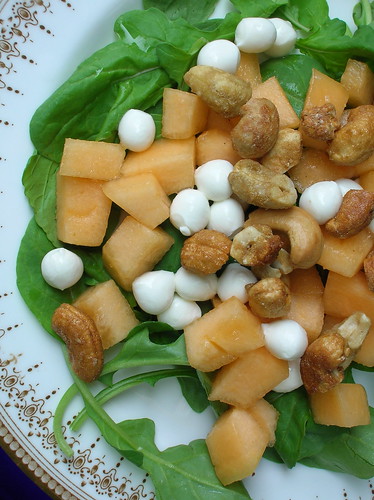
We’ve become friends with the Club’s owners, who told us they get the cashews from a little nut roaster not far from our appartment. Now we can get the nuts whenever we want, golden and hot, straight out of the rotating dark barrel. They rarely last the trip home, but I did manage to incorporate them into a lovely summer salad one day. The meaty cashews made a perfect pairing for the softest, sweetest summer melon, sort of like a play on the classic melon-ham pairing, except in a country without pork products. I used a soft herbal green that I have finally figured out is a type of purslane (anyone know a good source for Arabic/English herb translations?!). It’s worth looking for succulent purslane in your local farmers market, but you could substitute baby lettuces. Finally, tiny little balls of mild cheese round out the salad with a creamy note. It’s a wonderful salad I’ve made many times, but I always think of the jovial Kurds at the Journalist’s Club whenever I reach for the cashews.


Summer Salad with Melon and Cashews

3 handfuls purslane, or substitute baby lettuces or arugula
1 cup sweet melon, such as cantalope or charentais, diced
1/2 cup bocconcini (tiny mozzarella balls), or cubes of soft mild cheese
1/2 cup roasted salted cashews
lemon juice, olive oil, salt to taste

Combine the lemon juice and olive oil in a bowl. Add the purslane and toss to coat, then sprinkle with salt. Place the purslane on your serving plate, then arrange the melon, cashews, and cheese on top. Serve.

Variations: If you, like my mother, are deathly allergic to melon, you can substitute ripe peaches. Or if you, like my friend A., are allergic to nuts, you can substitute some slivers of Parma ham. If you’re allergic to melon, nuts, and dairy, well, maybe this isn’t the recipe for you.

29 July 2007

Snobless Hearts of Palm

When I was about sixteen I was in a dance company and we performed at some sort of gala or season opening, I can't remember precisely. I do remember they decided it would be nice to feed the dancers after we performed with some of the fancy dinner food the guests paid for with their hundred-dollar tickets. One of the girls in the company was, to put it frankly, a bit of a spoiled snob. I think her parents had underwritten part of the gala. We sat down to our first course, a salad with hearts of palm. "Have you ever had hearts of palm," she asked me, and I admitted I hadn't. When I asked what they were, she scoffed, "oh, they're very fancy, I don't know if you'll like them." Even at that age I was known to be a bit of a gourmand and a good cook, and I was mortified at my own ignorance.

I actually did enjoy the hearts of palm, but I've stayed away from them ever since. Eating them seemed like embodying the food snob I did not want to be, one of those people who goes on about truffle oil. I only ever prepared them once, on Valentine's Day as part of a "three hearts" salad (hearts of palm, artichoke hearts, and hearts of romaine). The salad wasn't as good as it was gimmicky, and so I pretty much wrote them off. Plus, there's the added issue of how they're harvested.

This was all before I met the grilled heart of palm, my new best friend. Many vegetables do well on the grill, but hearts of palm provide a wonderfully neutral palate for the smokey taste of the grill. All you have to do is get some hearts of palm (surprisingly inexpensive for a "luxury" item), toss them with some olive oil and balsamic vingar, and put them on a grill. You'll want a nice smokey charcoal grill, to give them lots of flavor. The balsamic caramelizes, the hearts of palm are tender; do this at your next barbeque, and I promise you they'll be the star of the show.

Oh, and that girl? She's a lawyer and married now. But my hearts of palm are still pretty tasty.


Grilled Hearts of Palm
Where I come from hearts of palm always come in cans, but if you have access to fresh, use them.

2 cans hearts of palm, drained and rinsed
3 tbl olive oil, plus more for the grill
4 tbl balsamic vinegar

1. Prepare your grill, you'll want it very hot. Combine the oil and vinegar in a bowl, then add the hearts of palm and toss to coat. Rub the grill with a little oil, then grill the hearts of palm, about 3 minutes on each side, so that they get nice char marks. Serve.
______________

27 July 2007

Corn Like the Summer of 1999


We spent two glorious weeks of vacation where the daytime climate hovered around seventy degrees and sunny and our evening appointments of sunset on the rocks called for jeans and heavy sweaters, wrapping shawls around our necks, we toasted the boats in the harbor with a glass of rosé the color of the pink, purple sky. Returning from vacation is always hard, but as we emerged into the 95 degree heat, the oppressive humidity, it seemed more like culture shock. I had forgotten that summer really was underway, “I’m melting, mom, I’m melting,” I cried as I worked to prop up plants in her garden. “Really, my nose is sliding down my face, I’m a Picasso painting.”

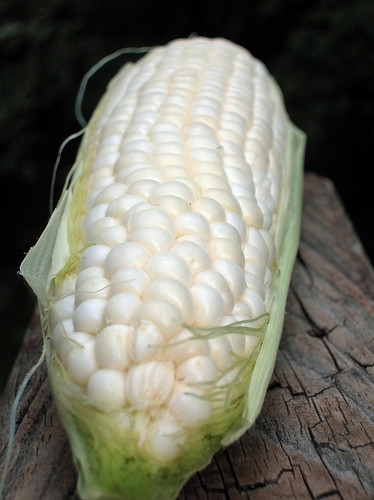
In this kind of weather, it’s hard to even work up much of an appetite, much less consider cooking anything. Entering the cool aisle of the grocery, I spied a sign that said local corn, and since sweet white Maryland corn is always good, I grabbed some of the fat heavy ears.

an armful

Talking with a friend later that week, my mother said in her Southern-tinged voice, “have you had any of the corn yet, why, it’s as good as the corn of 1999.” We both burst out in full-on belly laughs, but my mom was serious, and I knew just what she meant. The corn of the summer of 1999 is legendary in our family. That is the year we spent part of the summer at our friend’s beach house on the Eastern Shore. We’d go down to the local IGA, a ramshackle shed of a grocery, and get local corn and butter beans out of their wood crates. The corn was divine: fresh, sweet, wonderfully tender. We ate corn and beans for weeks, I don’t even remember anything else on the table. A man might rustle up some testosterone and put some fish on the grill, maybe some sliced tomatoes, but it was all about the corn. Tiny little Anne would eat 6 ears a night. “Can we do the butter thing,” Hollis would ask. This referred to rolling your hot corn over the stick of butter on the table, it’s the perfect way to coat an ear of corn, but also leaves tell-tale grooves in the butter, and so was not to be done in the presence of company. Much of dinner conversation was devoted to whether one ate their corn typewriter style or in the round.

We even endeavored to drive out into the country and find the reputed corn farmer, it was a bit like searching for the Field of Dreams, expecting his rows of tall ears to bear some tell-tale sign of their deliciousness. However, the corn appeared just like all those other fields we’d driven past, and the farmer was reticent to discuss his corn with a bunch of city girls. So we contented ourselves with eating, and that was good enough. Some people talk about vintages of wine and terroir, we talk about the years of sweet white kernels.

The corn this year has been just as wonderfully good. It’s got me thinking about how good Maryland corn is, all these years I’ve been eating adequate corn in other locales, I’ve learned to settle for less. I remembered a British friend who told me that corn was only considered food for livestock, and a Croatian friend who insisted corn had to be boiled for an hour (!) before being tender enough to eat. When you’ve got corn this good, it only needs a few minutes in boiling water and a thin swath of butter. Do not grill your corn in it’s husks, do not even think of using it for some other preparation, tender just-picked corn should be consumed as soon as possible, knawing away, butter and juices running down your chin.

In this spirit, I wasn’t even going to include a recipe today, but then I changed my mind and I’m giving you two. Even with the best corn, after about the tenth night of eating it you might want a little variation, so you can try different flavored butters to smear on your corn. And if you live in an area where corn is sub-par or out of season, I’m including my creamy corn recipe. This is so deliciously creamy, people will swear it’s full of cream, but it’s not. As for me, I’ve got corn on the cob, so I hope you all don’t mind if I do the ‘butter thing’ in your presence, because we’re all friends here.


Corn with Parmesan Black Pepper
I always thought corn on the cob should be graced only with the thinnest smear of butter and salt, until I met this version. Finely grated cheese clings immediately to the hot corn, adding a wonderful salty tang.

corn on the cob, preferably sweet white corn such as Silver Queen, shucked
very finely grated parmesan cheese, use a microplane or the finest part of a box grater
plenty of fresh cracked black pepper

1. Cook the corn in a large pot of boiling water until tender, a few minutes. Toss together the grated cheese and pepper in a bowl. Drain the corn and pat dry with a towel. Sprinkle a little cheese mixture over each ear of hot corn, rotating to coat all sides. Place on a platter and serve immediately.

Creamy Corn
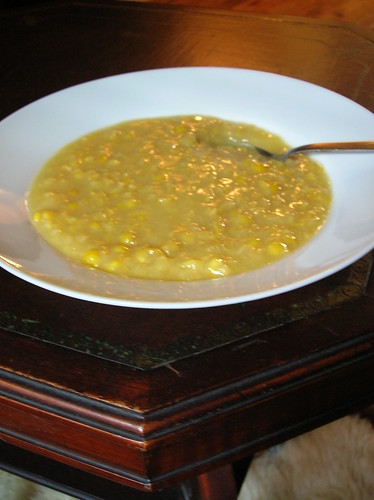
The original title of this recipe was “creamless creamed corn,” but it’s too delicious to be thought of as lacking anything. If you’re serving it as a side dish at dinner, cook the mixture a few extra minutes so that it’s thicker and not runny. You can also use it as the base of a soup, I particularly like it topped with flakes of smoked trout and chile oil.

6 ears shucked corn
1 tsp salt
1 tsp cornstarch
1/4 cup chopped onion
1 tbl butter
1/3 cup water
a splash of cream, optional
2 tbl minced chives, optional

1. Working over a deep large bowl, cut the corn off the cobs and scrape the cobs with the back of a knife to extract the cob juices. You should have about 3 cups of corn.
2. Transfer 2 cups of the corn with their juices to a blender or food processor, add the salt and cornstarch and purée until smooth.
3. In a saucepan, sauté the onion in the butter until softened. Add the water and the remaining corn kernels and simmer for 2-3 minutes. Strain the corn purée through a sieve or mesh colander into the saucepan (you can skip this step, but it omits some of the annoying corn fibers). Add cream if using. Simmer the mixture a few minutes until thickened to desired consistency. Serve with chives.

25 July 2007

Tiramisu Ice Cream


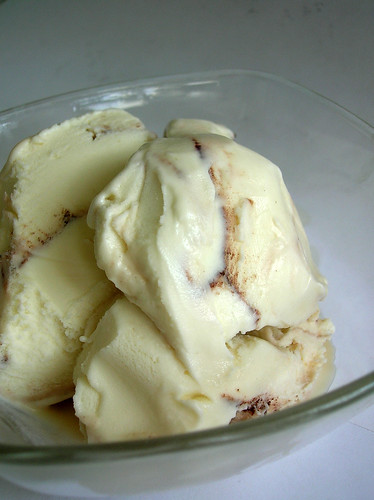
As a kid, tiramisu was one of those desserts that adults always ordered if you went to an Italian restaurant. It didn't look terribly exciting, and it had the funny translation of "pick me up," which sounded about as stodgy as your Uncle Lou's paisley tie. Besides, if it was an Italian restaurant, that meant gelato was on order, so who would even contemplate anything else. Which is why I'd never had tiramisu until one day when I bought one at a Damascus cafe. Now, I realize Syria is not the place for one's first tiramisu experience, but it looked good and the pastry shop was a very reputable one. It was delicious, with fluffy filling, the bite of coffee and hint of chocolate.

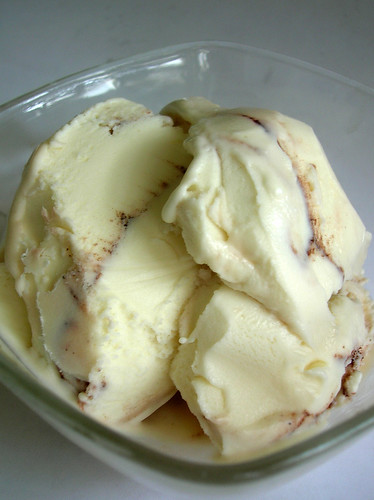
Since then, I've had many more tiramisus (from more traditional sources), but I still love gelato, and this tiramisu ice cream is a perfect marriage of the two. In fact, it's one of my favorite flavors, and the best part is that all you do is put all the ingredients in a blender and blitz! Which means that you'll only have one dish to wash, provided you haven't licked it squeaky clean already.

In other ice cream news, I'm working on a little ice cream project for the month of August. I'm quite excited about it so I hope you'll stay tuned for the details!

Tiramisu Ice Cream
Two classic Italian desserts in one, this ice cream has the rich tang of mascarpone with hints of coffee liquer. Layering the ice cream with cocoa powder after you've churned it gives it beautiful stripes.

2 cups mascarpone (or 8 oz cream cheese plus 1 cup sour cream)
2/3 cup whole milk
2/3 cup cream
3/4 cup sugar
1/4 cup Kahlua (or substitute strong espresso)
1 tbl brandy or rum
pinch salt
1/2 cup cocoa powder

1. Place all the ingredients except the cocoa powder in the blender and blend until completely smooth. Transfer to the refrigerator and chill thoroughly (at least 4 hours), then churn in your ice cream maker according to the manufacturer's directions.
2. After you've churned the ice cream, transfer 1/3 of the ice cream to your storage container, then sift some of the cocoa powder over top, top with another layer of ice cream, sift with cocoa powder, and finally cover with the remaining ice cream. Store in the freezer.

Note: you can substitute 1 1/3 cups half-and-half for the milk and cream.
_________________________________
22 July 2007

Worth Every Flinch

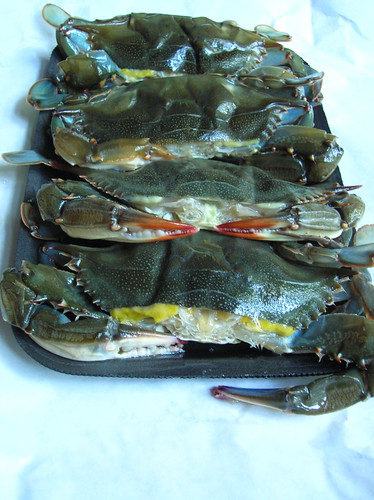
soft shell crabs
If you had told my 16 year old vegetarian self that I would one day participate in removing the lungs from a living being, I don't think I would have believed you. I should say that my teenage vegetarian days were motivated not by any sense of ethical activism but rather by a strong distaste for most meats. As a child I recoiled from the steaks and chicken my mother tried to feed me, and even today I only eat meat about once or twice a month. However, I love seafood and will happily gobble down any creature of the sea, including spindly legged soft-shell crabs.

Soft-shelled crabs are not a kid-friendly food. There's the whole legginess of them, and then there's the issue of how they crunch. For any child reading Charlotte's Web, watching your parent crunch into a sandwich with legs hanging out of it can be a disturbing experience. Also, they are a bit confusing, something you normally eat only the inside of, it's kind of like being told to eat a banana with its peel. I grew up in crab-central Maryland and I can pick a crab like a pro, but I never had a soft-shell crab until a couple years ago. Now, of course, I love them. All the things that once seemed unappealing are part of their delight: the crunch that releases their salty brine, the sweet meat inside.

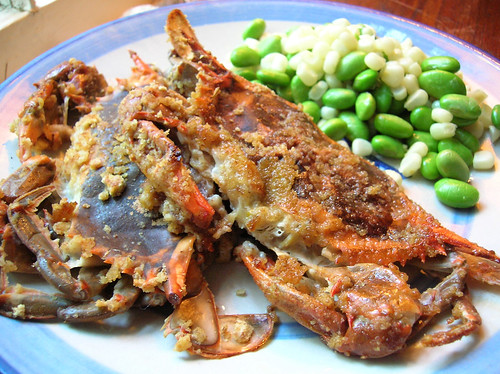
pan-fried soft shell crab

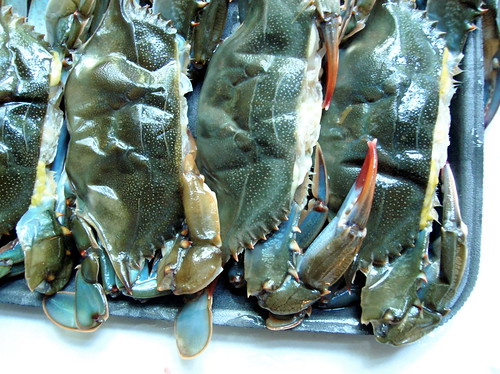
Usually, we just pan fry our soft shells with a little cornmeal coating (see above photo), but I got the idea for a tempura-fried soft shelled crab, and scuttled myself over to the grocery. "Do you have any soft-shells," I asked, not seeing any in the display. "Actually, we just got some in," the fish guy said with genuine enthusiasm, "but it will be a few minutes, I have to clean them." Having recently heard a friend talking about this rather tortuous process, I asked if I could watch how he did it. Now, the fish guy knows me, but he raised his eyebrow curiously, and that's how I found myself, a petite girl, behind the counter with a bunch of large men in butcher's aprons.

The crabs were still visibly alive, and we picked out four large males. "First, I cut off the eyes," he explained, as he took a large pair of scissors, and to my horror, did exactly that. Before I had recovered from that shock, he expertly lifted the shell edge and dug around and pulled out the crab lungs. "Actually, they're called gills," he told me. Right. He gave them a quick cleaning, snipped off the apron, and proceeded to the next crab. What was disturbing was that the crabs continued to twitch even after being defaced, much like the proverbial headless chicken. "They need to be alive up until the last minute, that's what keeps the shells soft," he explained.


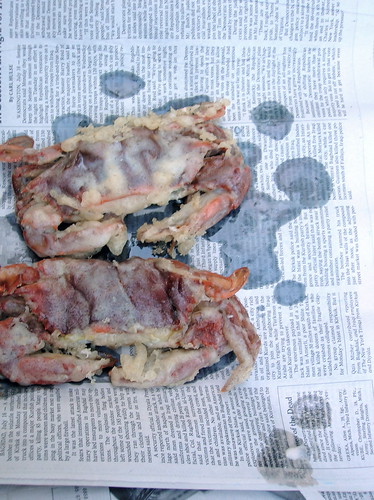
As a child, we would catch our own crabs and take them home and steam them for dinner. The live crabs were put in a large pot and you had to hold the lid down firmly for the first minute as their claws banged on the pan trying to escape. One time a crab managed to get out and scurried after me, angrily pinching my toes as I ran circles in the kitchen until my mother plunked it back in the pot. This is all to say that I'm pretty comfortable with the idea that cooking involves a little gore. However, I did flinch when the crabs twitched again when I went to prepare them that evening. There is something about battering and deep-frying something that just adds insult to injury. Nonetheless, I proceeded.

As soon as the crabs were on the plate, I knew they were worth every flinch. The crabs were divine. Each crunchy bite is an explosion of salty brine combined with buttery-sweet meat. There's just no other way to put it, this has to be one of the best meals of the summer. They were so good, I wasn't going to write anything about the process of prepping them for fear it would scare someone away from making them. I was just going to write about how good these are, you have to make them. Luckily, if you have access to soft-shells, they may be sold already cleaned or your fish monger will clean them for you, sparing you any gore. But somehow, I think learning about them made me appreciate each bite even more. All you have to do is cook them up, which makes this one of the best 10-minute meals I can think of.


Tempura Soft-Shell Crabs
Crunchy, salty, sweet, soft-shell crabs are a special delight. Your fish monger will clean the crabs for you, but you may also want to reach under the shell and scrape out the bright yellow crab guts, called the tomalley. Soft-shells are in season May-July.

4 soft shell crabs, cleaned
1 cup very cold mineral water
1 cup flour (preferably rice or cake flour, but all-purpose is fine)
pinch each of salt and Old Bay seasoning
oil, for deep frying

1. Heat the oil in a large, deep pot. Combine the flour in a bowl with the salt and seasonings. Add the water all at once and stir just to combine. The batter should still remain slightly lumpy, do not overmix.
2. Test that the oil is hot enough by drizzling a little of the batter into it, it should bubble up and fry. Dredge the crabs in the batter, then add to the hot oil. Fry until golden and crispy, about 3-5 minutes. Remove with a slotted spoon and drain on paper towels. Serve immediately.

Gild the Lily: Serve the crabs with a little aioli or mayonnaise sauce drizzled on top.

See also:
French Laundry at Home cooks soft shells.
Cleaning Soft Shell Crabs
_____________________