19 July 2011

What To Do with Summer

DSC_0098
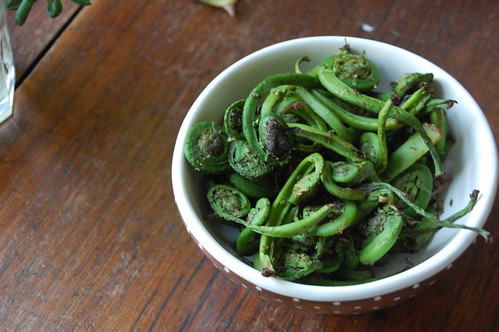
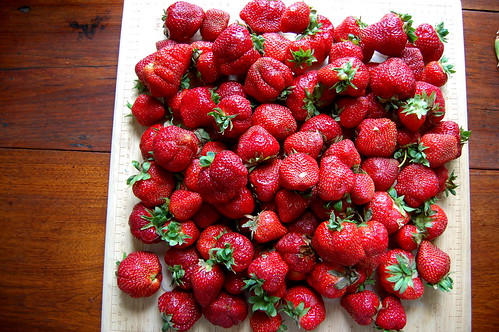
Well, first you eat it. All the summer peaches and corn on the cob and tomatoes and the last of the lettuce in your garden that is wilting in the heat, you eat all that you can. And then when you're done with that, when you've abundantly bought too many things at the market, when your table groans with berries about to go bad, then you preserve it.

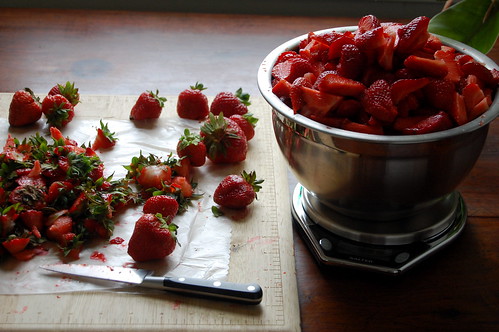
You look up every Christine Ferber strawberry jam recipe (here, here) and decide they are all too complicated and you don't have two days to spend making jam, and instead you improvise your own version. Skimming, skimming, skimming the foam off the jam as it cooks ever so slowly. Then canning and preserving for winter.
DSC_0100

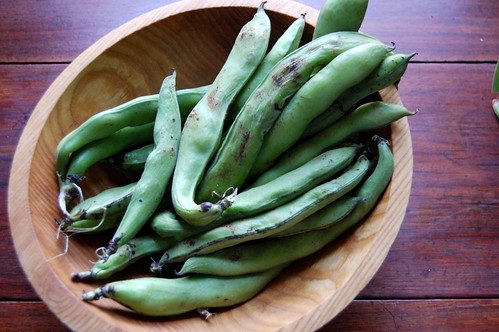
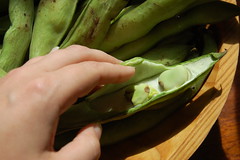
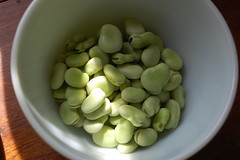
You shuck fava beans and freeze them, you make tomato sauce out of those pricey beautiful huge heirloom tomatoes, peeling them, seeding them, chopping, using an old Marcella Hazan recipe. And in the end you discover it tastes like .... tomato sauce.
DSC_0108DSC_0109

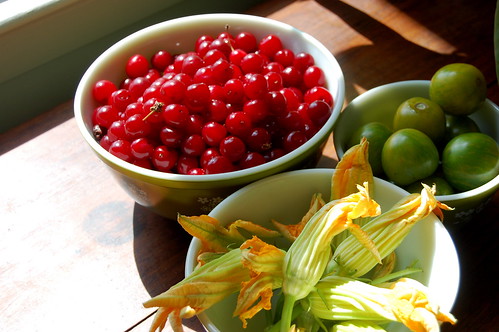
Sour cherries are available about 4% of the year (yes, I calculated) and so you buy up all you can, and then you spend so long pitting sour cherries and listening to pod casts that you get a neck cramp. Paul would advise you that sour cherry pie is the "the best thing ever," but I also like sour cherries in savory things like rice pilaf and kebabs.
DSC_0140

And speaking of preserving, this little piece via the New Yorker just lit up my day. The title alone is great: Suicide in the Garden, Murder in the Kitchen.

It's funny how some of the things I've been making are so vibrantly flavored that they almost taste fake--the strawberries so intense they almost taste like imitation flavoring, tomatoes so naturally sweet without any added sugar. Has anyone else noticed this? Back soon with a recipe....

10 July 2011

Turkish Pide Bread

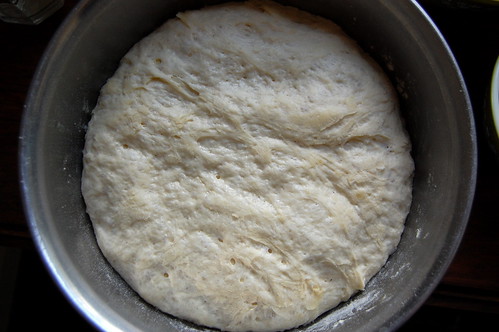
DSC_0143

Pide bread is the Turkish version of flatbread. It is puffier and richer than other flatbreads in the region, and totally delicious. Traditionally shaped in a long flat oval, it can also serve as a bed for toppings, such as roast eggplant or tomato and cheese, the Turkish version of pizza. Pide bread can also serve as a vehicle for kebabs, placing the long kebab over the long pide bread and topping the whole thing with grilled tomatoes and peppers and chopped parsley.

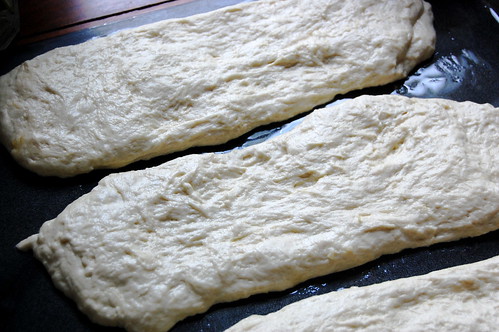
DSC_0145

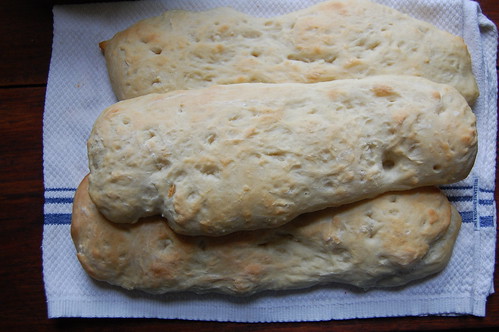
The plain pide bread is either roughly dimpled with your fingers or scored with a knife in a cross hatch design. My pide shaping skills still need some work. Like most flatbreads, these are best the first day they are made, but they keep well and can refresh nicely when reheated in the oven or toaster.

DSC_0147

Pide Bread

Adapted from Annisa Helou.

2 1/4 teaspoon yeast (1 package)
3 cups flour
2 teaspoons sugar
2 teaspoons salt
2 tablespoons olive oil
warm water

optional: egg wash, sesame seeds

1. Dissolve yeast in 1/4 cup warm water in a large bowl. Stir in the flour, sugar, salt, and oil. Gradually add 2/3 cup warm water to form a dough. Knead the dough to form a smooth elastic ball of dough, about 10 minutes.
2. Rinse out the bowl, oil it, and cover with plastic wrap or a damp towel and allow the dough to rise in a warm place for 1 hour. Punch down the dough and let rise another 45 minutes.
3. Preheat oven to 425 F. Grease a baking sheet, divide the dough into long oval loaves (you can make one very long loaf or several smaller ones). Place on the baking sheet, cover with a damp towel until the dough is slightly puffed, 10 minutes. Dimple the dough with your fingers. If desired, brush with egg wash and sprinkle with sesame seeds. Bake 20 minutes for smaller loaves, 30 minutes for one large loaf, or until golden and firm. Eat fresh.

02 July 2011

Beef Tagine with Prunes

DSC_0154

Jonathan Franzen writes of Washington DC, "the pedestrians in every neighborhood all seemed to have taken the same dowdiness pills. As if individual styles were a volatile substance that evaporated in the vacuity of D.C.'s sidewalks and infernally wide squares. The whole cite was a monosyllabic imperative directed at Katz's beat up biker jacket. Saying die."

I'm inclined to agree with Mr Franzen, and with this group of people. Don't get me wrong, I have a fantastic house here (the size of which I could afford about 8% of in New York), and a yard for gardening, a nice car and a good stable job and lots of good friends. And there's a lot more character in DC then there used to be, there's Birch and Barley and the lobster truck and movies at E Street and cool furniture shops on 14th Street. But a little bit every day, I feel the corporate government dullness of DC slowly sucking my soul.

DSC_0146

People keep talking about this thing called my "career trajectory," which always makes me picture, with horror, that my job is a shooting rocket just dragging me in its path. So I'm thinking a lot about jobs and careers and is going back to school really the right thing in this economy and will anyone even want to hire me and do I really want to move and is having a career really such a bad thing, and why oh why are DC drivers so horrible?

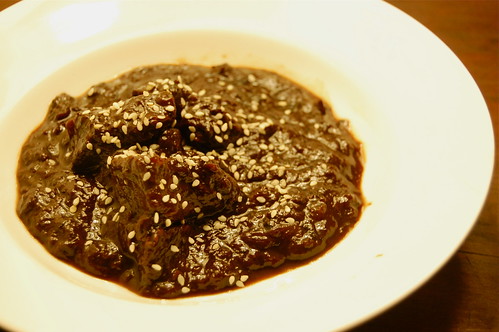
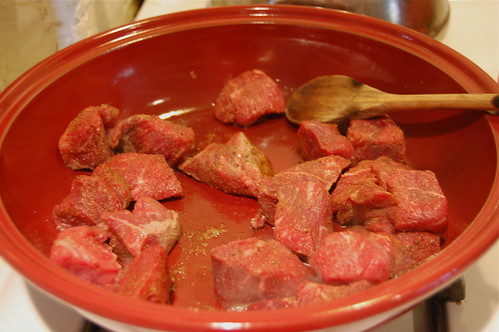
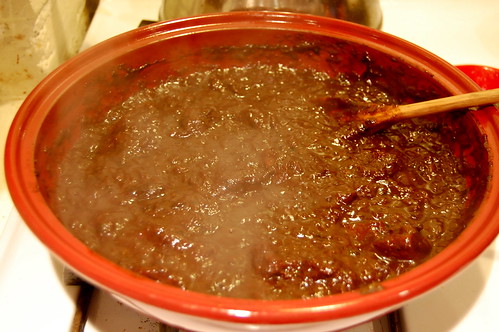
And this uncertainty is probably why I'm making rich comforting stews like beef tagine in the middle of summer when my diet should be consisting of summer tomatoes, corn, and soft-shelled crabs. But the beef tagine my friends, is really fantastic. I've made it a few times now, cooking the beef over several hours with prunes and spices until everything melts together in a thick sweet sludgy mixture. Like many Moroccan dishes this verges on the edge of sweet, and though not traditional I like to add some chli flakes to keep things balanced out. The dish reminds me strongly of Mexican mole negro, also black and sweet and spicy. It's one of those recipe you make once or twice and remember how to do from memory, long slow cooking on a Sunday afternoon, something to bookmark and make on a day when you need something warm and comforting.

DSC_0149
Beef Tagine with Prunes


2 lbs beef stew meat
salt, pepper
olive oil
2 teaspoons cinnamon
1 teaspoon ground ginger
2 teaspoons cumin
1/4 teaspoon turmeric
optional: 1 small diced chili or 1 tsp of Aleppo pepper or mild dried chili pepper
1 large onion, diced
12 oz prunes, diced
2 tablespoons honey
a few sprigs of cilantro leaves, diced
sesame seeds for serving

1. Season the meat with salt and pepper. Mix together the spices and toss with the meat to coat. Heat some olive oil in your tagine (or a dutch oven) over medium heat. Sear the beef until browned on all sides. Add water to just cover the meat, bring water to a simmer, put the lid on the pan and simmer on low for 45 minutes.
2. After 45 minutes, add the onions, chili if using, prunes, and honey and season with salt. Cover the pan again and simmer for 2 hours. Check on the mixture every 20 minutes or so, add more water if the mixture starts to look dry. Gently mash the mixture with the back of a spoon as it cooks, encouraging it to form one cohesive sticky sauce. As the sauce thickens toward the end of cooking, make sure it doesn't stick to the bottom of the pot and burn.
3. At the end of the 2 hours, the meat should be tender and falling apart, if it isn't keep cooking it gently. A few minutes before taking the dish off the heat, stir in the cilantro. The sauce should be thick and sticky. Taste for seasoning. Season with additional salt/chili/honey as necessary. Ladle the tagine over couscous. Sprinkle sesame seeds on top to serve.

27 June 2011

How to Make Steamed Couscous

DSC_0127
The proper way to make couscous, the Moroccan way, is to steam it. For those of us who grew up with the couscous in a box--and I think that's most people in the US--why would you bother with steaming when that box stuff cooks in five minutes? Well, because steamed couscous is light, ethereal, fluffy, and full of flavor. The last time I made instant couscous it came out like a clumped brick.

Steaming couscous is a bit time consuming, but it's meant to cook on top of whatever stew or tagine or other dish you have going. And as is often the case with stews, steaming the couscous is a welcome distraction as you wait for the meat to get tender in that seemingly endless 2 or 3 hours of stewing.

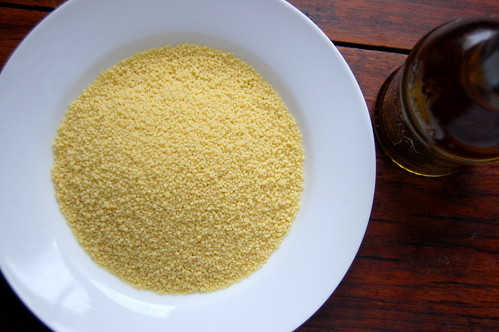
The basic technique is this - couscous, which is basically teeny tiny pearls of semolina pasta, is tossed with olive oil to coat. Then it is tossed with water, placed in a steamer basket (I line mine with cheesecloth because the holes are fairly large) and steamed either over water or over whatever you are cooking. You steam the couscous for about 15 minutes, then you remove it from the heat to rest, fluffing it, then you repeat the process. If you're lazy, two steamings will suffice, but thorough cooks will do as many as four steamings.

Couscous is typically served plain alongside a flavorful stew, kind of like rice alongside Chinese. One of the ideas behind steaming the couscous over the stew (besides being economical) is that the couscous absorbs some of the flavor of the stew. I like to think of steamed couscous kind of like fresh pasta: no you're not going to make it every day, but it's wonderful when you do.

Steamed Couscous

The traditional vessel for this is called a couscoussier, kind of like a double-boiler but the top vessel has a mesh bottom, however any old steamer combination of pots will do. Non-instant couscous is readily available in many grocery stores- Bob's Red Mill is one common brand, and some specialty shops carry the Mhamsa brand of hand-crafted Tunisian couscous.

1 lb couscous (not instant)
2-3 tablespoons olive oil
water
salt

1. Have a steamer set up over simmering water or stew, line the steamer with cheesecloth if it has large holes. In a large bowl, rub the couscous together with the oil with your finger tips. Then toss the couscous with 1/2 cup water. Rub it together again with your fingers, you will feel it start to plump a bit. Scrape the couscous into the steamer, cover, and steam 15 minutes.
2. Place the steamed couscous back in the bowl, toss to break up clumps, and let cool for a few minutes. Now toss the couscous with 1 cup of water and a pinch of salt.
3. Steam the couscous again for another 15 minutes. Remove the couscous back to the bowl again and cool for a few minutes. Now toss the couscous with 1 to 1 1/2 cups water (depending on how done the couscous feels, you don't want to over-saturate it).
4. Steam for a final 10-15 minutes- taste for doneness. Fluff the couscous a final time, maybe add a pat of butter, and serve as desired.

23 June 2011

White Peach Crisp with Cardamom and Orange Blossom Water

DSC_0134

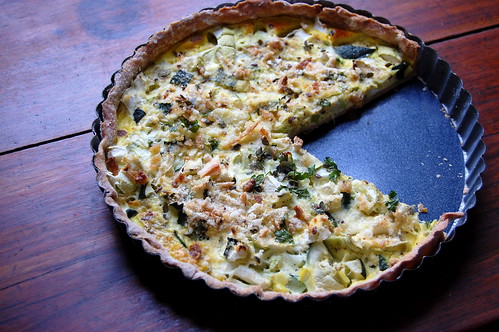
We welcomed summer with a picnic in the park marked with cheap Prosecco and homemade sourdough and stinky cheese, cute babies on blankets, a game of wiffle ball, and everyone dashing home just before the thunderclouds broke. My cooking recently has been much the same - impromptu, simple, easy. Sliced summer tomatoes. A bowl of peaches. Summer squash tossed in a crust with eggs, cream, cheese, and breadcrumbs. Nothing measured. Crusts made by the feel of the dough, the crumbliness of butter. Ratatouille made with the end of the week's vegetables.

DSC_0123

It makes for good eating but it certainly doesn't make for good blogging. There was one thing though - a white peach crisp. I have a thing for white peaches. They are delicate and floral, and they blush pink. They are almost too precious, but when baked they develop a bit of uumph, topped with a crumbly crust of brown sugar and accented with cardamom and orange blossom water. Those last two ingredients add an extra touch to this dish, but it would be perfectly delicious without them.

peaches


White Peach Crisp with Cardamom and Orange Blossom Water

Ripe peaches are sweet enough that I don't think they need extra sugar. You can peel the peaches with a knife or blanch them to remove the skin.

12 white peaches
3 tablespoons flour
1 tablespoon orange blossom water
1/8 teaspoon cardamom

1 cup brown sugar
1/2 cup flour
1/2 cup oats
1 pinch salt
8 tablespoons (1 stick) butter

1. Preheat oven to 415 F. Combine the crisp topping dry ingredients. Cut in the cold butter with a pastry blender until small crumbs form. Refrigerate crumble topping.
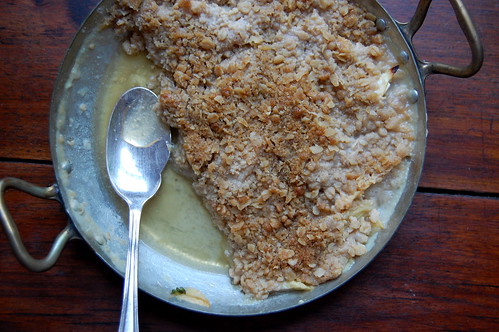
2. Peel and slice peaches into a bowl. Add the 3 tablespoons flour, cardamom, and orange blossom water. Toss together and place in a baking dish. Scatter the crumble over top. Bake 20 minutes, turn the temperature down to 375F and bake another 15-20 minutes, until peaches are soft and topping crisp.

08 June 2011

Two Fun Videos and Scenes from the Farmers Market

First of all, I discovered this cool video of making the Syrian pastry Ghazal al-Binat:


Ghazal al-Binat literally means the flirtation of girls (also a famous Egyptian film), and it's kind of like candy floss-- thin ethereal whipped threads that melt in your mouth-- stuffed with a sweet pistachio filling.

Check out Andrew Zimmerman tasting Syria. Okay, so the script is a little, umm, dumb-American sounding, but it's a nice intro into some of the weirder foods of Syria, and a flattering portrayal of the Syrian people (which is quite accurate!).

Also, hello, Foreign Policy has a food issue! People after my heart. I highly recommend this piece, "Eat, Drink, Protest."

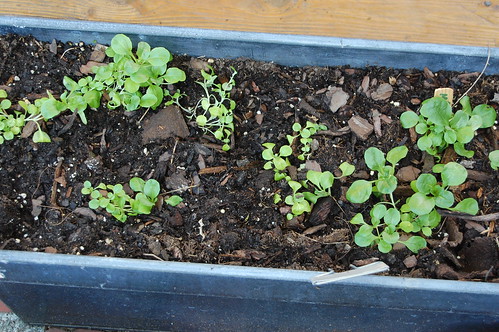
In more local news, growing my own mache lettuce:
DSC_0069

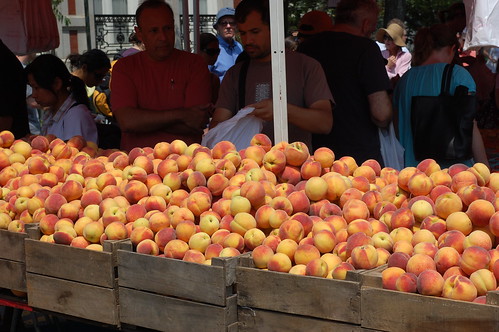
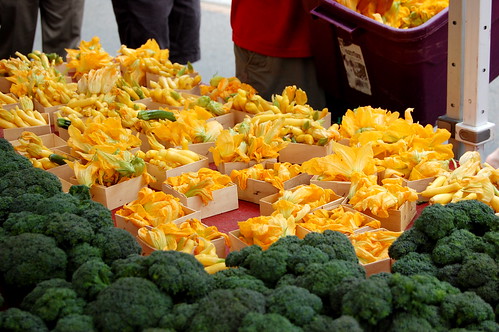
Beautiful early summer market produce:
DSC_0087
DSC_0084
DSC_0107
DSC_0116
if only my nasturtiums ever looked like this:
DSC_0079

Happy summer everyone!

04 June 2011

An Easy Moroccan Salad

DSC_0085
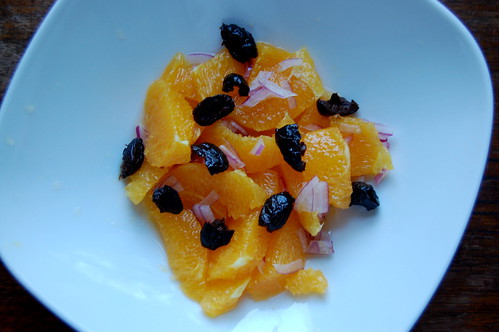
Moroccans like to make salads with oranges (think orange and artichoke salad, blood orange salad) and olive and orange salad is the most classic of them all. We may think of oranges as almost to delicate and juicy for salad, but when properly supremed or simply cut along the bias, they can be quite substantial. At its simplest this is just a salad of oranges and olives, but I like to add some slivers of red onion and perhaps a bit of diced cilantro for uumph. A nice pinch of salt is important to keep the salad on the savory side.

I used Moroccan baladi olives, which I found at a local shop. They are wrinkly and mildly flavored and taste as if they have been marinated in spices, perhaps cumin or allspice (I don't know if that's true, please chime in if you do). But any mild olive will do. The salad is light and refreshing and perfect alongside a heavier dish, like bistaeeya. It can also be used as a topping for grilled fish.

Orange and Olive Salad

3 large oranges (something with thick substantial segements)
olive oil
salt
6-8 black olives, preferably Moroccan baladi style
2 tablespoons diced cilantro
about 1/4 of a small red onion, sliced as thinly as possible and then diced

1. Working over a bowl to collect juice, supreme the oranges, placing the segments in another bowl. Add a pinch of salt to the orange juice, then whisk in the olive oil and the red onion to make a dressing. You should use twice as much oil as you have orange juice, you can eyeball it if you don't want to measure.
2. Gently mix the diced cilantro in with the orange segments. Tear the olives into pieces with your fingers, it can be rustic looking. Arrange salad on a platter. Spoon the dressing over the salad, you will not need all the dressing. Serve salad immediately, reserve remaining dressing for another day.