31 July 2010

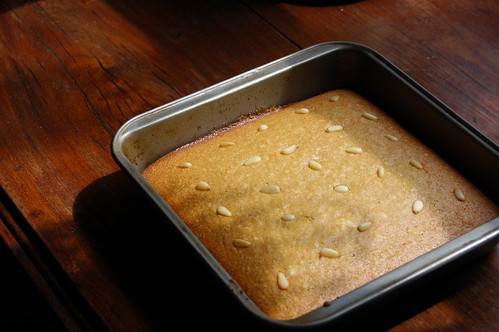
Semolina Cake (Old Fashioned Sfouf)


There are several semolina-based cakes in Middle Eastern cuisine that go by a variety of names. Basbousa, also known as namoura, is a dense semolina and yogurt cake which is soaked in syrup. Sometimes it has coconut added as a variation. On the lighter end of the spectrum is the Lebanese cake sfouf, which is a fluffier semolina cake that's barely sweet. It's mildly reminsicent of a slightly sweet Southern-style cornbread.

I was reading recently about how sfouf was originally made with carob molasses, one of the original natural sweeteners in the region. It is a molasses made from the pods of the carob tree, carob may also be familiar to you as a chocolate substitute. So, I thought I'd give the recipe a try with a jar of carob molasses we picked up on the Mediterranean island of Gozo.

As, I mixed the cake, I realized something was terribly wrong. Carob molasses is horribly bitter, and with that as the only sweetener, the cake batter actually tasted bad. Worse, the batter looked curdled. I started over, this time with half the amount of carob and good splash of honey and brown sugar.

I was still skeptical about the whole endeavor, but went ahead trepidatiously with the baking. Paul was the first to taste it, and without knowing the history, pronounced it to be quite good. And indeed, it's caramelly and not too sweet, crumbly and simple. It's not as fluffy as modern versions of sfouf, but its denseness lends itself nicely to a scoop of ice cream or some cooked fruit. I'm all for authenticity and old traditions, as long as it tastes good first.

Semolina Cake (Sfouf)

1 1/2 cups semolina
3/4 cup flour
1 teaspoon baking powder
1/8 teaspoon ground anise, optional
1/2 cup butter, softened
3/4 cup milk
1/3 cup carob molasses
1/3 cup honey
2 tablespoons brown sugar
pine nuts for decoration

1. Preheat oven to 350 F. Grease an 8x8 inch baking pan with butter or tahini.
2. Mix semolina, baking powder, anise, and flour in a large bowl. Add the butter and using a pastry blender or two forks, mix until crumbly. Stir in the milk, carob molasses, honey, and brown sugar to make a smooth batter. Pour into the prepared pan, dot the top with pine nuts if desired. Bake for 30-40 minutes, until firm and golden.

25 July 2010

Aushak (Scallion Dumplings) with Yogurt and Candied Pumpkin


There are some great Afghan restaurants and kebab shops in the DC area, including one quite near my office. I'd probably go there much more often than I do, except that their proportions are enormous, platters literally piled with meat, meat, meat. When I do go, I often end up eating the leftovers for three more meals, resulting in the dreaded "meat hangover."

But I recently discovered that they offer aushak, simple Afghan scallion dumplings, as an appetizer, just the right size for a light lunch. Instead of the traditional ground meat topping, I choose sweet caramelized pumpkin and yogurt to go with the dumplings, a standard vegetarian variation. It should be no secret to any readers here that I covet anything in yogurt sauce (whether chicken, or shish barak, or pumpkin kibbe), and I like these so much, I made them for a recent luncheon.


Oddly, every recipe I could find for aushak called for prepared wonton wrappers as dough, and I followed that short cut, though I'm sure homemade dough would be better. For the candied pumpkin I made my own, but if you want a shortcut, you could use the prepared candied pumpkin available in Middle Eastern groceries (Mymoune brand is quite good).

Because the dumplings are filled with a very basic mixture of chopped uncooked scallions, they are bright and spicy and light. The spice is tamed by the yogurt and counterbalanced by the pumpkin, which is very sweet on its own, but harmonious within the dish. Dumplings, no matter what culture they come from, are always pretty comforting.


Aushak (Afghan Scallion Dumplings) with Yogurt and Candied Pumpkin
Don't use quite as much yogurt as I did in the picture, use just enough to lightly coat the dumplings and keep them from sticking to each other. Dried mint is more common in this recipe, but I prefer fresh if it's available.

1 package wonton wrappers, or make your own dough
3 bunches scallions
2 teaspoons red pepper flakes, or Aleppo pepper for a less spicy experience
a drizzle of olive oil
1 pint (16 oz) plain yogurt, not Greek-style not fat-free
a squeeze of lemon juice
1 teaspoon salt
candied pumpkin, see below
2 sprigs of mint, leaves cut into slivers
optional for garnish: toasted pine nuts, diced seeded tomato

1. Thinly slice the green parts of the scallions only reserve white and light green parts for another use). Place in a bowl with the red pepper flakes and olive oil.
2. Get out the wonton wrappers and a bowl of water. Lightly moisten the edge of the dough with some water, then place a teaspoonful of the scallion mixture in the center and fold up the dumpling, pressing the edges firmly to seal. Place on a patter and continue to work making dumplings, until you use up all the filling or lose patience. Do not let the dumplings touch each other or they may stick, separate layers with some wax paper. Can be done 1 day ahead of time.
3. Let yogurt come to room temperature. Add the lemon juice and salt and thin the yogurt so that it is a pourable consistency. This will depend on your yogurt, but I usually add 1/2 cup up to 1 cup of yogurt. Choose a large serving platter and spread a thin swipe over yogurt over the bottom of the platter.
4. Bring a large pot of water to a boil, let it boil gently and not too vigorously. Add the dumplings, 4-5 at a time, and boil just for 1-2 minutes, or until the dough is tender. Transfer to the platter, trying not to let the dumplings crowd together or they will stick together. Drizzle a little bit of yogurt between layers of dumplings to prevent sticking.
5. When platter is full, drizzle the top with some more yogurt, and top with diced candied pumpkin, mint, and pine nuts. Serve immediately.

Second Serving Option: Leave the candied pumpkin in larger chunks and place them on the bottom of the platter. Drizzle with yogurt and then pile dumplings over top, as described in the original recipe.

Candied Pumpkin

a) purchase 1 jar of pumpkin in syrup, drain and rinse pumpkin, then dice
b) 2 lbs chopped peeled pumpkin or butternut squash, olive oil, 3/4 cup sugar

1. Preheat oven to 350 F. Cube pumpkin into 2 inch chunks, toss with oil to coat, then roll in sugar to coat. Cover dish in foil and bake in oven until tender, about 30 minutes. Use as desired in either of the recipe variations above.

20 July 2010

Freekia with Fava, Preserved Lemon, and Almonds


We have been trying to use the grill as much as possible this summer, although when it is 100 degrees at 9 pm and you're standing before a blazing fire, and half your t-shirts reek of charcoal smoke, you wonder why you're doing it. I'll admit I don't have a lot of grilling experience, so I've been trying to feel my way around things beyond burgers and kabobs. The other day I grilled cedar planked salmon, and topped it with a simple relish of chopped preserved lemon and green olives. This is a lovely combination, and reminded me of the great versatility of preserved lemons.

Good cooks are economical cooks, so the next time you use lemons set aside the rinds to make a quick version of preserved lemons. Rather than the traditional preserved lemons, which can take months to cure, these are ready in minutes and keep for several weeks in the fridge. I tossed the chopped lemons into a pilaf with freekiah, a cracked green wheat common in Syria and the Levant. Freekiah has a unique, slightly smokey green flavor, and you can try this pilaf with barley or bulgur, though the result will be quite different. Fava beans (limas work also), minced herbs, goat cheese, and toasted almonds round out the pilaf.

Now of course I'm thinking of all the things to do with quick preserved lemons- a plethora of Moroccan tagines, and tossing them in salads, and using them in stuffed vegetables. But first I have to keep working on that grilling...

To check out freekiah being prepared, check out this from cookbook author Anissa Helou. I saw freekiah being spread out to dry right on the public sidewalks of Aleppo once, near the bus station.


Freekia with Fava, Preserved Lemon, and Almonds
1 pat of butter
1 cup uncooked freekiah (cracked green wheat)
1/2 teaspoon cinnamon
1/8 teaspoon allspice
1 teaspoon salt
olive oil
1 cup shelled fava beans or baby lima beans
1/4 cup diced preserved lemon (see below)
1/4 cup diced mixed herbs, specifically mint, chives, and parsley
2-4 ounces crumbled cheese, such as goat cheese, feta, or another fresh crumbly cheese
1/4 cup almonds, toasted

1. Melt the butter in a medium-sized saucepan. Add the cinnamon, allspice, and freekiah and toast until the freekiah is slightly more opaque and the spices are fragrant. Add in 2 1/4 cups of water and bring to a boil. Cover and let simmer until the freekiah is tender (check package for exact times).
2. Transfer freekiah to a bowl, add the teaspoon of salt and a good drizzle of olive oil and let cool completely.
3. Meanwhile, cook the fava beans in boiling water until tender. Rinse under cool water, drain.
4. Combine beans, herbs and diced preserved lemon with freekiah. Sprinkle cheese over top. Toast almonds and sprinkle over before serving.

Quick Preserved Lemons

2 lemons
water
salt
cinnamon sticks and whole cloves (optional)

1. Quarter the Lemons, and remove the inner flesh, leaving the whole rind (including the white pith) intact.
2. Place a pot of water to boil and add a generous amount of salt- for a medium size pot I use about a cup of salt, you want it to be very briney. If using, add the cinnamon and cloves. Add the lemon peels to the pot and boil until tender.
3. Remove lemons, and chop if using immediately. Lemons will store, covered in some brine in the fridge, for a couple weeks.

16 July 2010

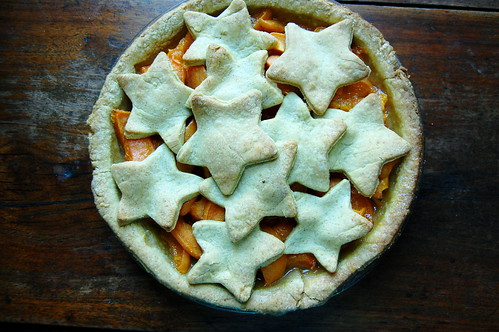
Apricot Pie with Pistachio Crust


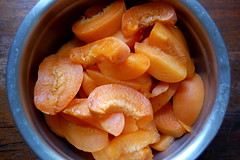
I was trying to think of a kind of pie I hadn't tried before (you know besides mango, butterscotch, pecan, chamomile, blueberry crumble, and chess). I'd never made an apricot pie before, and given that it is currently the 2.4 seconds that apricots are in season, it sounded pretty good. I love apricots, but it's terribly hard to find a good one around here, they're often too tart or mealy.


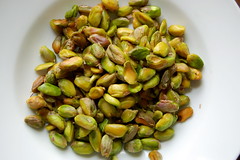
I also decided to stick with the classic pairing of apricots and pistachios by making a pistachios crust. A word of advice dear friends: if you ever see a package of blanched pistachios in the store, just buy them. I don't care where you are, heck you may even want to go ahead and order them now. Because one day, along will come an occasion when you need blanched pistachios- say to scatter over a pilaf, or to make a vibrant green tart dough (non-blanched pistachios make the dough brown), and you will be cursing yourself not only shelling the pistachios, but dunking them in boiling water and then plying off their little papery skins. Save yourself this trouble before you could ever encounter it.

But in the end the tart dough was lovely, the apricot bright and punchy, and the whole thing with a big scoop of homemade vanilla ice cream on top was messy and delicious. The fruit was a bit tarter than I would have liked, so if your fruit is on the tart side I'd recommend using the full cup of sugar.


Apricot Pie with Pistachio Crust
I didn't bother peeling the apricots, but the texture is probably better if you do. If you have proper ripe apricots the peels should just pull right off with your fingers.

5 cups apricots
3/4 - 1 cup sugar, depending on tartness of apricots
3 tablespoons cornstarch
1/8 teaspoon cardamom
1 teaspoon vanilla

12 tablespoons butter
1 1/4 cups flour
1 cup ground pistachios, made from 1 1/2 cups blanched pistachios
2 tablespoons sugar
3-4 tablespoons ice water

1. Make the dough: Place the whole blanched pistachios in a food processor and pulse until finely ground. Do not grind them to a paste. Add the flour, pieces of butter, and sugar, and pulse in the food processor until the mixture is crumbly. Add the cold water with the processor running, 1 tablespoon at a time, until the dough comes together. Gather up dough, pat into 2 disks and refrigerate until ready to use.

2. Roll out the two dough disks on a lightly floured surface. Fit one disk into the pie pan, reserve the second dough disk, wrap them in plastic and place them in the fridge to chill.

3. Preheat oven to 350 F. Meanwhile, pull apart the apricots, discard the pits, and slice the fruit. Combine in a bowl with the sugar, vanilla, and cardamom, and let macerate for about 15-20 minutes.

4. Scrape the fruit into the prepared pie dough, leaving behind any juices that accumulate. Cut out shapes or latticework out of the remaining pie dough and arrange over top. Sprinkle top with a bit of sugar if desired.

5. Bake for 50-60 minutes, until crust is lightly browned and filling is soft and bubbly. Let cool slightly before serving.

09 July 2010

The Failed Menu and Other Stories


There's been a lot of cooking going on in the Desert Candy kitchen, but sadly little of report. I've been busy gardening (and watering, watering, watering), painting our guest room, watching the World Cup (oh Argentina), and making my own birthday cake.

And then there's the case of the failed menu.

A while ago, we had the idea for black and white dinner party, where all the food would be black and white, and our guests could come dressed up. It sounded fun, right? That's what we thought, until we started testing recipes. We played with several themes along the following lines:

- amuse: forbidden rice, poached quail egg, goat cheese whipped cream
- grilled hearts of palm over white slaw, balsamic reduction
- seaweed-wrapped steamed fish, daikon broth, black bean sauce
- squid ink pasta, drizzle of cream sauce, seared scallops, caviar
- roast pork loin with black and white sesame seeds, ricotta-whipped potatoes, blackberry-balsamic reduction
- poppyseed cake (mohnkuchen) with labne-grapefruit whipped cream

As we tested and tasted, everything was just okay. We'd sit down to test our latest recipe and we'd end up staring at the dish on our plate, sigh, and think, maybe we should add lobster to the cream sauce, or maybe the broth needs more pepper. There were some highlighs: the delicious goat cheese whipped cream, the pok loin seasoned with white pepper and fennel. But everytime, it seemed the dish was fine for dinner, but it lacked punch or flavor. It wasn't anything we wanted to invite friends over to eat. Apparently if you remove all color, you remove lot of your flavor palate too.

So instead of shelling out money for more caviar and lobster, we just abandoned the idea. The next night, Paul made a great spicy curry, and both of us practically beamed at the idea of having color and flavor on our plates.

In the meantime, we've been eating good simple summer food. Have you ever tried toasting a slice of potato bread, spreading it with goat cheese, and topping it with sliced figs and a drizzle of honey? Well, you're in for a treat if you haven't. Or the simplest, tastiest salsa we've had in a while. And mainly, I've been cooking a lot from the archives here: ajo blanco, and apricot honey and shrimp with mango and avocado.

Stay tuned for lots of colorful recipes in the future.

06 June 2010

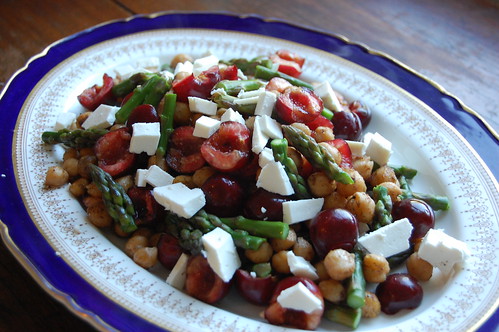
Spiced Cherry, Chickpea and Asparagus Salad


There are great things about the boom in the food blogging world, where you can find just about anything from recipes for whole camel to this fantastic guy on barbeque. But the flaws are poorly tested recipes with unclear directions. I recently was reading a recipe for a traditional Lebanese cake (sfoof), which claimed the cake could be made with only molasses as a sweetener. Carob molasses, or molasses made from carob pods, is traditional sweetener in the region, and it sounded plausible that this could be an old school version of the cake. Now, I should have known better, since I've had some of the carob drinks served across the Middle East and carob is very, very bitter. But I went ahead anyway, and let me tell you my friends, when a cake batter tastes bad, you know you have a problem on your hands.

This all brings me to the point that all of the recipes here are tested at least once, and usually twice before they make it on this site. I cook many, many things at home that don't make it onto this site for a variety of reasons. But the reason I often double test things is not just to ensure consistency, but also because I usually have a specific idea in mind, and it may take quite a bit of tinkering to get it right. Take this salad, I had an idea for a salad with cherries and ricotta salata and chickpeas. I knew it needed some more elements though, so I tried several things, frying up the chickpeas in spices, adding chopped arugula and mint, but it still was lackluster. First, the ricotta salata ha to be crumbled into fairly large chunks to stand up to the other ingredients. Second, the cherries needed some more oomph so they got a quick soak in some brandy (bourbon would work nicely too). And finally, the green needed to be more substantial, so I went with asparagus tips, which are in season with the cherries. A balsamic glaze was the final touch, and after about 16 experiments with this salad we were done. Luckily all were tasty enough that we didn't mind eating them.

Spiced Cherry, Chickpea and Asparagus Salad
It seems like a lot of elements, but really this doesn't take that much time. The worst part is pitting the cherries.

tips from 2 bunches of asparagus
2 pints of cherries, stemmed, pitted, and halved
2 tablespoons brandy or bourbon
1 1/2 cups of cooked chickpeas
1 teaspoon seven spice mix
olive oil
1 cup ricotta salata in large chunks
3 tablespoons balsamic vinegar
1 tablespoon honey
some chopped chives or mint for garnish, optional

1. Prep the cherries, place in a bowl and toss with the brandy. Set aside to soak.
2. In a skillet, place a very shallow amount of water. Bring to a boil, add the asparagus and cover and let steam for a few minutes, until green and crisp tender. Sprinkle with sat and set aside.
3. Wipe out the skillet and heat a generous amount of olive oil in it. Add the seven spice mix and a small sprinkling of salt, stirring to combine, and then add the chickpeas. Cook over medium-high heat until the chickpeas are coated in the spices and lightly browned. Set aside.
4. Place balsamic vinegar and honey in a very small saucepan, let simmer until the mixture is thick and syrupy.
5. Layer the asparagus, chickpeas, cherries, and ricotta salata in a serving dish. Drizzle the balsamic over top. You may want to put it through a quick turn in the microwave to make sure everything is a little warm. Scatter mint and chives over top if desired. Serve.

23 May 2010

Beef Ragu


I am rarely interested in large hunks of meat and I'm usually happy with a glass or two of wine, all of which makes me a pretty cheap date should you want to take me out to dinner. However, every once in a while I spy a meat recipe that strikes my fancy, say pulled pork or lamb flatbreads. This ragu recipe caught my eye because it not only looked succulent and juicy and perfect for a rainy day, but because it's very little effort.

Most ragu recipes call for a combination of ground pork and veal, but this one calls for chunks of stew beef. Technically a ragu is simply a meat sauce cooked with tomatoes and vegetables, and can be made with anything from sausage to lamb shanks to oxtails. I'd argue that in this case the long braise of the meat in the oven makes this especially good. And yes, this does take about 4 hours in the oven, so set it aside for a lazy Sunday or a day when you're home early from work.

But besides that long stint in the oven, there's very little else you have to besides chop up some carrots and brown the meat. Also, the recipe makes a lot, so you can eat it all week or, if you have recipe ADD like me, you can freeze half the batch for later. The rich flavor works perfectly when paired with the neutrality of pasta and tamed with a sprinkling of cheese.


Beef Ragu
This is just as tasty with lamb. Also, if you (tragically) happen to be low on wine, try combining 2/3 a cup Marsala with 1 1/3 cup low-sodium beef stock.

2 pounds stew beef, cut in chunks
Salt and freshly ground black pepper
1 onion
2 sprigs fresh rosemary
2 tablespoons fresh sage
8 cloves garlic
3-4 large carrots, peeled
Olive oil
2 cups red wine
1 28-ounce can diced tomatoes

1. Pat the beef chunks dry with a paper towel, liberally coat with salt and pepper and set aside. Peel and coarsely chop the onions, and chop the garlic. Chop the carrot into thin rounds.

2. Place an oven-proof Dutch oven or heavy stockpot over medium-high heat, and add olive oil to cover the bottom thinly. When oil is hot, add the lamb and brown deeply. Do this in batches if necessary. Don't worry about drying out the meat — you want it browned darkly for good flavor (~10 minutes).

3. When the meat is thoroughly browned, add the onions, rosemary, sage, garlic, and carrots. Reduce heat to medium-low and sauté until vegetables are softened, about 10 minutes. Add wine and continue to simmer until liquid has reduced by half, about 10 minutes. Add the tomatoes and their juices to the pot.

4. Bring to a simmer, then cover and place in a 275-degree oven for 3 to 4 hours. The longer it cooks the more tender it will be. Check the pan every hour and a bit of water if it starts to look dry. When ready to serve, go through with two forks and shred any remaining chunks of meat. Taste and season if necessary with additional salt and pepper. Serve over pasta with freshly grated Parmesan cheese.