Showing posts with label Iraqi. Show all posts

19 April 2008

Kubbe

If I could write a cookbook from the ground up, I'd want to travel all over the towns of Kurdistan, from the mountains of southern Turkey to the Tigris in Iraq to northern Iran, and collect their recipes. I want to know more about malthoum and kebab kishkash, about the wheat harvest in Mosul and mountain cheeses. This region is a great reminder that the borders of the modern Middle East were mainly drawn by arbitrary lines sketched on a map, and there are a lot of different ways to view the Middle East along ethnic, religious, and even culinary or linguistic lines.

My introduction to the diversity of this region came while living in Damascus, where I spent a good amount of time with a Christian family that hailed from Hasake and Qamishli, in the far northeastern corner of Syria. The Kurdish region stretches from it's western tip in Aleppo, Syria through Turkey, Iraq, and the it's eastern edge in Iran. Western media seems to paint this region simply as Kurdish, but in reality it's a fascinatingly beautiful part of the world that has long been home to a wide variety of ethnicities and religions: there's Armenians and Arabs, Yazidis and Zoroastrians, a large Christian population, including Assyrians and Chaldeans, and the region had a sizeable Jewish population before 1948. I had two Kurdish friends in Damascus who regularly conversed in Sorani and introduced me to colorful Kurdish textiles and fiercely flavored red pepper dip. We went to a concert of Kurdish music held at the French Embassy one evening (Kurdish music and gatherings are banned from public venues in Syria), and I saw old men cry at the joy of being able to share their beautiful songs.
The cuisine of Kurdistan is rich with the influences of Arab, Armenian, and Persian cooking, and it's also terrifically unexplored. The most famous dish from this region is kubbe, a meat-stuffed dumpling poached in broth. As the name implies, kubbe is related to kibbe, the Middle Eastern meat and bulgur dumplings (or patties, or casserole, depending on the incarnation). Similarly, there are many variations of kubbe- some people make the dumpling shell with a mixture of bulgur and semolina, some use all semolina, others add some matzo meal or use ground rice. The broth always has a slight tart element to it but it can vary from a simple lemony chicken broth to a saffron broth to a tomato-tamarind broth favored in Iraq or even a plum-flavored soup in Iran.

Ever since I first made kubbe, kneading about 20 pounds of dough with two other women on the floor of a Damascene apartment, I've been collecting kubbe recipes and tips. These days I make an all semolina dough and stuff it with a lamb mixture brightly spiced with parsley, dried fruits and pine nuts. A homemade chicken stock with a good dose of fresh lemon juice and a pinch of saffron (if I'm feeling plush) makes the base of the soup. You don't have to have any interest in Kurdish cuisine to love kubbe, there's something universally appealing about these dumplings in warm lemony broth.

Kubbe is very popular in Israel, where it was brought by Jewish immigrants from northern Iraq, it's similarity to matzo ball soup makes it a popular choice for Passover, which begins tonight. If you want to make it for Passover, use matzo meal in the dough, as semolina is hametz.
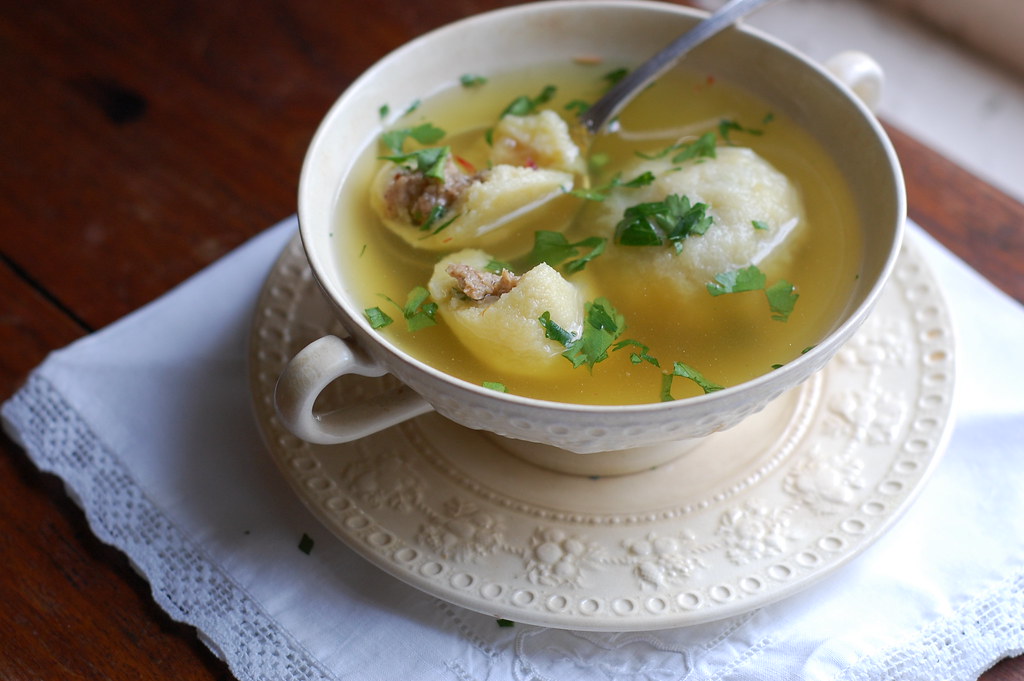
Kubbe (Meat-Stuffed Semolina Dumplings in Broth)
Though the dough can seem difficult to work with at first, in reality it's quite forgiving, if it tears merely patch it with another bit of dough. I've made this for vegetarians using vegetarian sausage and vegetable broth (heresy, I know!) and even avowed carnivores couldn't tell the difference. Makes about 4 main-coarse servings.

for the dough:
2 cups fine semolina (semolina flour, often found in the pasta aisle, works perfectly)
1/4 cup flour
pinch salt
1 cup hot water
for the filling:
1 small onion or shallot, diced
1 lb lean ground lamb (you can also use beef)
1/4 teaspoon each cinnamon, allspice
1/4 cup chopped dried cherries, currants, or cranberries
1/2 cup chopped parsley
2 heaping tablespoons pine nuts or chopped slivered almonds
for the broth:
6 cups good homemade chicken stock
1/2 cup fresh lemon juice
a pinch of saffron
salt, a tiny bit of red pepper to taste
chopped parsley for serving

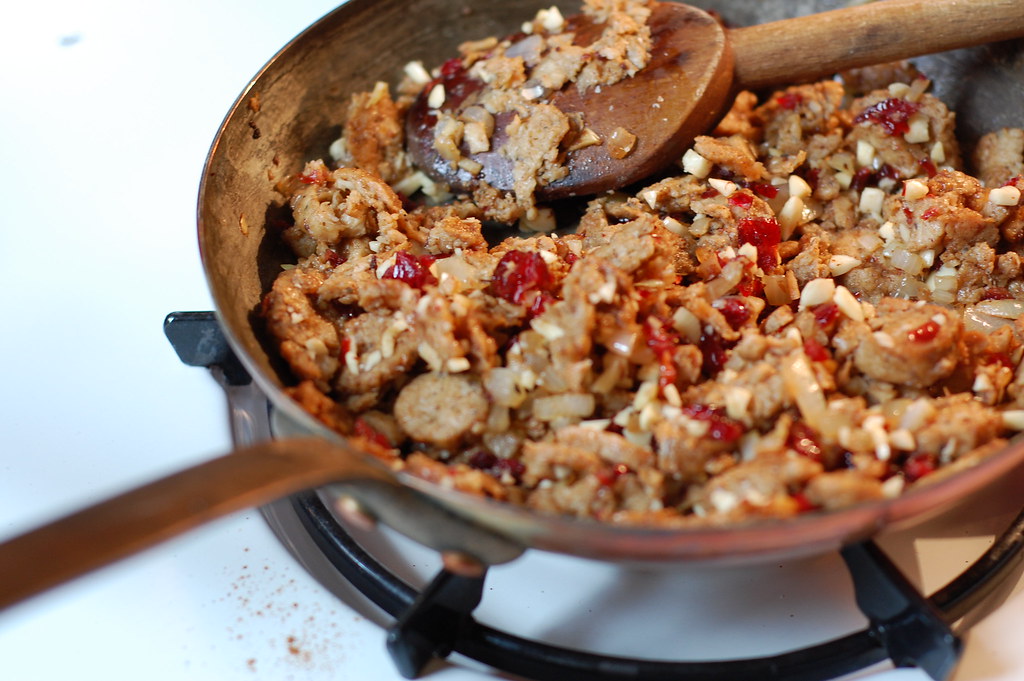
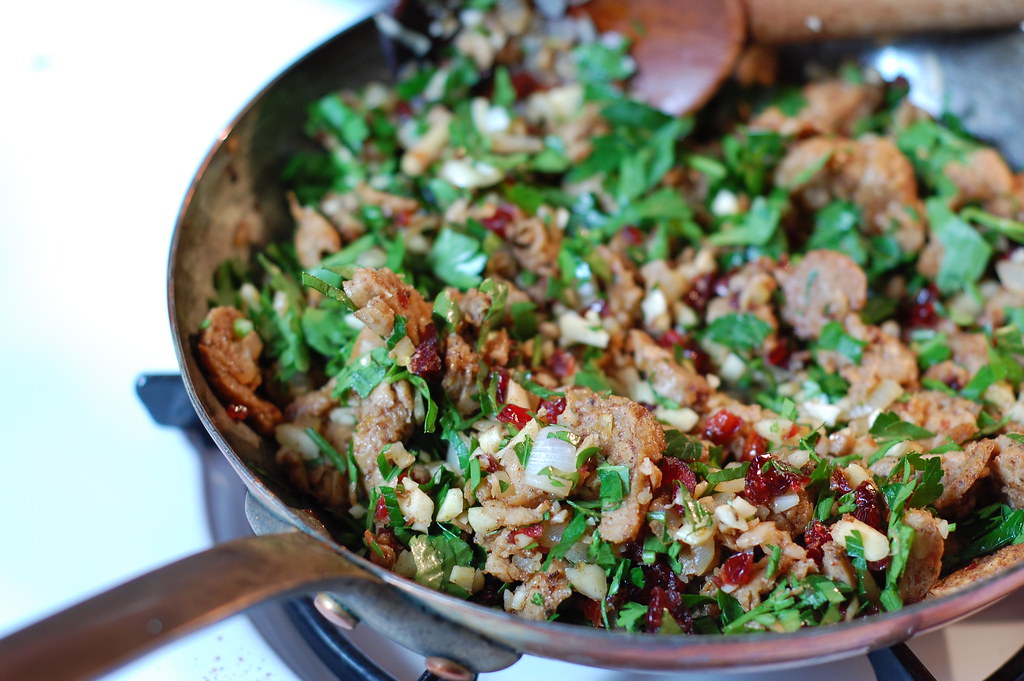
1. Make filling: Heat some olive oil in a saute pan. Add the onion and saute until softened, a few minutes. Add the ground lamb, season with salt and cook over medium heat, breaking up the pieces, until it is nicely browned, 10-15 minutes. Stir in the cherries and pine nuts in the last few minutes of cooking. Stir in the parsley to combine and then remove from the heat.
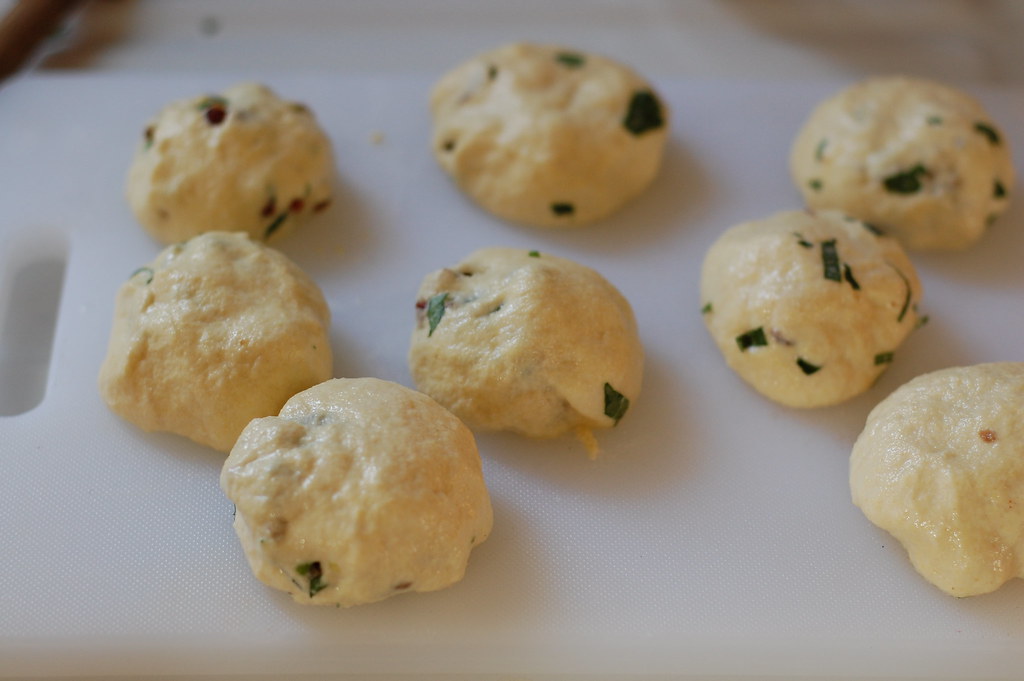
2. Make dough: mix together semolina, flour, and salt in a bowl. Gradually mix in hot water, stirring with a fork, until the consistency of playdough. Add a touch more water if necessary. Let rest 15 minutes. Knead the dough again (I do this by pressing it around with a silicone spatula) until pliable. Working with damp hands, take a walnut sized piece of dough and flatten it in your palm. Place a small spoonful of the meat mixture in the center, then close up the dumpling and roll it around between your palms. Your goal is to have a very thin shell encasing a good portion of meat, but this takes some practice. Continue forming dumplings, always keeping your hands damp to prevent sticking.
3. Bring a pot of water to boil, lower the heat so the water is just simmering. Poach the dumplings in the water (you may have to do this in batches) for 15 minutes. The dumplings may float before this, but they need the full 15 minutes for the semolina to cook. Remove with a slotted spoon.
4. While the kubbe are poaching, bring chicken broth to a simmer, add the saffron and season to taste. Stir in the lemon juice. Add as many kubbe as you are going to serve to the broth (reserve any extra dumplings separately), and let reheat for 1-2 minutes. Place a few kubbe in a bowl, ladle the broth over top. Sprinkle with parsley and serve.

14 April 2008

Oven-Barbequed Shad

As much as I complain about D.C. and oh, I do, I have to admit, the city really shines in the spring. While New York has the market cornered on fall, with the fire of autumn leaves blazing across Central Park, it's as if D.C. were built just for spring. Thank goodness for Lady Bird Johnson, whose beautification campaign scattered seeds all over the city, because I've never seen so many daffodils, hyacinth, tulips, and fosythia abloom in one place. A friend and I went for an excursion in Georgetown and we couldn't tell whether the houses had been painted to match the blossoms or vice versa. And though we complain about the tourists, the cherry blossoms scattering their confetti-like petals over the ground, their branches echoing the graceful white curves of the Capitol, are truly beautiful.

It's still a bit too early for asparagus and peas and such, but ever since March the fish monger at Eastern Market has been carrying that most local harbinger of spring, shad. [And if there's anything I really love about DC, it's that fish guy at Eastern Market, with his bright yellow coveralls and salt and pepper beard.] Shad is a fresh-water fish found in rivers from Morrocco to Persia, from Ireland to the United States, where it plays a special role in Virginia election politics. Related to herring, shad spawn in the spring, running upstream much like salmon. Around these parts, shad are celebrated in the spring for their sacks of roe, which when pan-fried constitute a quintessential delicacy.

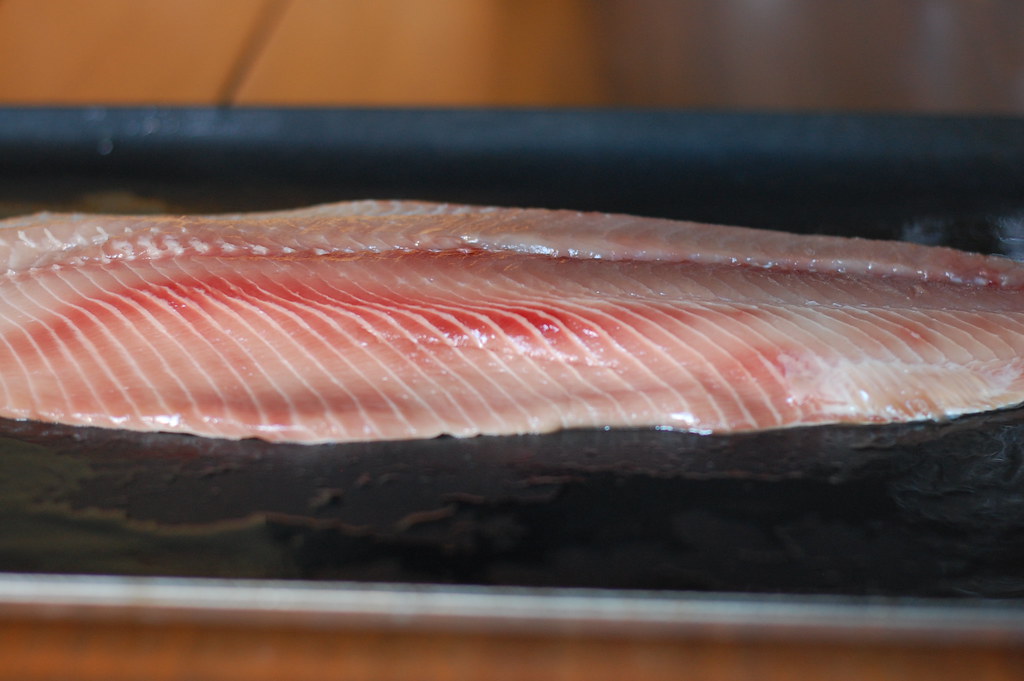
However, I was excited to see shad fillets because I've been reading about shad in Middle Eastern and Iraqi cooking, where the meaty flesh is prized for a sort of fish barbeque. When I asked the fish guy where the shad had come from, he told me they'd just been brought up from South Carolina, and then proceeded to give me a twenty-minute history of how shad fishing had changed in his lifetime. (It was quite interesting, but I'll spare you all the details). Another issue with shad is they can be quite bony, even the boned fillets are likely to have tiny pin bones that can be an annoyance when eating. Here, the fish guy gave me a great tip, cook the fillets in an acid (such as some lemon juice or some milk and butter) for a long time over a low temperature and the smaller bones will literally dissolve. Here's where I got excited because Iraqi's cook their fish with tamarind -another acid that could possibly serve the same purpose.

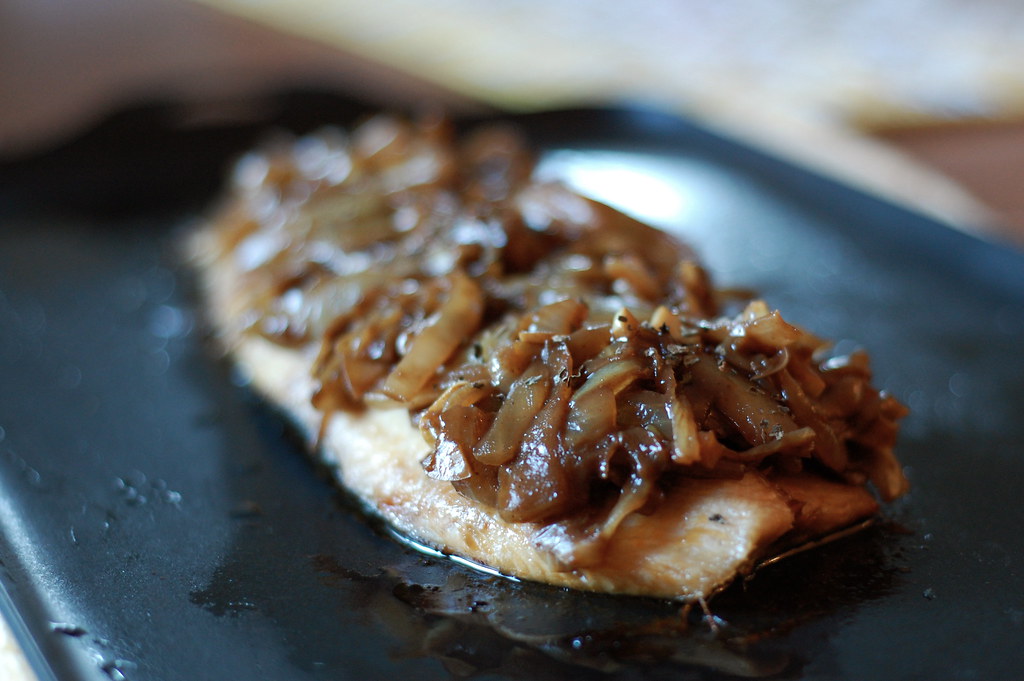
I can't speak to the scientific accuracy of the fish guy's claim, but I can tell you I made a sort of amalgam of his recipe and an Iraqi recipe and it was truly delicious. And barely a pesky bone in sight! Really, it was so good I'd urge you to seek out some shad, or try it with some salmon if you can't find shad. Even if it's still too cold for a proper barbeque, the shad, at least, is a real sign of spring.

Oven-Barbequed Shad
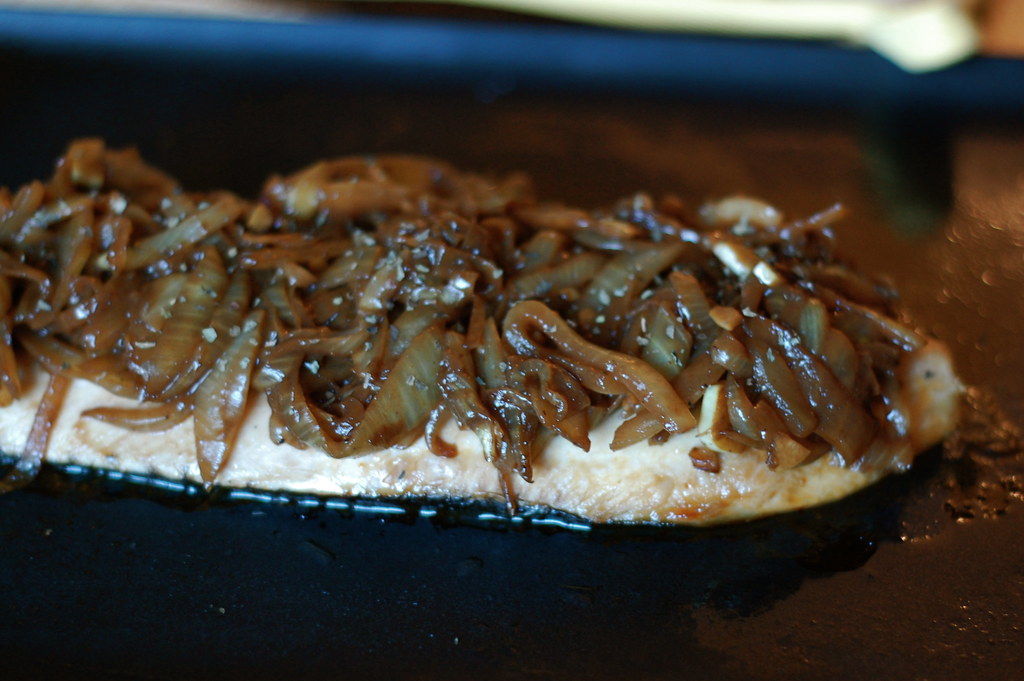
I realize that something slow-cooked in the oven doesn't really fit anyone's definition of barbeque, but that was the title of one of the recipes I adapted this from, and it seemed to perfectly capture the succulent fish and tangy-spicy-sweet onion topping.

1 large boned shad plank (1 1/4 lbs)
3 tablespoons lemon juice
3 tablespoons olive oil
2 large onions, thinly sliced
3 garlic cloves, sliced
1 teaspoon curry powder
1 teaspoon dried lime or lemon zest
1 teaspoon salt
3 tablespoons tamarind paste or balsamic vinegar
1 tablespoon tomato paste
1 cup warm water
1/4 cup chopped parsley

1. Preheat oven to 275 F. Place the shad in a greased baking dish, pour lemon juice over top and sprinkle with salt. Bake for 1 1/2 hours.
2. Meanwhile, heat the olive oil in a wide skillet. Add the onions and garlic and cook over medium heat, stirring frequently, until the onions begin to darken in color and caramelize, about 30 minutes. Stir in the water, curry, dried lime, tamarind, and tomato and cook another 5-10 minutes until the mixture is thick. Remove mixture from heat and stir in the parsley.
3. Spread the onion mixture over the fillet and return to the oven. Increase heat to 400 F and bake another 10-15 minutes, until the fish is done to your liking. Serve immediately, with a green salad and some bread.

10 March 2008

Molasses Braised Turnips with Pepper


When I was staying with my mom just before moving to D.C. I warned her: I'm in a phase where I'm cooking primarily Iraqi food now. My mother raised the expected skeptical eyebrow. "But don't worry mom," I said, "Iraqis love turnips." You see, my mother loves turnips, she likes to say she lost fifty pounds eating turnips, which she buys from a quirky bearded farmer at the market each week. They're a rather overlooked vegetable, a healthy alternative to potatoes with a slightly bitter edge. And funnily enough, Iraqis, whose cuisine tends to be meat and rice heavy, also love turnips.


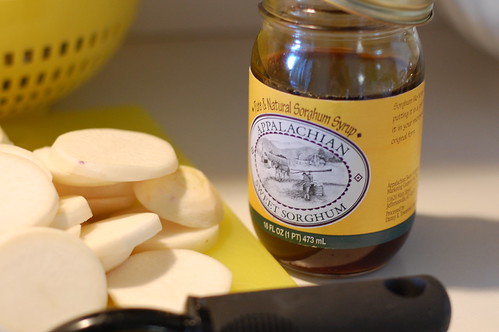
In Iraq, turnips are cooked whole in a sticky molasses mixture and served as a popular street food. When I first heard about this in Nawal Nasrallah's Delights from the Garden of Eden (the go-to reference for anyone interested in Iraqi cuisine) I'll admit I was skeptical: both turnips and molasses can have a bitter edge, and I wasn't sure they could balance each other. But having made this dish three times now, I can tell you they sure do! I like to thickly slice the turnips and slow cook them in a molasses and lemon mixture until they turn translucent and almost caramelized. In Iraq, this would be made with date molasses, but good old plain molasses works perfectly, and my aunt gave me some sorghum molasses recently that I've also used with great results. We top the turnips with a sprinkling of black pepper for spice, or perhaps a few grains of paradise (a neat alternative to pepper). Since I recieved both the cookbook, sorghum molasses, and grains of paradise as Christmas gifts, think of this as a virtual thank you note. Yes mom, I know it's only three months too late.


Molasses Braised Turnips with Black Pepper
At the edge of spring, when I'm still reaching in the root vegetable bin, this is the recipe I reach for. The name in Arabic (maye' al-shalgham) means melting, a fitting name for this slighly sweet side dish.

2 lbs turnips
1/3 cup mild molasses
3 tablespoons lemon juice
1/4 teaspoon salt
fresh black pepper or grains of paradise, for serving

1. Peel the turnips and slice thickly (about 1/2 and inch thick).
2. Place turnips in a wide pot with the molassses, lemon, and salt. Add enough water so that the turnips are covered by 1 inch. Bring the mixture to a boil, then turn the heat very low and simmer for 30-35 minutes, stirring fairly frequently so that the turnips cook evenly. The turnips should be meltingly tender and the liquid should be reduced to a glaze. Serve immediately with fresh cracked pepper.

26 February 2008

Date and Almond Stuffed Fish


Middle Eastern cuisine prizes two things: tiny foods and stuffed/layered foods. Like many cuisines, the tiniest baby fruits and vegetables are coveted, from lady apples the size of your thumb to the littlest eggplants and squash. Stuffed grape leaves should be as thin as a woman’s little pinky, and the smallest meatballs are a symbol of a woman’s dexterity, commitment, and potential marriageability. Similarly, stuffed foods are representative of the time invested to make them, and the complex flavors that come from filling one ingredient with another. Little zucchinis, hollowed out and filled with a rice or meat mixture, stuffed grape leaves and cabbage rolls, intricate kibbe meatballs with an outer meat shell and an inner meat stuffing, artichoke bottoms hollowed out and filled with meat, tiny flaky turnovers with oozy cheese inside.

The emphasis on stuffed foods is so great that a needle and thread are often employed in the Arab kitchen: oh, how I loathed this practice. Once, I sewed orange peels into intricate coils, another time it was beef rolls stuffed with herbs. Teeny tiny fish were stuffed, sewed, deep-fried, then de-threaded. I like to sew, but fabric does not squirt juices at you when you pierce it. Anyway, if one thing can be stuffed, than a doubly-stuffed dish is even more special. Such is the case with this fish dish from Iraq: whole fish are stuffed with dates which are stuffed with almonds.

The practice of stuffing dates with almonds is a very common one in the Middle East, as the almond imitates the date pit but is edible. The first time I had one of these was when one of my colleagues went to Mecca on hajj, she brought back dates for the office and specifically instructed us not to discard the pits. I thought that, being from the holy city, the date pit must have some sort of mythic significance, so I carefully nibbled around it only to find it was an almond. Since almond-stuffed dates are common in the area, and since Iraqis use dates in everything, it would be obvious to stuff them inside fish.

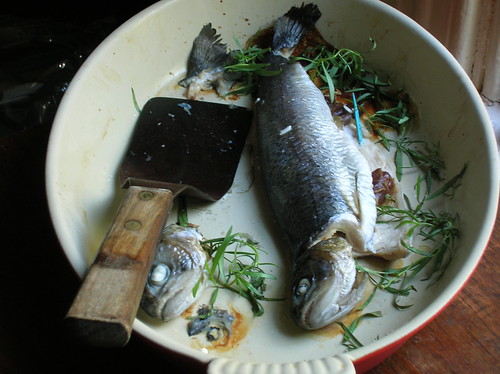
In the most complex form of this dish, the dates are stuffed with almonds and rice, certainly an exercise in patience, but I prefer to simply put the rice inside the fish along with the dates. This way the rice balances the sweetness of the dates and the warm spices with the fish. Traditionally, this might be made with shad or trout from the Shatt al-Arab, but I’ve used small whole branzino, and you could use rainbow trout as well. Roast fish is one of our all time favorite meals, and this is a great way to serve it, the stuffing adds a new twist to the fish, and makes it practically a meal-in-one. And consider yourself lucky you don’t have to get out the needle and thread to enjoy it.

Date and Almond Stuffed Fish
At the fish market the vendor asked if I wanted the heads cut off my whole fish and I looked at him in horror. But that's where all the flavor is! Even if the idea of whole fish weirds you at, for goodness sakes at least cook the fish whole, then remove the heads before serving, trust me it makes a difference. This dish can be increased to serve as many as necessary. Serves two.

1 whole fish (a scant 1 lb), such as rainbow trout or bronzino, boned and gutted but left whole
fresh lemon juice
1/2 cup cooked basmati rice
1/2 teaspoon cinnamon, 1/4 teaspoon cardamom
6 dates, pitted
6 whole almonds

1. Preheat the oven to 400 F. Grease a baking dish with some olive oil.
2. Rinse the fish and pat dry. Open the fish and squeeze some lemon juice on the inner flesh and sprinkle with some salt. In a small bowl, toss the cooked rice with the spices, then stuff inside the fish. Slip each almond inside of a date. Place the almond-stuffed dates inside the fish.
3. Close up the fish, secure with a toothpick if necessary. Place in the prepared dish and bake 20 minutes. To serve, open up the fish and spread the stuffing equally over each side of the fish. Use a wide spatula to transfer fillets and stuffing to serving plates. Serve immediately, with a green salad.

See also: Rice-Stuffed Dates Wrapped in Sole with Sweet and Sour Sauce

20 February 2008

Anbari Rice Pilaf

muhammar
Anbar, Mosul, Bosra, Samarra. What do you think of when you hear these names? Chances are, you think of violence, of roadside bombs and IEDs, of suicide bombers and gun fights. How sad it is that these cities, once famous for their history and traditions, are now thought of in the context of war and conflict. Samarra, that ancient city, once most famous for the fabulous spiral minaret that every art history student studies.

I’ve been doing research recently about the culinary traditions of different Middle Eastern cities: Aleppo’s unique use of spices, Anataklia and its eggplants, the biscuits of Saida. Mosul is famous for its kibbe mosul, a casserole of ground lamb and rice, and the cuisine of Bosra is characterized by its use of dried limes. It got me thinking about those city names, that those cities can have more than one meaning, that in the past when someone said Iraq one thought of Babylonian gardens, the cradle of civilization, an old and rich culinary tradition, and not of war.

My goal here is not political, in fact, by writing about Iraqi foods my aim is to depoliticize. When you understand what someone eats everyday, how they shop, how they prepare their foods, you begin to understand how they live and what their values are.

That region often in the headlines, el Anbar, was once known for producing some of the best rice in the world. Iraq’s most esteemed anbari rice is slender and highly aromatic. Unfortunately, Anbari rice is no longer available, but you can make a truly witching pilaf using the similar basmati rice. You’ll find this rice dish from Iraq to Oman and it is particularly popular in the Gulf, but it uses those most beloved Iraqi ingredients: dates, cardamom, and rose water. The dish also reflects the Iranian influence on Iraqi cuisine: the technique of cooking the rice to yield a crispy crust and the spice mix similar to the Iranian mix advieh.

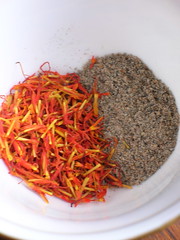
Quite frankly, this is one of my favorite recipes, it always shows up whenever I’m cooking for a crowd and sometimes I make the whole recipe just for the two of us so we can eat it all week long. It has the wonderful scent of rose water, cardamom, and saffron, with a hint of sweetness from the dates. (Or, if you’re feeling cheap, a bit of safflower in place of saffron) The rice is par-boiled, then mixed with the seasonings and cooked over very low heat so that the bottom of the rice forms a delectable crispy crust (tah dig in Persian). Making the crust is part experience and part sheer luck: turn the heat too high and the crust will burn, too low and the crust will be pale and not crisp. The real talent is to be able to turn out the dish in one piece so that the crust makes a beautiful crown on the serving platter. Despite practice, I am never this lucky, and usually half my crust sticks to the pan, in which case you can just crumble the crusty bits over the top, which tastes equally as good. I actually don’t mind if it gets a touch burnt, it adds a nice toasty crunch.

I’ve called this dish Anbari rice pilaf, not because it is specific to el Anbar, but rather in remembrance of that legendary rice. I hope you’ll make it mainly because it’s amazingly good, but also so that next time Anbar comes on the news maybe your senses will be flooded with the scents and tastes of rice pilaf, and not just images of war.

Anbari Rice Pilaf

2 cups basmati rice, rinsed in cold water
1/2 cup date molasses*
1/2 tsp ground saffron
1/2 tablespoon cardamom
2 teaspoons rose water
1 teaspoon salt
3 tablespoons ghee or butter

1. Combine, saffron, cardamom and rose water in a small cup.
2. Bring a large pot of water to boil with the salt. Add the rice and boil uncovered for precisely 8 minutes, then drain.
3. Mix the date molasses with the rice, then mix in the rose water mixture.
4. Choose a medium sized heavy bottomed pot. Melt the butter in it over medium heat. Add 2 spatula-fulls of rice and mix with the butter, patting down to cover the bottom of the dish. Pile the reminder of the rice in a loose cone shape and poke a few holes in the rice with the spoon handle. Sprinkle a few tablespoons of water over the rice, then wrap the pots lid with a towel and cover the dish. Place over very low heat and let cook for 20-25 minutes. Keep a close eye at the end as the rice can burn (use your nose to see if it begins to smell burned).
5. The easiest way to unmold the rice is to prepare a sinkful of cold water, dip the bottom of the pot in cold water for about 30 seconds, then invert the pot onto a serving platter. If the rice crust does not release fully, simply break up the crunchy pieces that stuck to the pot and scatter over top.

*Date molasses is available in Middle Eastern groceries. You can make a quick substitute by placing 1/3 cup minced Medjool dates in a small saucepan with 3 tablespoons water. Bring the mixture to a simmer and mash with a fork so that the dates melt into a paste.

Serving Suggestion: this rice is delectable alongside any saucy dish (I often serve it with Sweet and Sour Fish), but our favorite serving is the following. Mound the rice on a platter, or on individual plates. Take shredded cooked chicken meat (from a roast chicken or poached chicken breasts, whatever you’d like), scatter the chicken meat over the rice. Get some good plain yogurt, add a pinch of salt, and thin it with a bit of water so that the yogurt is thick but pourable. Pour the yogurt all over the chicken to cover. Sprinkle cinnamon over the top. Serve immediately.

Note: In parts of the Gulf this dish is called Muhammara- which just means red. The name muhammara is often used to refer to any reddish colored dish, do not confuse it with the red pepper dip from Syria or the Iraqi dish of rice with tomatoes, both of which bear the same name.

10 November 2007

Crispy Duck Legs with Apples

duck w/ apples (batta tufahiyya)
In medieval Baghdad, pomegranates were considered food for the poor. I know this because for a college Islamic art class I had to design an Abbasid palace with certain stylistic specifications. In addition to what seemed like thousands of assigned readings, there were extra optional readings which were intended to give us a feel for the lifestyle of the period: after all architecture is functional, and it would help us to envision the furniture and textiles which would fill the space and the daily lives of the people who would inhabit it. Being the complete nerd that I am, I stopped in the library reserves to get one of those extra readings, the first and I am sure only person to check out the musty cloth-bound papers crumbling with age. Flipping through the book I found a section devoted to the great cuisine of the caliphs and, fascinated, I spent the next hour under the awful florescent lighting of the library basement absorbing every detail.

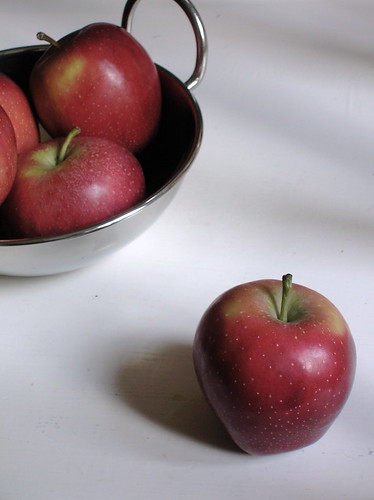
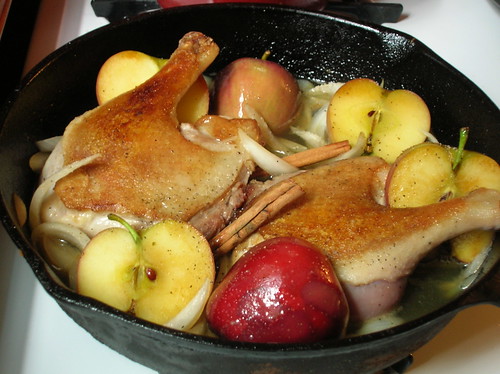
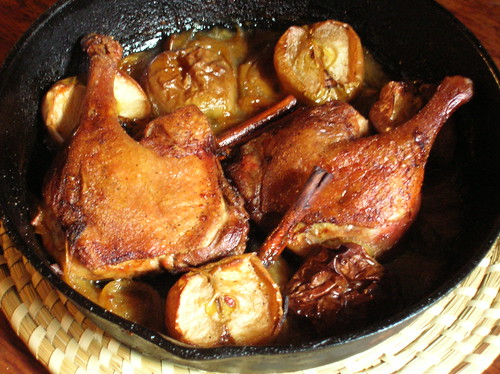
This is how I know that pomegranates were so plentiful they were distributed to the poor, while the most prized fruits were apples and quince, which were used in stews with lamb or poultry. Later, I found that Charles Perry wrote a lovely little book translating those medieval Baghdadi recipes into modern English. But what I find even more fascinating is that those apple dishes, called tufahiyya, are still made across the Middle East today, from Syrian lamb stew to Moroccan chicken tagines. This recipe of duck and apples hews closely to the classic tufahiyya, which always use apple juice in addition to the fresh fruit. I've used small apples simply halved, but for an even more aesthetic presentation you can use whole tiny baby apples which are so prized by Arabs (if you can find them). You just eat around the seeds, and it's fun to pick up the apples by their little stems. The only change I've made is to do the braise in the oven (ovens are used very sparingly in the Middle East because they use up a lot of expensive fuel). This is where the real beauty of this dish lies: the duck legs are nestled in the liquid so they become meltingly moist, but the top peaks out so you also get perfectly crispy duck skin. There's nothing like crispy duck skin.


It may seem odd now that apples were considered the food of kings, but their deliciousness here is certainly convincing. No matter where you live or what century you're in, I think this is an autumn recipe everyone should have in their repertoire. And if you ever have to design an Abbasid palace, remember to put in a good apple orchard, and a pond for ducks. And maybe a few pomegranate trees, to distribute to your less-fortunate subjects.

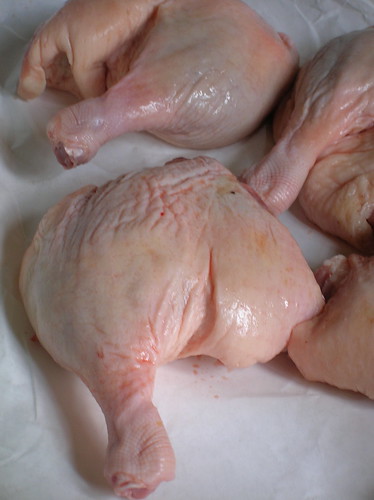
On Cooking Duck: If you are at all intimidated by the idea of cooking duck, I urge you not to be. Duck legs have all the wonderful things that chicken does not: it's dark, moist, and full of meaty flavor. Duck has a bad reputation for being fatty, but most recipes call for the fat to be trimmed away. It is unfortunate that many places only sell duck whole, since the breasts and legs are really suited to different preparations. If you have a good relationship with your butcher, he may cut up a duck (or two) and sell you just the legs. If not, I urge you to go ahead and buy a whole duck: it's like a culinary treasure trove. Set aside the breasts for another use, render the fat and store it in the fridge for roasting potatoes or frites, use the skin to make duck cracklings for salad, and use the bones and giblets for amazing duck stock.


Crispy Duck Legs with Apples
A modern interpretation of a centuries-old Middle Eastern recipe. You can double or triple the recipe as needed, the only difference will be you have to transfer to a larger roasting pan. It can also be made using chicken (reduce cooking time to 45 minutes) and also with quince (poach the quince first to tenderize). Serves 2.

2 duck legs
3 very small red apples
1 cup apple juice
1 small onion, sliced into half moons
1/2 cup water
2 cinnamon sticks or 1 tsp cinnamon
1/2 tsp coriander
salt pepper, to taste

1. Preheat the oven to 375 F. Put the apple juice in a bowl, cut the apples in half (leaving the stems intact) and place them in the bowl with the apple juice.
2. The duck legs will probably have a good amount of fat and skin on the underside of the leg- trim away this fat, leaving only the skin on the outer surface of the duck legs (though you don't need the fat in this recipe, I urge you to save the fat and render it for another use). Heat a cast iron skillet or dutch oven until hot. Add the duck legs, skin side down, and cook until nicely browned. Turn over and cook for only one minute, then transfer to paper towels to drain.
3. If there is a lot of fat in the skillet drain off all but one tablespoon of it. Add the onion slices and apples, cut-side down, and saute them over medium heat until onions are softened, a few minutes. Pour in the apple juice and water, add the coriander and cinnamon sticks. Nestle the duck legs in the pan so that just the skin surface is exposed, arranging the apples around them. Sprinkle a little salt and pepper over the surface.
4. Transfer to the oven and braise for 1 hour and 10 minutes, or until duck is tender. Check it a couple times during the process to make sure the pan isn't looking dry, you may want to add a touch more water. Serve warm.

If you are as nerdy as I am, I recommend you check out Jean Bottero's "The Oldest Cuisine in the World: Cooking in Mesopotamia" (U of Chicago Press), Lilia Zaouali's "Medieval Cuisine of the Islamic World" (USC Press), or Charles Perry's "A Baghdad Cookery Book" (Prospect Books).

07 November 2007

Kleeja (Cardamom-Wheat Cookies)

I like to a keep a good biscuit around the house. I use the word biscuit in the British sense: not one of those puffy buttermilk biscuits in America but rather some cross between a cracker and a cookie, a digestive biscuit or a tea biscuit, call it a snack cookie if you must. They're good for nibbling as a 3:00 sweet fix, a 5:00 pick-me-up, after dinner as dessert, or a midnight snack. And if you tend towards hypo-glycemia, tucking one in your bag is essential.

My favorite biscuit to have around is a cardamom-wheat version, they're called kleeja and they're from Iraq. You can find similar biscuits all over the Middle East but I like to think that they are uniquely Iraqi. Northern Iraq is believed to be the first place wheat and barley were cultivated and planted as crops, and wheat continues to be a staple grain and a symbol of prosperity and fertility. Sheaves of wheat are hung from balconies in Baghdad and their image imprinted on the dinar. I like the slight coarseness of the wheat in these biscuits, and I love the liberal use of cardamom, so particularly Iraqi: Iraqis scent their coffee, rice pilafs, soups, cookies and breads all with heaping spoonfuls of cardamom.


Kleeja are quite popular in the Gulf where they are mass-produced and packaged to be sold all over the Middle East. That's where I first tasted them, but now I've discovered they are just as easy to make at home, and I do, quite often. I've served them with coffee, tea, or wine, sent them in care-packages, and people always love them. I know the recipe by heart, which is good, because people often ask me for it. I've put them here as well so friends don't have to read my recipes scribbled on the back of paper napkins. I think it's the cardamom that gives them that special air, and their satisfying crunch. I hope you'll think they're just as good to have around as I do.

As you can see, I've varied the size and thickness of these cookies, and my favorite version is that rolled 1/4" thick and cut with a biscuit cutter. Feel free to play around, but make sure not to roll them too thinly, as the thickness contributes to their charm.

Kleeja (Cardamom-Wheat Cookies)

3 cups whole wheat flour.
1/2 cup vegetable oil or 9 tbl melted butter
3/4 cup sugar
1/4 cup milk
1 egg, beaten
1 tablespoon baking powder
1/4 teaspoon salt
2 teaspoons ground cardamom
1 egg beaten with 2 tbl water, for glazing

1. Preaheat oven to 350 F. Grease 2 baking sheets or line with parchment. Combine sugar and milk in small pan, stir over heat without boiling until sugar dissolves, set aside to let cool.
2. Combine flour with baking powder, salt, cardamom in a bowl. Mix in the oil/butter until crumbly and well combined, then add egg, sugar and milk, mix well to form a dough. Set aside to rest for 15 minutes.
3. Roll out the dough with a floured rolling pin (you do not need to flour your work surface) to 1/4" thick. Cut out rounds with a biscuit cutter, rerolling until all the dough is used. Make a cross-hatch pattern on the cookies with a knife if desired. Transfer to baking sheets and brush the cookies with egg wash. Bake 15-20 minutes, or until just golden and firm on top (the bottoms will brown, but keep an eye that they don't burn). Cool on a rack, store in a cookie tin.

I should mention that the term "kleeja/kleicha" is used widely in the Middle East to refer to an array of things- it can also refer to a brioche roll stuffed with dates or other kinds of cookies.

19 September 2007

Sara's Loumi

Fish Baked with Pomegranate and Lime

We were on our usual Friday morning stroll through the market when my friend Sara suddenly let out an excited shriek. “Look,” she cried, “loumi!” Startled, I looked around confused, what, noumi, loumi? It didn’t help that the items at which she was wildly gesticulating were small shriveled black orbs, harder than rocks and somewhat resembling tiny dried brains. Before I could ask any clarifying questions, Sara had already rushed over and was engaged in intense negotiations with the vendor of the little black things, which I had now decided looked more like little grenades. “Loumi,” she asked him, “loumi bosra?” I was beginning to get a little worried about the intense activity around these bizarre objects. You can buy a lot of odd things at a Damascus souq, and I wasn't sure if we wanted these. Finally, Sara turned to me, clutching the newly-purchased package to her chest. “They’re a special kind of dried limes,” she explained, “my dad used them to make this soup whenever we were sick.”

Sara grew up in Britain but her dad hails from Bosra in southern Iraq and he has always been the cook in their family. The soup she described is much like a local version of chicken noodle soup, except it involves lamb and rice and those whole limes simmered in a thin broth. Sara doesn’t much like to cook herself, and when she moved away I inherited those dried limes and I’ve carted them around with me through many kitchens over the years, unable to throw them away because she had cherished them so dearly.


Finding something to make with my loumi proved to be very difficult. Also known as Omani limes or black limes, they have a strong sour-bitter flavor and are often used to flavor rice dishes. However, recipes were few and far between, and most called for grinding loumi into a powder (ironically, General L. Paul Bremmer, who also trained as a French chef in addition to being the former military head in Iraq, discovered loumi while in Baghdad and encorporates them into classic sauces). Anyway, when I found a recipe in Mary Bsisu’s The Arab Table for fish baked with dried limes, I pounced.

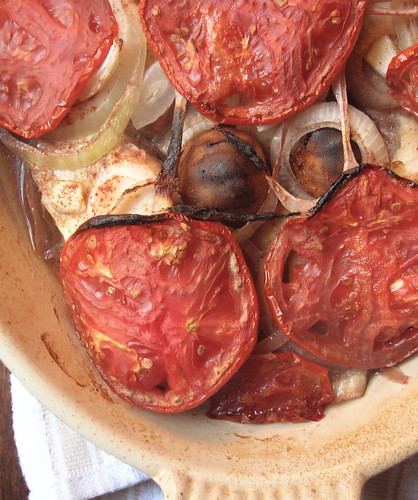
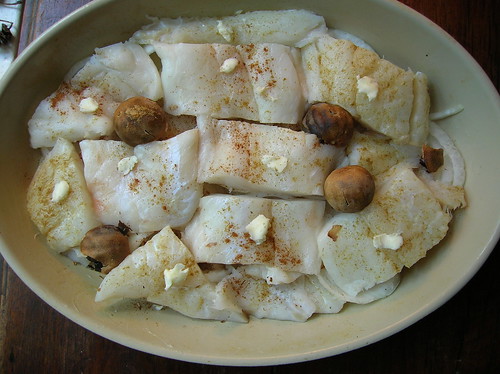
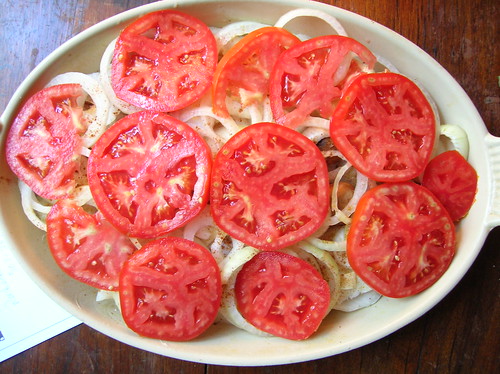
It’s called samak tibsi in Iraq, samak meaning fish and a tibs being the kind of pot it is usually baked in. I ended up deviating greatly from Bsisu’s recipe (which called for 4 lbs of fish for only four servings, and had you scatter raw diced celery over top before serving, ???). Basically, you layer onions, garlic, and fish in a baking dish, nesting the dried limes amongst them, and then you top it with a layer of sliced tomatoes and pour pomegranate juice over top. This is one of those dishes that, as you are putting it together, you know it’s going to be good. As the dish bakes, the vegetables soften and caramelize and the liquid reduces into a wonderfully thick sweet-tart sauce.


I have a tendency to declare something is my “new favorite dish” about once a week, but this really is my new favorite. I’ve made it three times in the past two months, including once for company, and I already know it’s going to be a staple. Let me outline it’s benefits: first it is supremely easy, all you do is slice some things, layer them in a dish, and bake them. It's got your vegetables and protein all in one dish, so you don't need to fix much else, a green salad and some bread perhaps. It is perfect for entertaining, where your guests will love the intricate flavors and tender fish, or for you to eat solo over several days. I’ve also discovered that this is just as good when using whole fresh limes, and since pomegranate juice is readily available in groceries nowadays, you don’t even need any special ingredients.

By now, I'm beginning to sound like my friend Sara, ecstatic over her limes. In the end, it turns out her excitement was worth it. I'll stop my enthusiastic raving, but only if you promise to go out and make this dish as soon as possible.

Note: you should use more tomatoes than in this photo.

Fish Casserole with Pomegranate and Lime (Samak Tibsi)
Hands down one of my favorite dishes, easy and sure to impress. Despite the long oven time, the fish remains moist thanks to the syrup and the insulation of the vegetables. When serving, you shouldn't actually eat the whole limes. Serves four.

1 tbl all spice, 1 tsp cumin, 1 tsp cinnamon, 1/4 tsp red pepper flakes, pinch salt
2 tbl butter
2 lb thick white fish fillet, such as orange roughy or red snapper
3 very large white onions (I used vidalia)
4 dried limes or 4 key limes or 2 regular limes
4 cloves of garlic, minced
1 lb tomatoes, sliced
1 cup pomegranate juice (or 3 tbl pomegranate molasses dissolved in 3/4 cup water)

1. Preheat the oven to 400 F. Combine the spices in a small bowl. Rub half the spices over the fish fillets.
2. Grease a casserole dish with 1 tbl of the butter. Thinly slice the onions and seperate into rings. Toss the onions with the remaining spices to coat. Spread half the onions in the bottom of your dish. Cut the fish into medium-sized pieces and arrange over the onions. Cut several slits in the dried limes (if you have larger fresh limes, halve them) and nestle the limes amongst the fish. Scatter the minced garlic over top. Dot the remaining tablespoon of butter over top. Top with the remaining onions, then cover the whole dish with the tomato slices. Overlap the tomato slices slightly as the will shrink when baking. Pour the pomegranate juice over top.
3. Bake the dish for 45-50 minutes, until the onions are softened and the sauce is slightly thickened. Serve warm.

Dried Limes can be found at Middle Eastern stores and ordered from Kalustyans.
Other recipes with dried limes: khorest ghaimeh