Showing posts with label Argentine. Show all posts

28 March 2010

Matambre

I'll admit that I made this recipe out of culinary curiosity rather than any desire to eat flank steak. Matambre, a rolled stuffed flank steak is a classic of Argentine cuisine. A friend mentioned that she had made it back in the seventies, when cooking unusual international dishes was all the rage. I realized that I'd never made it myself, and though I'll admit to not adoring matambre, I thought I'd give it a go.

The difficulty with matambre is that flank steak is a tough cut of meat best suited to quick cooking. However, matambre is a lengthy stew, and it's sometimes difficult to identify when it gets tender. I've heard that Argentine butchers cut the steak differently than American butchers, which makes it more suitable to slow cooking. However, when the steak is pounded, marinated, and stewed long enough it can be soft tender and flavorful.


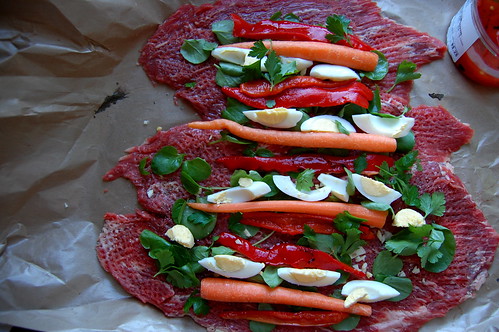
The traditional stuffing for matambre is carrots, spinach, roast red pepper, and hard-boiled eggs. Argentines put hard-boiled eggs into lots of meat dishes, but frankly, I think it's weird and adds nothing here, for the white color feel free to substitute parsnips or turnips instead. Matambre is traditionally served at room temperature or cold with chimichurri sauce. It's a good dish for a buffet since it can be made ahead and looks beautiful on a platter.

Matambre (Stuffed Rolled Flank Steak)
I highly recommend having your butcher butterfly the steak for you- it is difficult to do well, and you don't want to have holes in your steak or the roll may fall apart. The spinach helps the stuffing adhere together.

1 2-pound flank steak, butterflied length-wise
for the marinade: red wine, garlic slivers, a dash of soy sauce and cayenne pepper
a handful of spinach leaves (arugula or watercress also works)
3-4 very skinny carrots
1 roasted red pepper, cut into strips
2 hard-boiled eggs, quartered, or sliver of parsnip or turnip
2 cups beef broth
3 cloves garlic
salt and pepper to taste

1. Pound out the butterflied steak until even and tenderized. Place in a plastic bag or dish with red wine, garlic, soy sauce, and pepper to cover and marinate overnight.
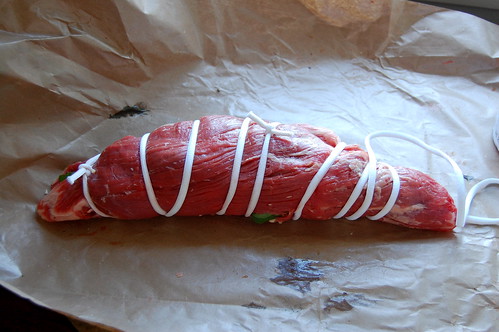
2. Preheat oven to 300 F. Drain steak, discarding marinade, and place on a work surface. Scatter spinach leaves over steak. Align the carrots, red pepper, and eggs/parsnips lengthwise along the steak. Carefully roll up the steak and tie it firmly. Trim any ragged ends from the roll.
3. Heat a nice glug of oil in a dutch oven large enough to hold the roulade. Add the steak and sear on all sides until browned. Add the beef stock, the garlic cloves, and enough water to come 2/3 of the way up the side of the roulade.
4. Place in the oven and roast, covered, for 2 hours, turning the steak occasionally. Test the steak for done-ness starting at the 1.5 hour mark. You may want to slice-off a bit of steak and taste it.
5. Remove the steak from the liquid (don't discard it- strain it and keep as broth). Let cool, then slice the roulade as thinly as possible. Serve slightly warm or at room temperature with chimichurri sauce.

29 July 2008

Empanadas


Last time I made empanadas, nearly fifty of them,


Rolling, cutting, filling, folding. From my mothers old Argentine cookbook, half in English, half in Spanish, and torn across the cover.

The traditional way, although I forgot the hardboiled egg. I always do. But please don't skip the olives and raisins. It sounds odd, but it gives that sweet salty balance.


I froze them ahead of time, and then baked them. So that I could look like one of the hosts I always want to be, the one who serves things with ease.

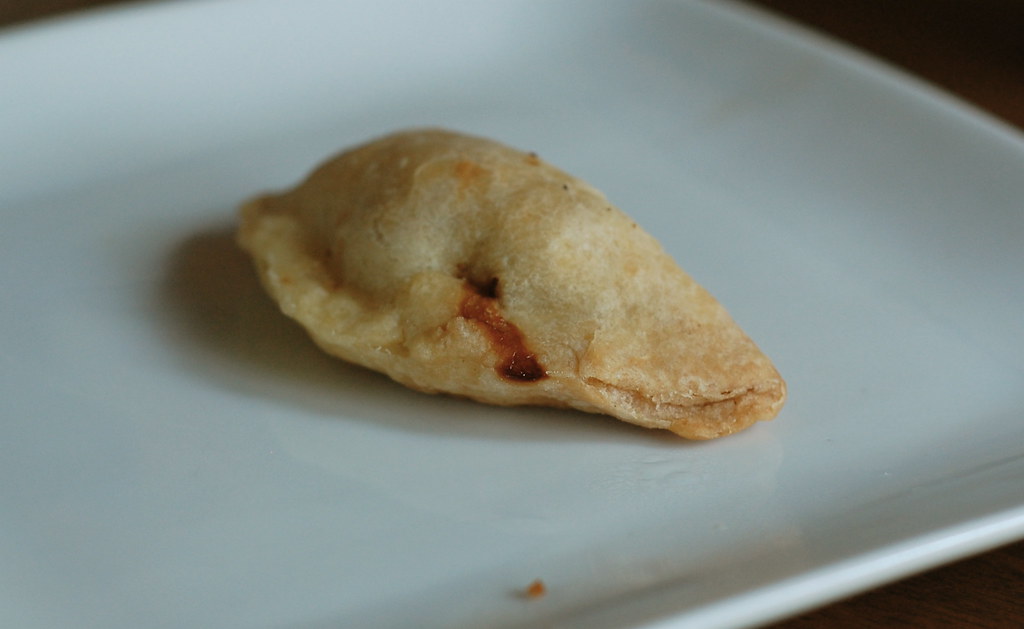
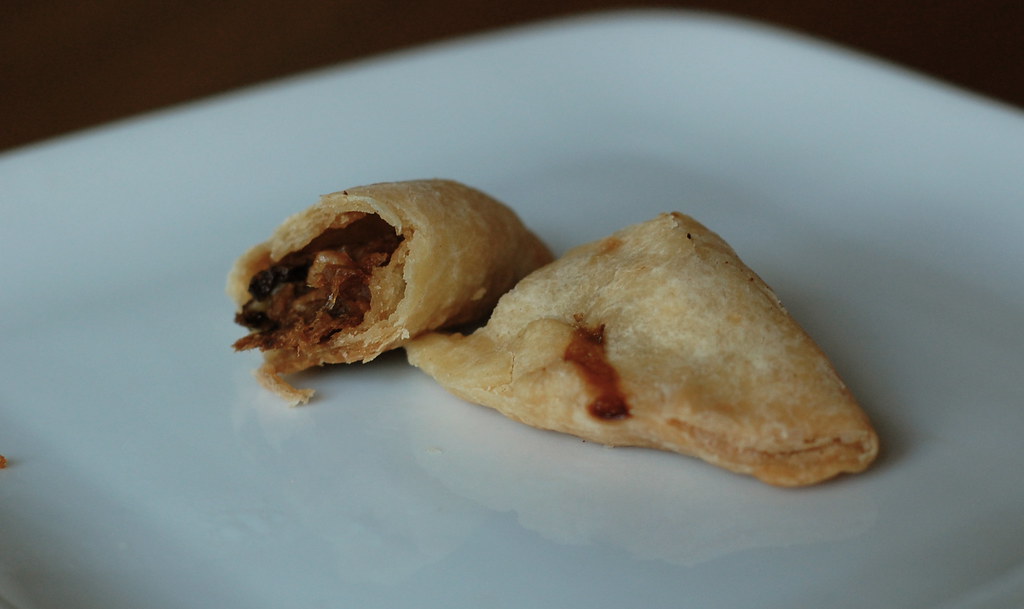
They disappeared so fast, into the stomachs of hungry guests, that I didn't even get a picture. So you'll never know how beautiful they looked on their platter, all of them, with their fork-pleated edges.

Except for this one. That I had to hide and save, just for you. Or really, for me. Because I'm afraid I ate it too.


Empanadas
Though it would be completely sacrilegious, for vegetarians you can make these with an imitation meat (like crumbled soy protein sausage) or chopped mushrooms. And if you are pressed for time, I won't hold it against you if you use purchased pie crusts, pie crust mix, or puff pastry in place of making your own pastry. Adapted from Asi Cocinan Los Argentinos.

1 recipe shortcut pastry of choice
3/4 lb ground beef
1/4 cup lard or butter
1 bunch scallions, chopped
1 clove garlic, chopped
1 small sweet green pepper, finely diced
2 tablespoons tomato paste
1/2 teaspoon each oregano, cumin, paprika, and parsley
2 heaping tablespoons seedless raisins, chopped
2 tablespoons chopped green olives
1 large hardboiled egg, chopped

1. Heat fat in a large skillet. Add the scallions, garlic, and pepper and saute until softened. Add the tomato paste and the spices and stir to combine, at this point I usually add a few spoonfuls of water to get everything to combine. Add the beef, stirring to break it up, and cook until no longer pink. Remove from the heat, add the raisins, olives, and chopped egg. Taste for seasoning (remember the olives are brined, so salt is usually not needed).
2. Roll out your pastry and cut circles with a biscuit cutter or inverted glass. Have a small bowl of water at your side. Place a small spoonful of filling in the middle of each circle, moisten the inner edges of the pastry and fold to seal. Crimp by twisting the edges or with the tines of a fork. Avoid over-stuffing the empanadas. Refrigerate or freeze empanadeas until ready to bake.
3. Preheat oven to 375F. Spread empanadas on a baking sheet and bake until golden brown and some of their filling is oozing out. Frankly, I've never timed this exactly but I'd guess 25-35 minutes, depending on the size of your empanadas.

03 May 2008

Dulce Danger

The first time I made dulce de leche I almost killed my mother. Really. I was busy cooking dinner and had recently finished a batch of the sweet milky caramel sauce, which was cooling on the counter. When my mum asked how she could help, I nodded towards the can and asked her to open it. Apparently, the can had not been cooling long enough, so when my mother punctured it with a can opener the boiling hot sauce went flying everywhere. Luckily, it just grazed my mother’s cheek and splattered all over the kitchen wall, leaving a bit of a mess but sparing any permanent eye damage.

Yes, for years I made dulce de leche by boiling an unopened can of sweetened condensed milk submersed in water. Add to my own experience, the countless stories of people whose boiling cans subsequently exploded, and you may be wondering why you should undertake this possibly life-threatening endeavor. But not to worry, I’ve actually found a faster and safer way of making dulce de leche using the oven, although I still think there’s nothing wrong with the can method. Most importantly, there’s the reward of the sauce itself, which I dare you not to eat by the spoonful.


As an Argentine, I feel obliged to point out that the authentic way of making dulce de leche is by slow-cooking milk and sugar, and though I’ve been meaning to try this method, I’m perfectly happy with the shortcut version. Though dulce de leche has made it into the vernacular in the U.S., it’s still not widely available (especially any decent brand), so chances are you’ll need to make your own. And if you are wondering what to do with your sauce, besides drizzle it on ice cream, spread it on toast, stir into coffee, or make bread pudding or cheesecake with it, well you make alfajores.

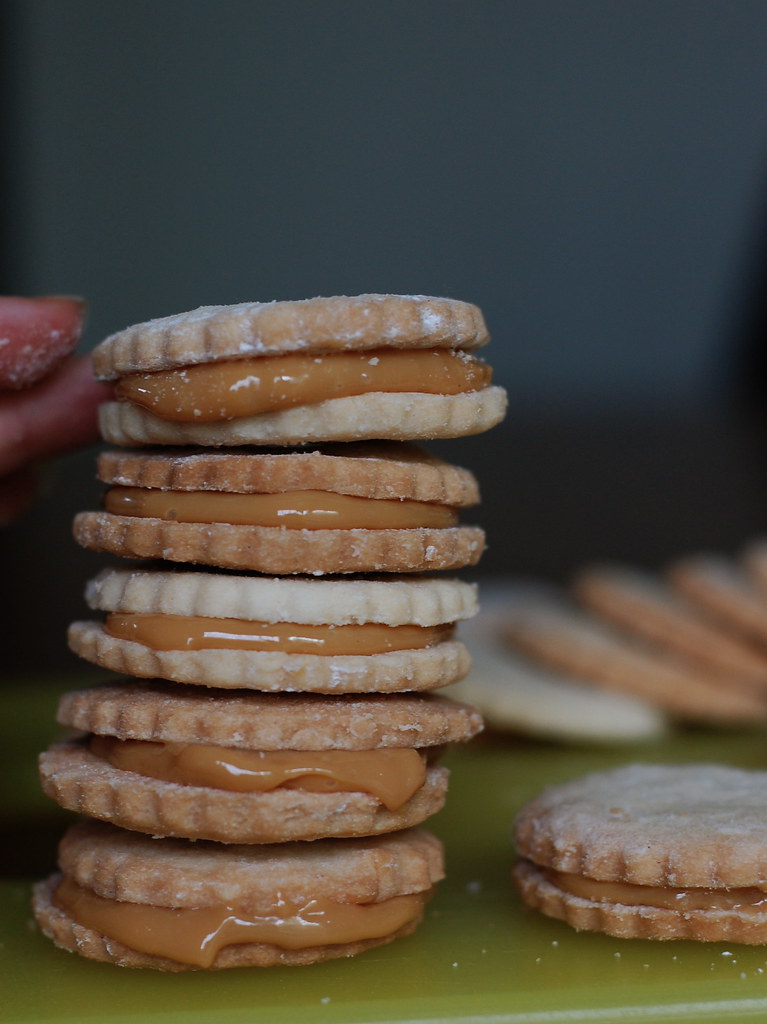
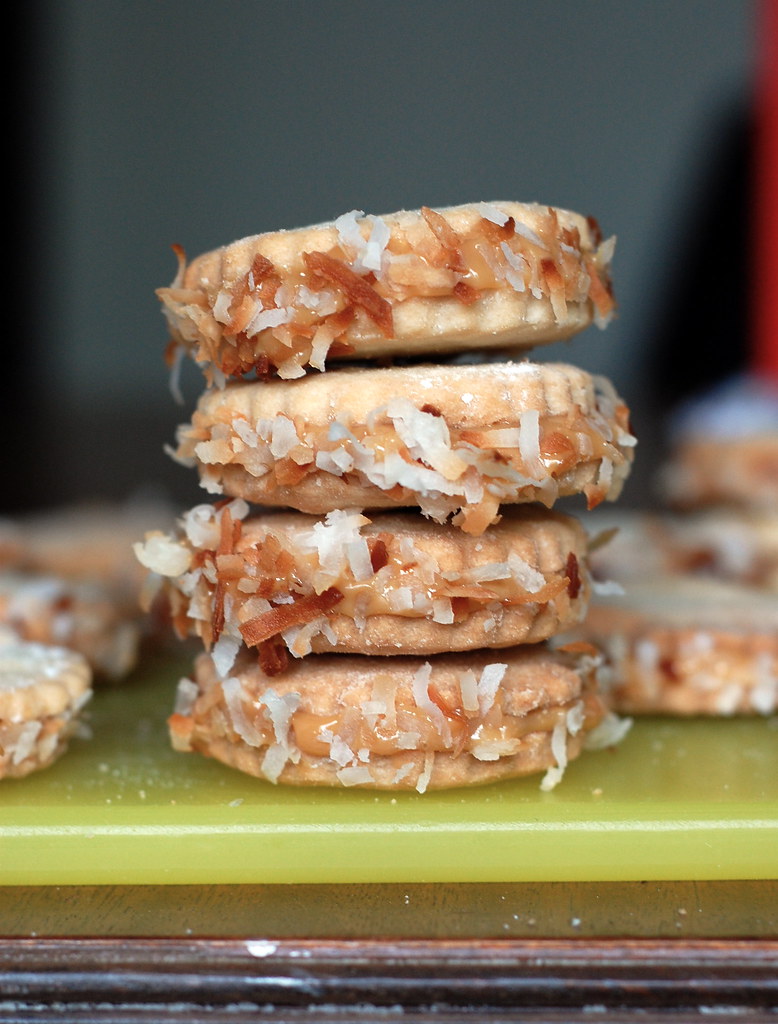
Alfajores are the quintessential Argentine sweet, the thing every homesick Argentine craves and every tourist carries home in yellow Havanna boxes. The basic version is a tender shortbread cookie sandwiched with dulce de leche, which can then be dressed up most often with a roll in coconut, though it can also be dipped in dark or white chocolate. In my mind, an alfajore is the queen of the sandwich cookie, the way the filling melts into the crisp crust, it’s parallel only the likes of the regal French macaron. I think the cookies are best after they’ve rested overnight, it gives the cookie and filling a chance to meld together, but I won’t blame you if you bite into one right away.


Alfajores (Caramel Sandwich Cookies)
Do not be alarmed by the amount of cornstarch in the shortbread, it’s what gives the cookies their tender texture. If you want to make the cookies on their own, as I often do, adding a bit of lemon zest to the mixture is a nice touch. Instead of rollling the edges in coconut, you can also dip the cookies in melted chocolate (dark or white), or simply leave them plain.

1 cup (1/2 lb.) butter, at room temperature
2/3 cup sugar
1 large egg + 1 egg yolk
2 tablespoons dark rum
1 teaspoon vanilla
2 cups all-purpose flour (plus more for rolling)
1 cup cornstarch
1 teaspoon baking powder

about 1 3/4 cups dulce de leche or cajeta (recipe follows)
about 1 cup sweetened flaked dried coconut, toasted

1. In a large bowl, with a mixer on medium speed, beat the butter and sugar until smooth. Add egg + yolk, rum, and vanilla and beat until well blended.
2. In a medium bowl, mix 2 cups flour, cornstarch, and baking powder. Stir into butter mixture, then beat until well blended. Divide dough in half, press each half into a disk, wrap in plastic wrap, and chill until firm, about 30 minutes.
3. Preheat oven to 350º F. Unwrap dough. On a lightly floured surface, with a floured rolling pin, roll one disk at a time to about 1/8 inch thick. With a floured, 2- to 3-inch round cutter, cut out cookies. Place about 1 inch apart on greased or lined baking sheets. Gather excess dough into a ball, reroll, and cut out remaining cookies. (I usually toast the coconut while I'm rolling out the cookies, just keep an eye so it doesn't burn.)
4. Bake until cookie edges just begin to brown, about 10 minutes. If baking two sheets at once in one oven, switch their positions halfway through baking. Let the cookies cool on sheets for 5 minutes, then use a spatula to transfer them to racks to cool completely.
5. Turn half the cooled cookies bottom side up and spread each with a heaping tablespoon dulce de leche (be generous). Top with remaining cookies. Place toasted coconut in a shallow bowl. Gently squeeze each sandwich until filling begins to ooze out sides, then roll edges in coconut. Cookies are best on the second day, they keep well for 2 weeks in an air-tight container at room temperature.

Dulce de Leche (adapted from David Lebovitz):

Preheat the oven to 425° F. Pour one can of sweetened condensed milk (not evaporated milk) into a glass pie plate or shallow baking dish. Stir in a few flecks of sea salt. Set the pie plate within a larger pan, such as a roasting pan, and add hot water until it reaches halfway up the side of the pie plate. Cover the pie plate snugly with aluminum foil and bake for 1 to 1¼ hours. (Check a few times during baking and add more water to the roasting pan as necessary, make sure the water is as high as the dulce de leche, otherwise the surface may burn). Once the Dulce de Leche is nicely browned and caramelized, remove from the oven and let cool. Once cool, whisk until smooth.