Showing posts with label Seafood. Show all posts

05 April 2012

Sous Vide Salmon with Dukkah

spiced sous-vide salmon

In keeping with last week's theme of "things I don't usually make," molecular gastronomy, or anything that involves clouds of vapors swirling throughout my kitchen, also falls in this category. So when the NYTimes ran an article on Nathan Myhrvold's six volume tome on Modernist Cuisine, I was skeptical. Plus, I'm an Apple girl, not Windows.

Anyway, the Times feature was surprisingly approachable, the salmon looked delicious and called for nothing more than a thermometer by way of gadgets. Basically what you do is place the salmon fillets in ziplock bags and place them in a bath of very hot tap water. The weight of the water creates a vacuum seal in the bags, and the salmon cannot over cook since it will never go above the temperature of the water. To finish it off, you very quickly sear the salmon in some spice butter for flavor (you want to get a bit of crisp on the outside but be sure not to cook the inside any further).

The salmon is amazing - nothing like that over cooked baked salmon that smells up your house, and it has become my go-to technique for salmon at home. The spice butter can really be anything you'd like - I bet a curry mixture or a Moroccan tagine spice mix or za'atar would be great. But for this one I chose dukkah, which is an Egyptian spice blend based on hazlenuts, coriander, and pepper. Dukkah can be used for all sorts of things, from a dipping sauce to a crust for beef, but it is definitely for the coriander lover. But play around with the spice blend to your taste, making salmon with hot tap water was never easier.

sous-vide salmon

Sous Vide Salmon with Dukkah
The quantity of salmon here doesn't really matter- use as many or as few sliced fillet pieces as you like. Adapted from the New York Times.

salmon fillet, sliced about 2 inches thick, as many as you want to serve
olive oil, salt, pepper

for dukkah:

2 ounces, 1/2 cup hazelnuts
4 tablespoons sesame seeds
2 tablespoons coriander seeds
2 tablespoons cumin seeds
1 teaspoon fennel seeds
1 teaspoon black pepper berries
1 teaspoon salt

for finishing:
8 tablespoons butter

1. For dukkah: toast hazelnuts in a dry skillet. Add to a food processor with the remaining ingredients and process until coarsely ground. This can also be done in a mortar and pestle but I find the peppercorns don't break up as well that way.

2. Season the fish with salt and pepper. Place a large pot in your sink, and add warm water until the pot is full and the water reaches 115 degrees. Place two fillets side by side in a gallon-size heavy-duty resealable plastic bag. Drizzle fillets with oil. Submerge the bags halfway into the warm water (this creates a vacuum). Seal as airtight as possible, pushing out any excess air. Repeat with the remaining fillets.

3. Once all the salmon fillets are submerged in the pot, add more hot water until the water temperature returns to 115 degrees (the cold fish will reduce the water temperature). Let the salmon rest in the water bath about 20 to 25 minutes. Check the water temperature occasionally and add more hot water as needed to maintain the temperature of 115 degrees. (If you want to check, the salmon's internal temperature should reach 113 degrees, but I didn't find it necessary to check).

4. Remove fish from plastic bags and peel off skin.

5. Melt the 8 tablespoons butter in a skillet and add in the dukkah mixture. Make sure your pan is nice and hot before adding the salmon (the butter will be bubbling). Saute in the salmon fillets on both side, basting with spice butter the whole time, about 30 seconds each side. Serve immediately.

24 September 2010

Samkeh Harra (Spicy Fish from Tripoli)

DSC_0251

With an entire section of our library devoted to cookbooks, some of which often go unused for months (umm, years) at a time, I will occasionally force myself to cook something out of one of my old cookbooks from time to time. It's a good deterrent from buying that big new glossy book you want that you'll probably cook two recipes out of and then relinquish to the shelf.

Flipping though Paula Wolfert's "Cooking of the Eastern Mediterranean," I spotted a recipe called "pepper fish" that I thought looked good. Later, when I checked the recipe again, I realized, with the sort of slow realization of seeing something through frosted glass, that this was in fact a classic Lebanese dish from Tripoli known as samkeh harra, or spicy fish.

While Ms. Wolfert's work done on Moroccan cuisine is unparalleled in its accuracy and detail, her work in other countries often strikes me as odd. Her Levantine recipes tend to wring a false note with me, as if someone came to America for a few weeks and discovered a recipe they called "beef patty with sesame bread and sweet tomato reduction." Aka, a hamburger.

But I digress. I decided to go ahead and make the classic samkeh harra, which is a red snapper stuffed with chopped herbs, walnuts, and chile peppers, and topped with a garlicky tahini sauce. This is a celebration dish in the best sense, not that it is particularly complicated or difficult, but that it just feels festive to eat and serve. It is traditionally served with long grain rice (a sort of red wild rice is traditional) and with all the herbs and nuts, practically makes a meal of itself. When you serve it make sure to top everyone's fish portion with some more of of the tahini sauce and herb-chile mixture.

DSC_0253

Samkeh Harra (Spicy Fish from Tripoli)
This festive dish is found along the Northern coast of Lebanon and the coast of Syria. Snapper is traditional, but a similar fish can work, and if you dislike the idea of a whole fish, it can be made with two fillets as well (adjust the baking time accordingly). Serve with wild rice.

1 red snapper (about 3-4 pounds), scaled and gutted
1 bunch cilantro, chopped
1 c walnuts, chopped
2 chilies (jalapenos are fine), finely chopped, seeds set aside
salt and pepper

tahini sauce:

1 c tahini
2 large garlic cloves, mashed in a mortar and pestle
1-1/2 c water
juice of 3 lemons
1 tsp cumin

1. Preheat oven to 375 F. Combine the chopped cilantro, walnuts, chilies, and salt and pepper. (If you don't want to do the chopping, you can also toss the ingredients in the food processor and give it a few pulses, everything should be just coarsely chopped). Add in the reserved chile seeds, as few or as many as you want depending on your tolerance, you can omit them if desired.
2. Make three slashes on each side of the fish with a knife and rub the fish inside and out with olive oil and salt. Stuff 2/3 of the herb mixture into the cavity of the fish. Place on a baking sheet and roast for 25 minutes, or until the fish is slightly under-done.
3. Meanwhile combine the tahini sauce ingredients in a saucepan and stir until very smooth. Place over medium heat and heat the sauce, stirring, just until warmed.
4. After the fish has cooked for 25 minutes, pour half of the tahini sauce over the fish, and return to the oven for 10 more minutes, or until the fish flakes easily.
5. To serve, fillet the fish. Place some fish on a plate, top with some reserved tahini sauce, and top with some of the stuffing from inside the fish. Place extra bowls of tahini sauce and stuffing mixture on table for people to use as they like.

28 April 2010

Shrimp with Mushrooms and Chiles


I may be having a bit of trouble adjusting back from our vacation- you mean I have to work and commute and run and blog again? I can't while away my time in an outdoor cafe? Blasphemy! It doesn't help that Paul and I moved in together, and all our possessions have been in boxes for weeks as we sort out what to do with 2 couches, 2 dining tables, and 2 of every blender, mandoline, and zester ever made. One of us may be a pack rat, I'm not saying who.

But don't worry, I wouldn't miss out on a chance to tell you about our excellent trip to Oaxaca, where we went to cooking school and learned about chiles and ate in the markets and in superb restaurants. Paul is already scheming to go back to some of the restaurants, and I'm busy trying to apply all the things I learned in our home kitchen.

We chose to go to Oaxaca, the southernmost state in Mexico, because it's known for its unique regional cuisine, much of which carries on ancient native traditions. Oaxaca is famous for its moles, the complex sauces which come in black, red, green, yellow and many other varieties. The famous mole negro is made from chiles, almonds, sesame, raisins, garlic, onion, spices, and chocolate. We loved the food culture in Oaxaca, the freshly ground chocolate factories, the central market with at least 100 varieties of chile, the ice cream and the fried grasshoppers. But we also loved Oaxaca because it's just a pleasant little town, with a big central square, and a handful of nice museums and shops, a town that's walkable and safe even late at night.

We took cooking lesons with the wonderfu Jose Louis at el Teatro Culinario, where they teach both classic and contemporary Oaxacan cuisine. I really enjoyed the contemporary class, where we learned to use traditional ingredients like chiles, avocado leaves, yerba santa, epazote and quesillo Oaxaca in contemporary dishes which I could easily stir up at home. The Teatro Culinario is also a spectacular restaurant, which serves 6 or 8 course meals of delicately presented contemporary Mexican food like nopales salad with fig paste, hibiscus sauce, requeson and squash blossom quenelle and balsamic reduction.

We're still lusting after the lamb chops in red sauce we had at Casa Oaxaca, and the cajeta ice cream, and most of all, the ability to forget about email and cell phones and while away our afternoons in a shady sidewalk cafe.

Shrimp with Mushrooms and Chiles

1 lb shrimp, peeled and deveined
1 lb mixed mushrooms, cleaned, trimmed, and sliced
1/4 cup diced onion
1 clove garlic, minced
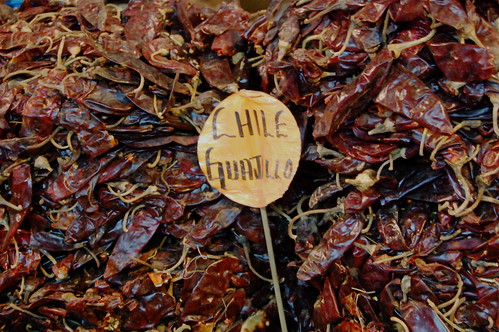
1 each pulla, guajilla, and pasilla chiles
1 tablespoon each diced epazote, yerba santa, and cilantro
about a cup of water
salt, pepper, olive oil

1. Preheat the oven to 425 F. Using scissors, slice the dried chiles very thinly into a bowl. Let the chile seeds fall into the bowl as well, set aside.
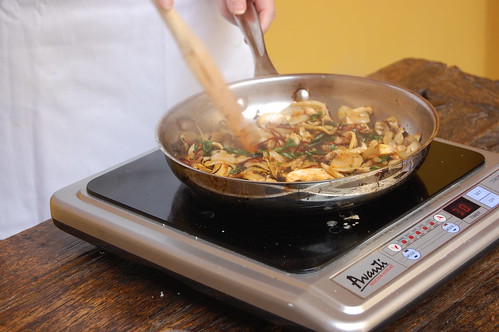
2. Heat some olive oil in a saute pan. Add the onion and garlic and saute until tender and translucent. Add the mushrooms, saute them for a minute, the add the chiles, chile seeds, herbs, and season with salt and pepper. Let this cook, stirring for about ten minutes, until the mushrooms are soft and reduced.
3. Meanwhile heat some olive oil in another saute pan (make sure it is oven-proof). Add the shrimp and saute over high heat until pink on the outside, but not fully curled up or done. Add enough water to fill the base of the pan, sprinkle with salt, place a lid on the pan and place in the oven to steam. Bake for about 5 minutes, or until the shrimp are very plump and cooked through, but not overdone.
4. Spoon mushrooms on a plate, spoon shrimp over. Serve over pasta or as desired.

25 July 2009

Grilled Lemony Sardines

I like small fish. Little tiny ones: sardines and smelts and rainbow trout and lots of other varieties I don't know the name for. In Beirut one summer, a group of friends and I stopped in one of the large fish houses at the lower end of the Corniche. After ordering drinks, the waiter asked us what we would like, though no menus had been presented. After some confusion, we were lead to a large display of fish on ice, where we could pick what we wanted and how it would be prepared. Most of the fish were tiny, about ten different varieties of fish ranging from the size of your pinky to the length of a pencil. We ordered haphazardly and hoped for the best.

Everything that came out of the kitchen was excellent, particularly the little fish which had been battered and deep fried, but also the smokier grilled ones. Ever since then, if I see little fresh fish in a market (sadly rare in the States), I'm tempted to buy them.

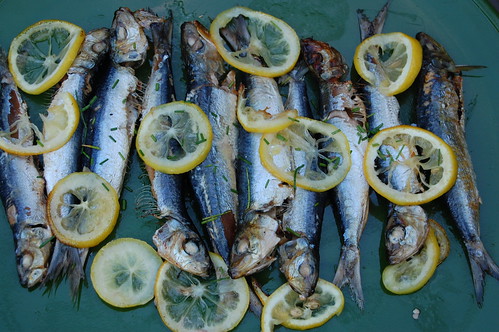
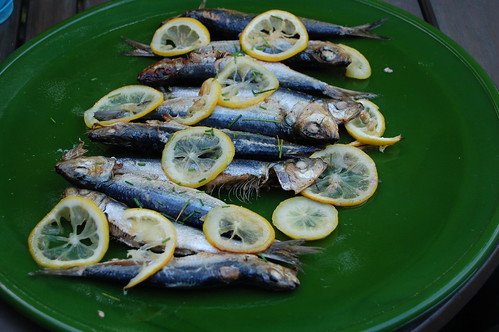
Fresh sardines are in season now, and I couldn't resist picking some up. Sardines are also one of the few undebatedly sustainable fish left to eat (although I fear someone will dispute me in the comments). I grilled them with whole slices of lemon and a bath of garlicky olive oil.

Having been over-zealous, I faced a week of sardine sandwich eating for lunch. This is not a bad thing: a toasted bun layered with a few leaves of spinach, sardines, grilled whole lemon slices, and goat cheese is a pretty good thing. However, most of my colleagues eat Thai take-out for lunch, and I was sheepishly assembling my sardine sandwich for lunch when a colleague stopped me. He loved sardines he said, and was eager to know where to get fresh ones and how to cook them. Relieved, I explained the following recipe to him.

Grilled Lemony Sardines

1 lb fresh sardines, gutted and rinsed
2 large thin-skinned lemons, sliced as thinly as possible
3 tbl olive oil
1 garlic clove, pressed
1 pinch Aleppo pepper
sea salt, to taste

1. Preheat a grill, or preheat your oven to 475 F. If you're using a grill you'll want some sort of grill pan.
2. Combine oil, garlic, pepper, and 1/4 teaspoon salt in a large bowl. Add the sardines and toss to coat.
3. Grease your grill pan or baking sheet. Scatter half the lemon slices on the pan. Spread the sardines over top- try not to crowd them so they cook evenly. Sprinkle with some more salt. Top with remaining lemon.
4. Grill the sardines for about 10 minutes, tossing everything around mid-way through, until sardines are done and lemons are soft. If using the oven it may take 12-15 minutes.

22 June 2008

Grilled Fish Kebabs

Summer solstice has arrived, and that means one thing for some people: grilling season. People who do not cook all winter long are pulling out the spatulas and tongs, debating charcoal and direct vs indirect heat, and mainly standing manly over large slabs of meat on a primal flame. I have to admit I’ve always been a little intimidating by grilling, my oven has an on/off button and a specific temperature, while the grill has flames that can flash up and die down and where cooking times are based on instinct and experience and not a kitchen timer. However, we’ve got a pretty nice grill and a great backyard and I’ve been slowly trying to teach myself those grilling instincts honed with experience.

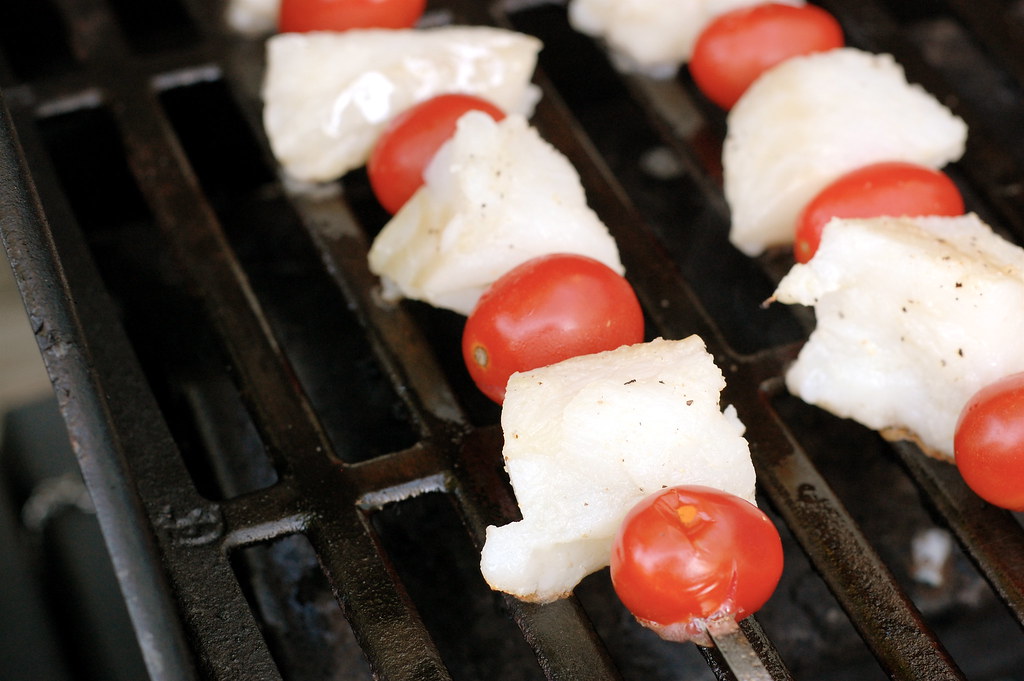
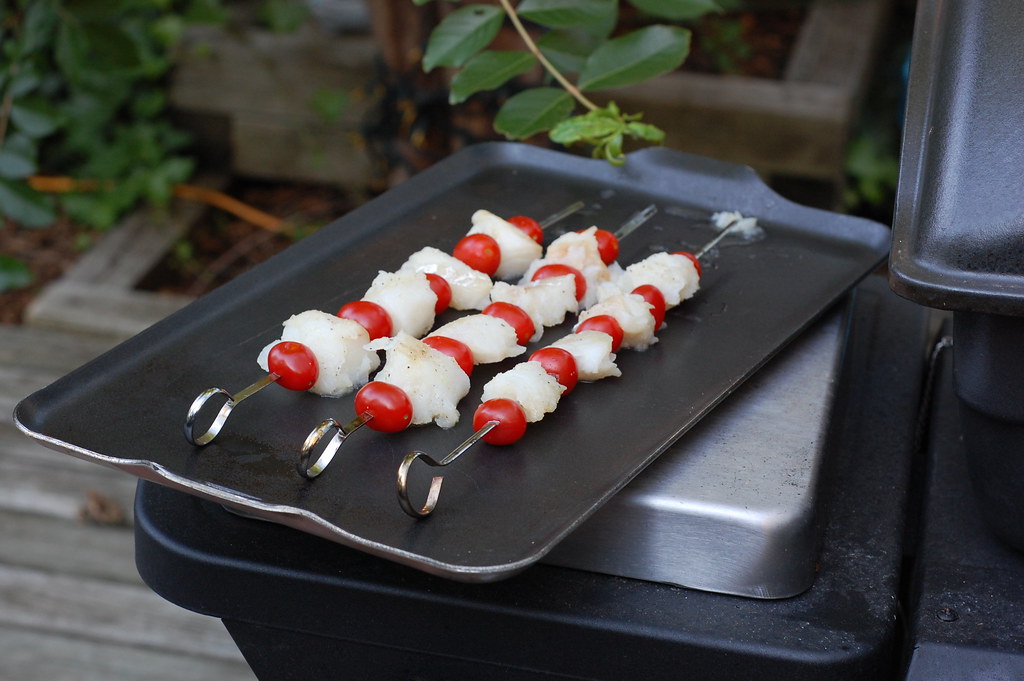
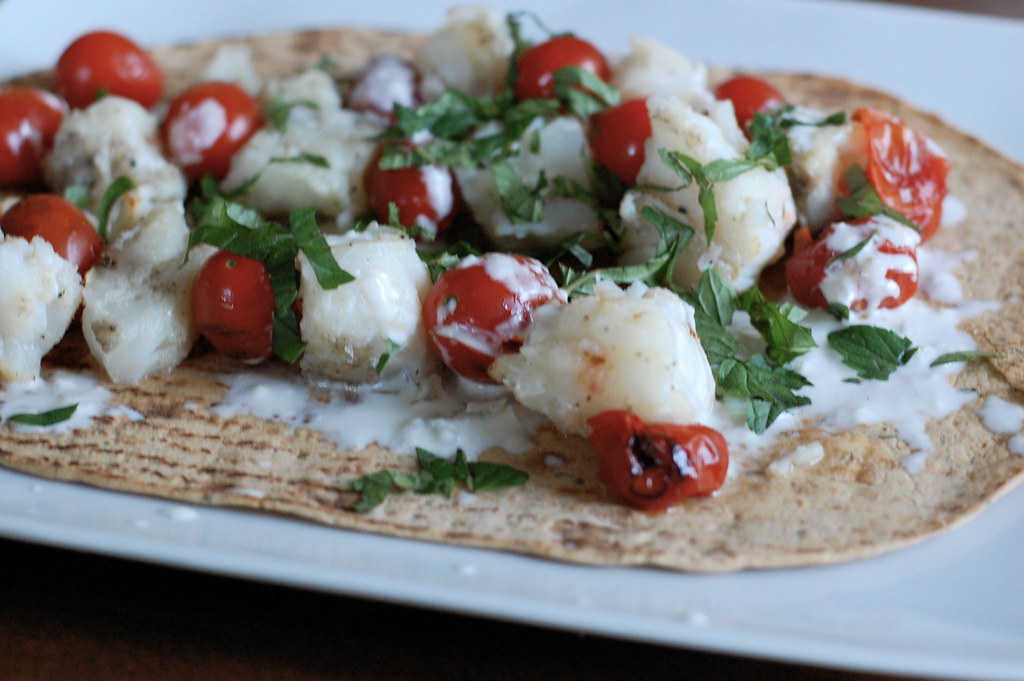
When it comes to fish, I usually prefer to grill a whole fish, mainly because I think it’s one of the best simple meals out there, but also because fish fillets can easily fall apart on the grill. However, if you choose the right firm-fleshed fish, I’ve found grilled fish kebobs make an excellent and very quick dinner. You can always add whatever vegetables you’d like to the kebabs, but I live for those grilled cherry tomatoes, charred on the outside and slightly sweet inside.

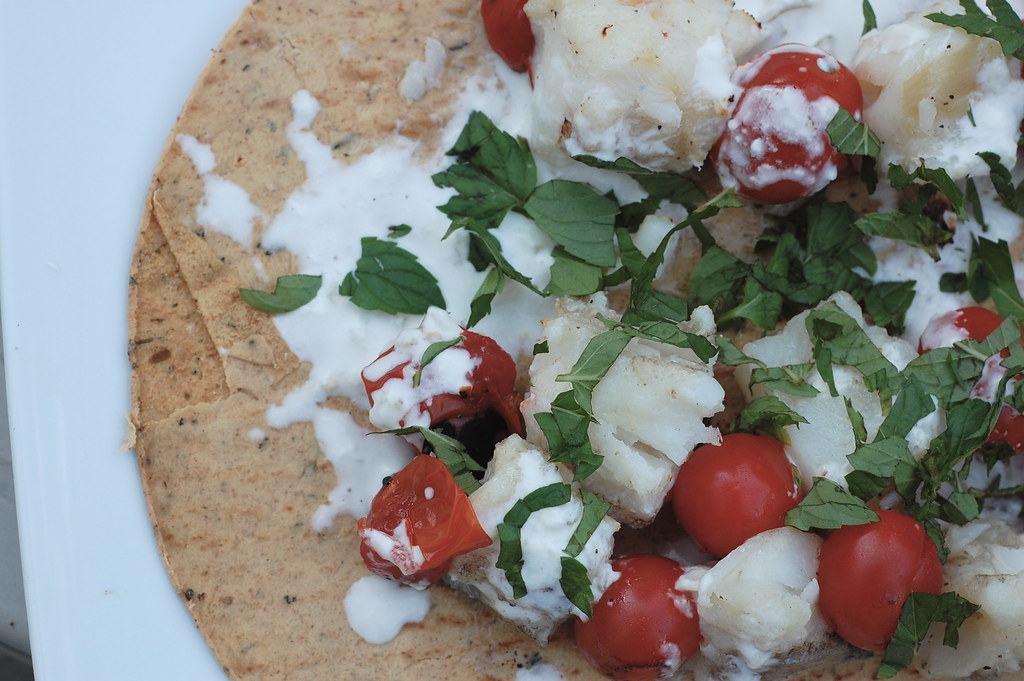
But most importantly, as I’ve told you before, is how you serve the kebabs. Don’t just plop those pieces of fish down all alone, place them over flatbreads and give them a good drizzling of sauce and dose of chopped herbs. My kebabs are of the Middle Eastern variety, that is marinated in a bit of lemon and olive oil and served with a classic yogurt sauce. However, you can always experiment with different sauces, a romesco sauce or tarator sauce, or one made with sour cream and herbs.

I'm not sure if I'm a grill fanatic like some out there, but this may just be the summer I catch the grilling bug, so if you have tips, grilling experiences, or any of those instincts I'm looking to hone, please send them this way.


Grilled Fish Kebabs
There are a couple tricks to making good fish kebabs: choose a firm fleshed fish that won't fall apart on the grill, don't try to move them around too much, and don't overcook them. I make a sauce by stirring together plain yogurt seasoned with a little lemon zest, garlic, salt, and a bunch of fresh chopped mint.

1 lb firm fleshed fish such as halibut or mahi-mahi
1/2 cup fresh lemon juice
1 garlic clove, smashed in a mortar and pestle or crushed with a fork
1/4 cup olive oil
salt and pepper
1 pint cherry tomatoes or other vegetables

flatbread or pita bread
yogurt sauce (see header)
a handful of chopped flat leaf parsley

1. Using a very sharp knife, cut fish into kebab sized cubes, try to cut along the grain of the fillet so that the cubes will stay together and not fall or flake apart. Combine lemon juice, smashed garlic, olive oil, salt and pepper. Add fish pieces and let sit 15-20 minutes.
2. Preheat your grill to very hot. Place your flat breads on a platter and set aside. Thread fish cubes and cherry tomatoes onto skewers. Scrub down your grill and spray with a bit of olive oil or non-stick spray (caution, grill will flare). Place kebabs on grill and let cook without moving until the flesh appears opaque and firm. Slide a spatula under the kebabs and turn to cook on the other side, only about 15-30 seconds, until the fish is cooked through but not overly flaky or dry.
3. Remove kebabs to the platter and place over flatbreads and slide out the skewers. Drizzle yogurt sauce over top. Sprinkle chopped parsley over and serve immediately.

17 May 2008

Dinner, at Least


My goodness, has it been so long? I certainly did not mean to leave you for over a week without a recipe. It seems I’ve been spending most of my time at work lately, and while I truly love my job, too much time behind a computer screen makes me less inclined to want to face one during my time off. But I’ve actually missed you all in a funny sort of way, like extended guests at my own little table.

I’m afraid what I have to offer you as consulation isn’t anything that’s unique or innovative or something you haven’t seen before. It did, however, make up my much-deserved late night dinner twice this week, and is perhaps one of the better quintessential spring-time dinners I can think of. Best of all the whole thing is ready in about twenty minutes start-to-finish.

Roast asparagus is probably one of my quintessntial spring time dishes. Just like I eat plate after plate of tomatoes in summer and butternut squash in fall, I make roast asparagus for weeks on end when the weather finally warms up. I really never tire of it. Sure, you can dress the asparagus up with splash of balsmaic vinegar or a bit of lemon zest or the tiniest shavings of cheese, but I’m perfectly happy with just good old plain. Sometimes I make roast aspragaus sandwiches with just a smear of spreadable goat cheese and toasted sourdough bread.

The other part of my favorite spring dinner is a soft shelled crab, pan fried. I am lucky enough to live somewhere with access to local fresh seafood and I couldn’t imagine my life without it. I’m a recent convert to soft-shells, though my mom always ate them I only first tried them about a year-ago. But now I love them, and those little crunchy fried legs, they’re my favorite part.

So there you have it, I will offer you dinner at least. But not to worry, I picked up the latest copy of Marth Stewart while traveling this week and there’s an article on pies that I’m dying to tackle. I’ll let you know how it goes.


Roast Asparagus
Preheat the oven to 425 F. Wash asparagus and snap off the woody ends. Drizzle some olive oil on a baking sheet and roll the asparagus around to coat. Sprinkle with salt. Roast in the center of the oven for about 12 minutes, shaking the pan once or twice to ensure even cooking. Time may vary slightly depending how thick/thin your spears are. Serve, with a squeeze of lemon juice, if desired. (You can also use the same process to make roast green beans, time will be closer to 18-20 minutes.)

Pan-Fried Soft Shelled Crab
Your fish monger should have prepared the crabs by removing the lungs and eyes. I like to also reach under the shell and scrape out the yellow tomalley. Get two shallow plates, place a couple spoonfuls of plain yogurt in one and thin it with some water until it is the consistency of cream (you could also use buttermilk, but I'm more likely to have yogurt on hand). Place equal amounts flour and cornmeal in the other plate and season with some salt and red pepper. Heat about half an inch of oil in a cast iron skillet. Dredge crabs in yogurt, then in flour mixture. Add crabs to hot oil, pan fry about 3 minutes on each side, until golden. Drain on paper towels, serve immedately.

14 April 2008

Oven-Barbequed Shad

As much as I complain about D.C. and oh, I do, I have to admit, the city really shines in the spring. While New York has the market cornered on fall, with the fire of autumn leaves blazing across Central Park, it's as if D.C. were built just for spring. Thank goodness for Lady Bird Johnson, whose beautification campaign scattered seeds all over the city, because I've never seen so many daffodils, hyacinth, tulips, and fosythia abloom in one place. A friend and I went for an excursion in Georgetown and we couldn't tell whether the houses had been painted to match the blossoms or vice versa. And though we complain about the tourists, the cherry blossoms scattering their confetti-like petals over the ground, their branches echoing the graceful white curves of the Capitol, are truly beautiful.

It's still a bit too early for asparagus and peas and such, but ever since March the fish monger at Eastern Market has been carrying that most local harbinger of spring, shad. [And if there's anything I really love about DC, it's that fish guy at Eastern Market, with his bright yellow coveralls and salt and pepper beard.] Shad is a fresh-water fish found in rivers from Morrocco to Persia, from Ireland to the United States, where it plays a special role in Virginia election politics. Related to herring, shad spawn in the spring, running upstream much like salmon. Around these parts, shad are celebrated in the spring for their sacks of roe, which when pan-fried constitute a quintessential delicacy.

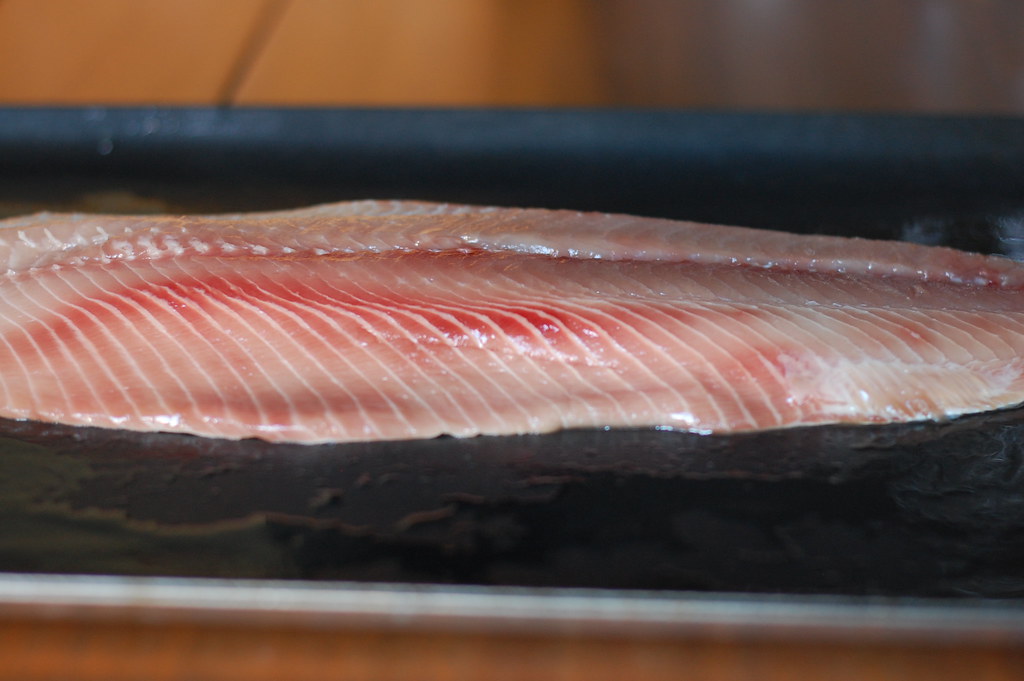
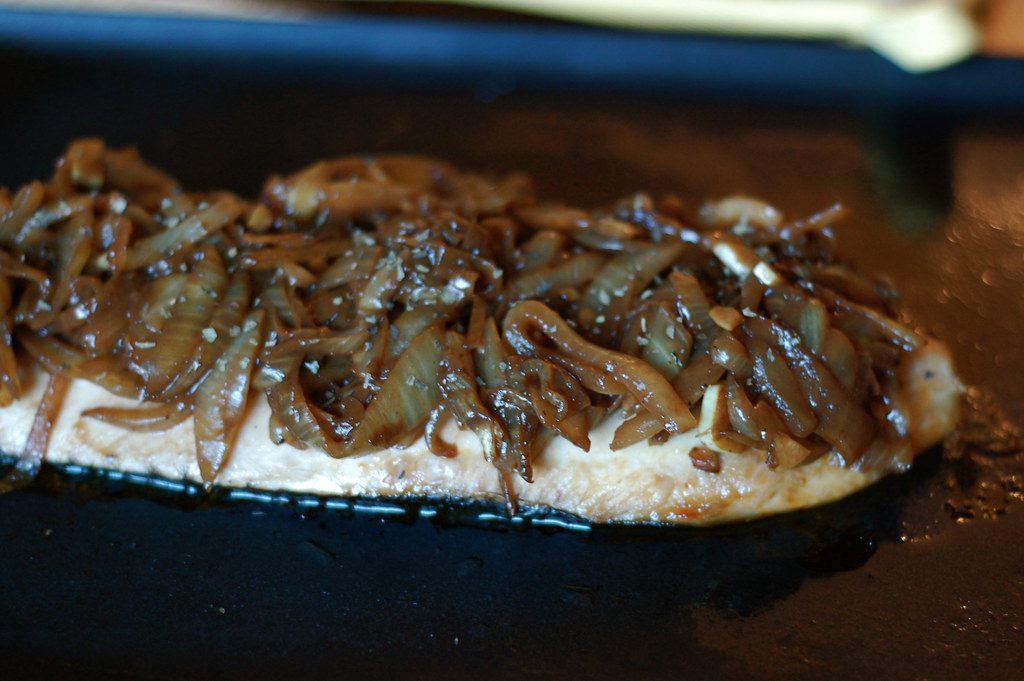
However, I was excited to see shad fillets because I've been reading about shad in Middle Eastern and Iraqi cooking, where the meaty flesh is prized for a sort of fish barbeque. When I asked the fish guy where the shad had come from, he told me they'd just been brought up from South Carolina, and then proceeded to give me a twenty-minute history of how shad fishing had changed in his lifetime. (It was quite interesting, but I'll spare you all the details). Another issue with shad is they can be quite bony, even the boned fillets are likely to have tiny pin bones that can be an annoyance when eating. Here, the fish guy gave me a great tip, cook the fillets in an acid (such as some lemon juice or some milk and butter) for a long time over a low temperature and the smaller bones will literally dissolve. Here's where I got excited because Iraqi's cook their fish with tamarind -another acid that could possibly serve the same purpose.

I can't speak to the scientific accuracy of the fish guy's claim, but I can tell you I made a sort of amalgam of his recipe and an Iraqi recipe and it was truly delicious. And barely a pesky bone in sight! Really, it was so good I'd urge you to seek out some shad, or try it with some salmon if you can't find shad. Even if it's still too cold for a proper barbeque, the shad, at least, is a real sign of spring.

Oven-Barbequed Shad
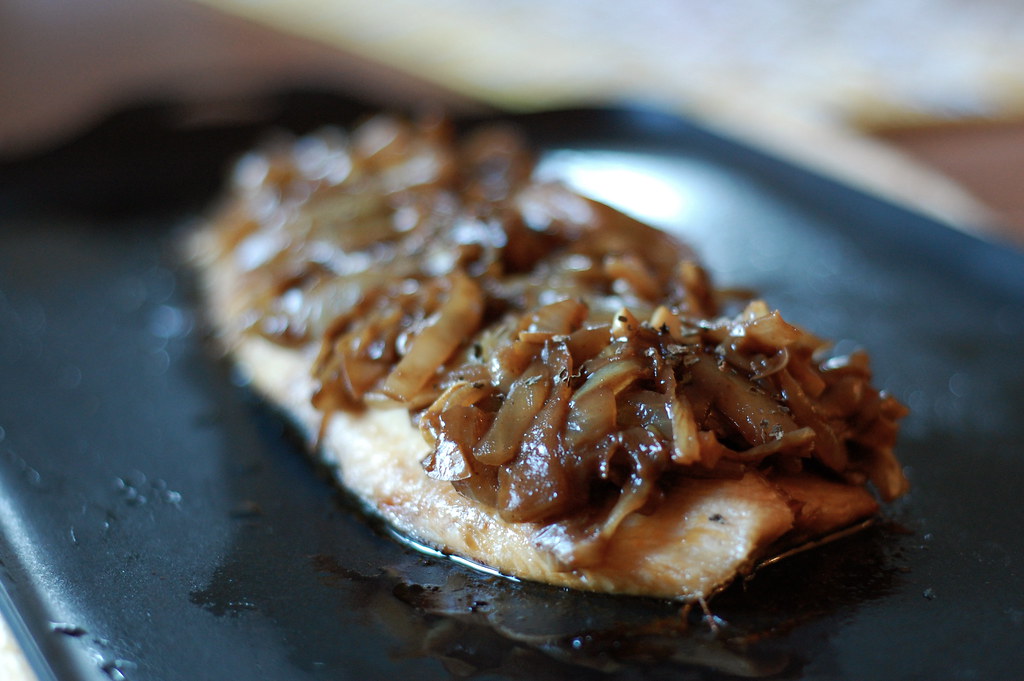
I realize that something slow-cooked in the oven doesn't really fit anyone's definition of barbeque, but that was the title of one of the recipes I adapted this from, and it seemed to perfectly capture the succulent fish and tangy-spicy-sweet onion topping.

1 large boned shad plank (1 1/4 lbs)
3 tablespoons lemon juice
3 tablespoons olive oil
2 large onions, thinly sliced
3 garlic cloves, sliced
1 teaspoon curry powder
1 teaspoon dried lime or lemon zest
1 teaspoon salt
3 tablespoons tamarind paste or balsamic vinegar
1 tablespoon tomato paste
1 cup warm water
1/4 cup chopped parsley

1. Preheat oven to 275 F. Place the shad in a greased baking dish, pour lemon juice over top and sprinkle with salt. Bake for 1 1/2 hours.
2. Meanwhile, heat the olive oil in a wide skillet. Add the onions and garlic and cook over medium heat, stirring frequently, until the onions begin to darken in color and caramelize, about 30 minutes. Stir in the water, curry, dried lime, tamarind, and tomato and cook another 5-10 minutes until the mixture is thick. Remove mixture from heat and stir in the parsley.
3. Spread the onion mixture over the fillet and return to the oven. Increase heat to 400 F and bake another 10-15 minutes, until the fish is done to your liking. Serve immediately, with a green salad and some bread.

30 March 2008

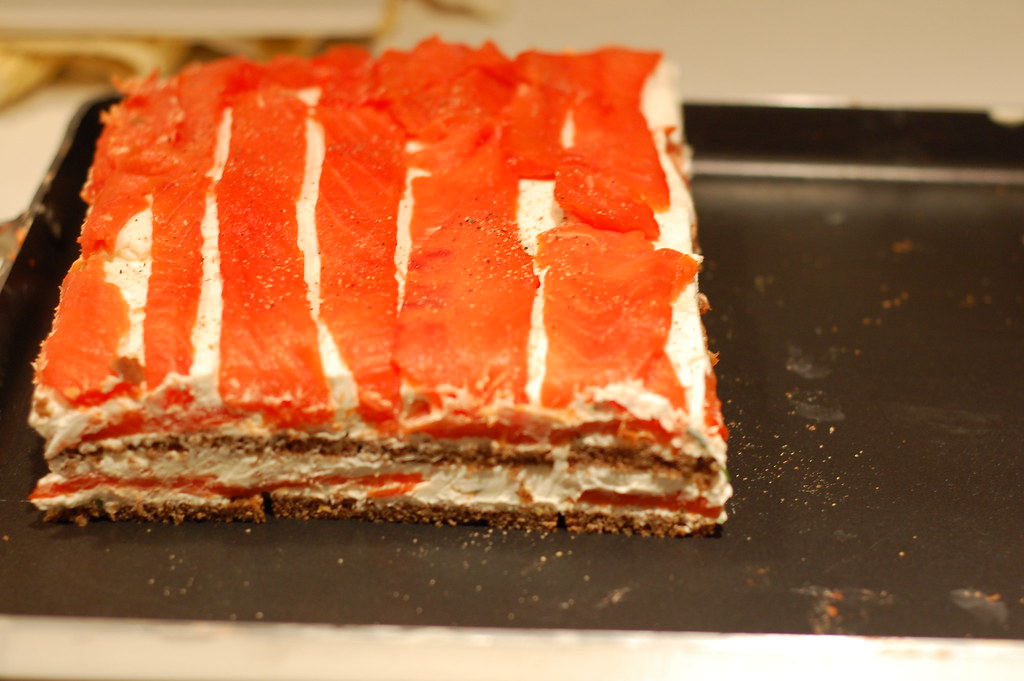
Nine Layer Salmon Bites

Do you ever have those recipes that you just know are going to be perfect and easy and delicious, so you immediately clip them or bookmark them, only to have them sit and linger for months, years even, waiting to live up to their (I know this is sooo delicious) potential? And then, when you finally, finally, get around to making them, you realize they weren't so easy or tasty after all?

This recipe for Seven Layer Salmon Bites was one of those recipes- oh don't get me wrong, it was really delicious, but it was also a little trickier than I had imagined. I've been wanting to make them ever since I saw the gorgeous photo in Gourmet a couple years ago, they just looked so festive and pretty with their spunky salmon roe topping, I could already picture them at my next dinner party. Apparently, it took me two years to come up with an occasion to make them. And even then I couldn't get any decent salmon roe, after trying numerous groceries including Eastern Market, Black Salt, and there was no way I was braving traffic to get to Dean and Deluca (damn you D.C., sometimes you are so inaccessible!!) but I think it was just as good without.

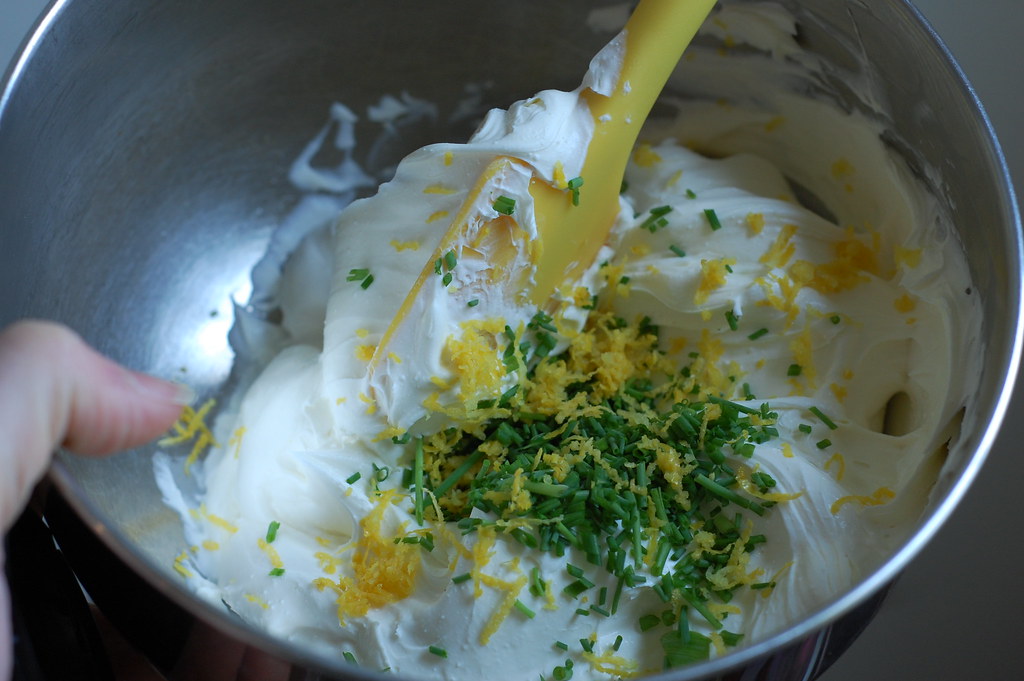
But I had the salmon and the pumpernickel and I stirred up the cream cheese mixture, which flecked with chives and lemon zest and pepper was positively finger-licking good. Then all I had to do was layer it up, chill, and slice. Except (except!) have you ever tried to spread a very sticky cream cheese mixture over a matrix of bread slices? Or over slippery salmon? Yeah, let me just say not the easiest thing I ever did. The cream cheese kept sticking to and dislodging the bread, the salmon was sliding around, and I of course, was cursing like a sailor. In the recipe's defense, it calls for whipped cream cheese and I had used regular, but in my defense the quantities in the recipe were rather off, and I finally solved the cream cheese problem by thinning the mixture with some heavy cream.

I realize these are small quibbles, but the difference between an easily assembled dish and a frustrating one is often the difference between whether something is adopted with regularity into one's kitchen. And with a few small tweaks, this is a dish that should be adopted into your kitchen. I know salmon-cream cheese canapes are nothing new, but the extra layering effect makes them a bit more special. They disappeared so fast at the party I made a few more later in the week just for myself. So go ahead, bookmark the recipe, I promise this version really is easy and delicious. And please don't wait two years to make it.

Nine Layer Salmon Bites

16 oz cream cheese, preferably whipped type, at room temperature
4 tablespoons heavy cream
1/4 cup chopped chives, plus more for garnish
zest of 1 lemon
several good crackings of black pepper
9 oz thinly sliced smoked salmon
6-8 slices thinly sliced pumpernickel bread

1. Cream together the cream cheese, heavy cream, chives, lemon zest, salt and pepper until smooth and spreadable.
2. Trim the bread slices to squares or rectangles and lay them in a jelly roll pan to form approximately a 16 by 9 inch rectangle, or about 2/3 of the jelly roll pan. Spread 1/2 of the cream cheese mixture over the bread slices. Layer half of the salmon slices on top. Repeat making another layer of cream cheese than another layer of salmon.
3. Slice the entire rectangle in half width-wise to form two squares. Use two large spatulas to transfer one square on top of the other (so it is now double-height). Press down gently then refrigerate the stack for at least half an hour in order for it meld together.
4. Remove from the fridge and using a sharp knife cut into small bites, wiping the knife after each cut. Garnish with chopped chives. Chill until ready to serve.

26 February 2008

Date and Almond Stuffed Fish


Middle Eastern cuisine prizes two things: tiny foods and stuffed/layered foods. Like many cuisines, the tiniest baby fruits and vegetables are coveted, from lady apples the size of your thumb to the littlest eggplants and squash. Stuffed grape leaves should be as thin as a woman’s little pinky, and the smallest meatballs are a symbol of a woman’s dexterity, commitment, and potential marriageability. Similarly, stuffed foods are representative of the time invested to make them, and the complex flavors that come from filling one ingredient with another. Little zucchinis, hollowed out and filled with a rice or meat mixture, stuffed grape leaves and cabbage rolls, intricate kibbe meatballs with an outer meat shell and an inner meat stuffing, artichoke bottoms hollowed out and filled with meat, tiny flaky turnovers with oozy cheese inside.

The emphasis on stuffed foods is so great that a needle and thread are often employed in the Arab kitchen: oh, how I loathed this practice. Once, I sewed orange peels into intricate coils, another time it was beef rolls stuffed with herbs. Teeny tiny fish were stuffed, sewed, deep-fried, then de-threaded. I like to sew, but fabric does not squirt juices at you when you pierce it. Anyway, if one thing can be stuffed, than a doubly-stuffed dish is even more special. Such is the case with this fish dish from Iraq: whole fish are stuffed with dates which are stuffed with almonds.

The practice of stuffing dates with almonds is a very common one in the Middle East, as the almond imitates the date pit but is edible. The first time I had one of these was when one of my colleagues went to Mecca on hajj, she brought back dates for the office and specifically instructed us not to discard the pits. I thought that, being from the holy city, the date pit must have some sort of mythic significance, so I carefully nibbled around it only to find it was an almond. Since almond-stuffed dates are common in the area, and since Iraqis use dates in everything, it would be obvious to stuff them inside fish.

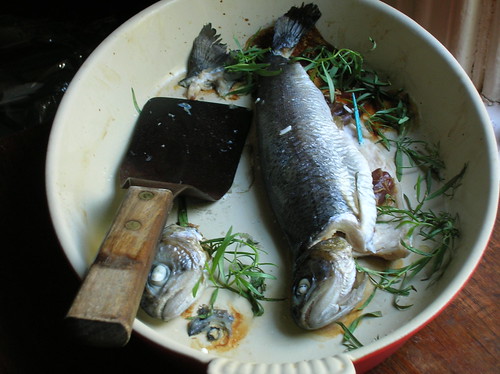
In the most complex form of this dish, the dates are stuffed with almonds and rice, certainly an exercise in patience, but I prefer to simply put the rice inside the fish along with the dates. This way the rice balances the sweetness of the dates and the warm spices with the fish. Traditionally, this might be made with shad or trout from the Shatt al-Arab, but I’ve used small whole branzino, and you could use rainbow trout as well. Roast fish is one of our all time favorite meals, and this is a great way to serve it, the stuffing adds a new twist to the fish, and makes it practically a meal-in-one. And consider yourself lucky you don’t have to get out the needle and thread to enjoy it.

Date and Almond Stuffed Fish
At the fish market the vendor asked if I wanted the heads cut off my whole fish and I looked at him in horror. But that's where all the flavor is! Even if the idea of whole fish weirds you at, for goodness sakes at least cook the fish whole, then remove the heads before serving, trust me it makes a difference. This dish can be increased to serve as many as necessary. Serves two.

1 whole fish (a scant 1 lb), such as rainbow trout or bronzino, boned and gutted but left whole
fresh lemon juice
1/2 cup cooked basmati rice
1/2 teaspoon cinnamon, 1/4 teaspoon cardamom
6 dates, pitted
6 whole almonds

1. Preheat the oven to 400 F. Grease a baking dish with some olive oil.
2. Rinse the fish and pat dry. Open the fish and squeeze some lemon juice on the inner flesh and sprinkle with some salt. In a small bowl, toss the cooked rice with the spices, then stuff inside the fish. Slip each almond inside of a date. Place the almond-stuffed dates inside the fish.
3. Close up the fish, secure with a toothpick if necessary. Place in the prepared dish and bake 20 minutes. To serve, open up the fish and spread the stuffing equally over each side of the fish. Use a wide spatula to transfer fillets and stuffing to serving plates. Serve immediately, with a green salad.

See also: Rice-Stuffed Dates Wrapped in Sole with Sweet and Sour Sauce

08 January 2008

So Much To Say


I have so many things to say today. About the new and last season of The Wire, about the awful piece by Ayaan Hirsi Ali in the Times recently, about Michael Pollan's new book. Unfortunately, I have nothing to say about this fish dish I want to tell you about, other than that it was delicious. Nothing, nada.

This blog is supposed to share recipes with you all and reflect on life both inside and outside the kitchen, but sometimes it seems like that's not enough.It's the same reason I decided a dancing career wasn't for me: I love, love dancing, but I just had so many other things to say, and I couldn't say them with tendus. As Claudia LaRocco wrote in a line that struck a special chord with me: "modern dance can easily and intensely capture fleeting emotions and atmospheres, but it runs into difficulties when addressing complex social realities; its delicacy and precision don’t lend themselves to topics like women’s lives in fundamentalist Islamic societies."

Sometimes I feel the same way when writing about food: how many ways can I tell you that something is delicious or that I really liked it without being trite or (worse) preachy. Twice now I have sat down to write about this fish recipe: first writing about the great sweet-sour flavors of Iranian cuisine. The second time I set out to tell you about verjus, the sour juice of unripe grapes, a traditional by-product of any grape-growing region from France to Iran. Haaa-shhooo.... Oh, sorry, I'm even putting myself to sleep, blah-blah-boring, besides I couldn't even find verjus in stores.

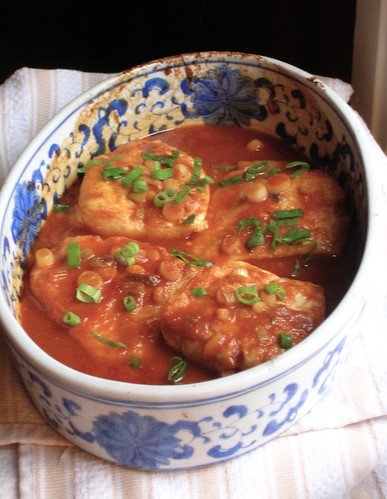
So here you have it: a completely delicious dish of fish baked in a sweet-sour sauce flavored with pomegranate, orange, and lime. Sometimes food just needs to be eaten, not analyzed. Instead, if you want to talk about political primaries, sustainable development, a great new novel, or the best movie you saw recently, then I've got a lot to say.


Fish in Persian Sweet-and-Sour Sauce
This was inspired by a recipe by Najmieh Batmanglij which called for verjus (the sour juice of unripe grapes, not the alcoholic beverage) and Seville orange juice. Not having access to those ingredients, I came up with this version which has become a favorite in our kitchen. Serves 4.

olive oil
1 bunch scallions, white and light green parts chopped
2 cloves garlic, crushed
1 cup pomegranate juice or 1/4 cup pomegranate molasses with 3/4 cup water
juice from 1 large orange plus 1 teaspoon orange zest
1 cup tomato juice
1/4 cup lime juice
1/2 teaspoon salt
1/4 teaspoon each cumin, cinnamon, cardamom, and nutmeg
1 tablespoon sugar or honey
4 thick fish fillets (about 2 lb) like orange roughy, trout, or sea bass
1/4 cup flour

1. Combine pomegranate juice, tomato juice, orange juice and zest, lime juice, salt, spices, and honey in a bowl.
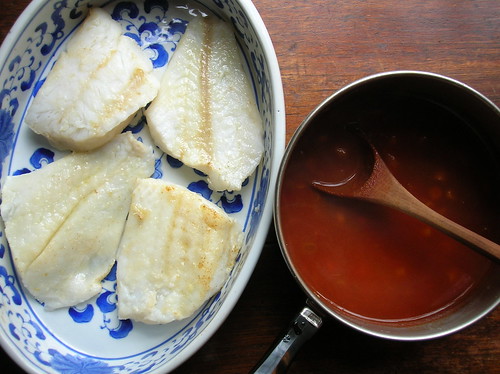
2. In a saucepan heat a few tablepoons of olive oil. Add the scallions and garlic and saute over medium heat until softened, a few minutes. Add the juice mixture and bring to a boil. Taste the sauce: it should be both sweet and sour, add more honey if necessary. Simmer for 10-15 minutes, then set aside.
3. Preheat oven to 450 F. Get out a large casserole or baking dish.
4. Pat the fish dillets dry and sprinkle with salt, then rub a thin sprinkling of flour on the fillets to coat on both sides. Heat a few spoonfuls of olive oil in a wide pan. Fry the fillets for 2 minutes on each side. You want the outside of the fillet to be "sealed" but the inside will not be done.
5. Place fillets in the baking dish. Pour the sauce over the fish and place in the oven. Bake 7-12 minutes, until the fish is just done. Serve immediately, with rice or bread.

08 October 2007

Squirrel 3, Me 1

All summer I watched our fig tree with baited anticipation. I adore figs and our nascent tree, though grown in a pot and only in its first year, was vigorous and healthy. With it, the promise of fresh-from the-tree-figs, budding heartily on its stems, tantalized me everytime I spied it by the back deck. It only had about five fruits, but I watched them ripen in painstaking slowness over August and then into September, peering at the fruits, practically drooling as as they slowly turned from bright green to deep brown.

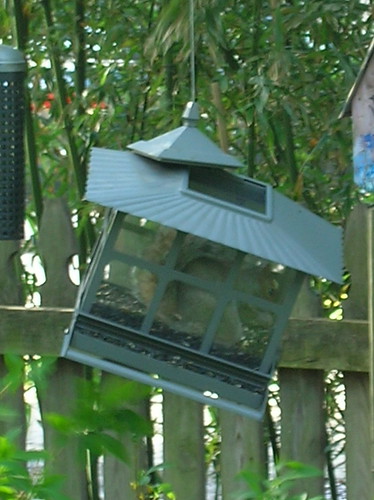
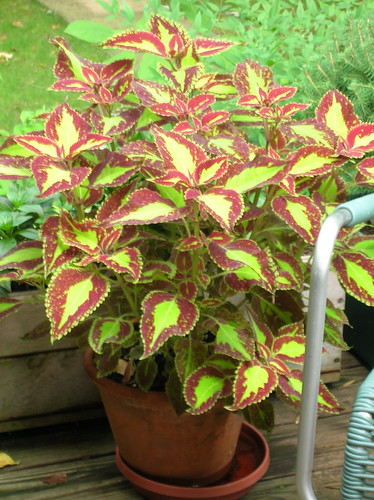
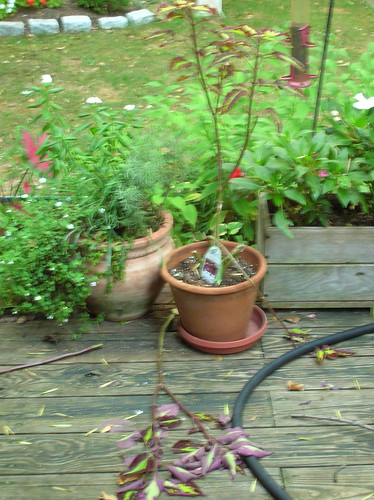
All summer, we have also been plagued by drought-like conditions and by several crazy squirrels. I grew up hearing my mother curse the squirrels that dug up her garden and which would climb in through our chimney and run in the space between the walls on winter mornings, their scampering claws on the eaves above my head a six a.m. wake-up call. Now, a couple decades later, I am once again plagued by a crazy squirrel: one afternoon I watched as it literally turned flips in some sort of hyper-active fit. It systematically chewed the coleus plant, chewing one stalk each day until the plant was completely stripped. We've invested in several "squirrel proof" birdfeeders, only to find the squirrel has dismantled them, sending them smashing to the ground, and even prying the top off of them and climbing inside to feast glutinously in a sea of sunflower seeds.


"Squirrel-Proof" Bird Feeders, Coleus Plant Before and After

When watering our plants one day, I noticed our figs were ready: ripe, plump, brown figs!! A few hours later I returned, only to find a cruel surprise: the tree bore no hint of fruit. It seems the squirrel had beat me to it, stripping the tree and devouring its luscious fruits leaving not even a nubby stem behind. To say I was devastated would be an exaggeration, but I was truly saddened that I wouldn't get to taste the fruits of a long, hot summer's labor.


Determined to turn our fig tree into some sort of gustatory pleasure, I remembered a recipe that called for salmon wrapped in fig leaves. Wrapping fish in leaves, like grape leaves or chard leaves, is a common Mediterranean practice but using fig leaves is unusual because they are rather tough and inedible. I first read about the recipe in that lovely children's book Fanny at Chez Panisse, and if you remember a recipe you heard about when you were seven, it ought to be worth making. The salmon fillet at the shop was beautiful and I added a dose of lemon for good measure and wrapped it in the fig leaves, adding some beet greens on top to keep the unwieldy leaves in place.

As the fish roasted, the house started to fill with the most amazing aroma: the smell of coconut. Fig leaves, when cooked, give off the most tantalizing coconut-like smell, I wouldn't have been surprised if my neighbors had come knocking on my door in search of the glorious source. Thankfully, none did, because I don't think we would have wanted to share, the fish was knock-out good. Of course, a lovely fillet of salmon perfectly roasted is bound to be good, but I can't help think that coconutty fig leaf aroma had a lot to do with the magic. If you don't have access to fig leaves (and I am afraid of stripping our baby tree any further), give it a try with hearty leaves like beet or chard, it will still be delicious. And in the battle of me versus squirrel, the squirrel might still be ahead but I've got one very happy victory under my belt.


Salmon Roasted in Fig Leaves
Fig leaves give off the most amazing coconut-like smell when roasted, but if you don't have them substitute a firm leaf like beet, turnip, or chard greens. Serves 6. Adapted from The Chez Panisse Cafe Cookbook.

12 large fig leaves, or beet greens or chard
2 to 2 1/2 lb fillet of salmon
1 lemon
coarse salt, olive oil

1. Preheat the oven 400 F. Lightly oil a large casserole. Wash the leaves well and place enough fig leaves shiny-side up to cover the bottom of the dish. Place the salmon fillet over top. Grate a little of the lemon zest directly onto the salmon, then halve the lemon and squeeze half the juice over the fish. Sprinkle with salt. Fold the leaves up around the salmon fillet, and place several more leaves over top to hold the leaves in place. If your leaves are uncooperative, you can try and tie them in place with a bit of kitchen twine. Drizzle some olive oil over the outside of the fig leaves. Place in the oven and roast for 20-25 minutes, or until fragrant and the fish is plump.

For a fancier presentation: Cut the fillet into serving size pieces. Wrap each piece in a fig leaf and tie with twine to secure (it's ok if the fish isn't completely covered). Roast 15 minutes.
_________________________________

19 September 2007

Sara's Loumi

Fish Baked with Pomegranate and Lime

We were on our usual Friday morning stroll through the market when my friend Sara suddenly let out an excited shriek. “Look,” she cried, “loumi!” Startled, I looked around confused, what, noumi, loumi? It didn’t help that the items at which she was wildly gesticulating were small shriveled black orbs, harder than rocks and somewhat resembling tiny dried brains. Before I could ask any clarifying questions, Sara had already rushed over and was engaged in intense negotiations with the vendor of the little black things, which I had now decided looked more like little grenades. “Loumi,” she asked him, “loumi bosra?” I was beginning to get a little worried about the intense activity around these bizarre objects. You can buy a lot of odd things at a Damascus souq, and I wasn't sure if we wanted these. Finally, Sara turned to me, clutching the newly-purchased package to her chest. “They’re a special kind of dried limes,” she explained, “my dad used them to make this soup whenever we were sick.”

Sara grew up in Britain but her dad hails from Bosra in southern Iraq and he has always been the cook in their family. The soup she described is much like a local version of chicken noodle soup, except it involves lamb and rice and those whole limes simmered in a thin broth. Sara doesn’t much like to cook herself, and when she moved away I inherited those dried limes and I’ve carted them around with me through many kitchens over the years, unable to throw them away because she had cherished them so dearly.


Finding something to make with my loumi proved to be very difficult. Also known as Omani limes or black limes, they have a strong sour-bitter flavor and are often used to flavor rice dishes. However, recipes were few and far between, and most called for grinding loumi into a powder (ironically, General L. Paul Bremmer, who also trained as a French chef in addition to being the former military head in Iraq, discovered loumi while in Baghdad and encorporates them into classic sauces). Anyway, when I found a recipe in Mary Bsisu’s The Arab Table for fish baked with dried limes, I pounced.

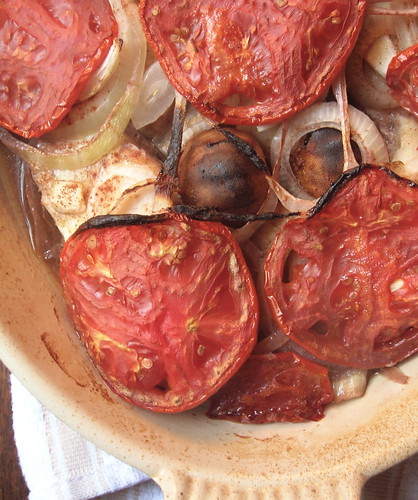
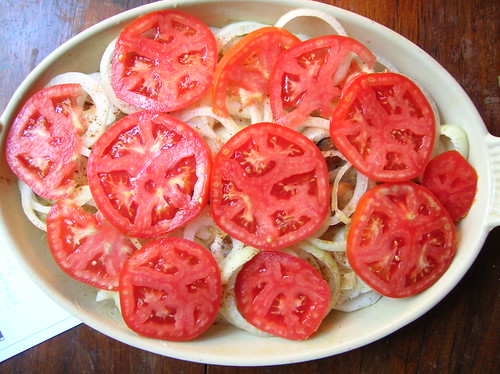
It’s called samak tibsi in Iraq, samak meaning fish and a tibs being the kind of pot it is usually baked in. I ended up deviating greatly from Bsisu’s recipe (which called for 4 lbs of fish for only four servings, and had you scatter raw diced celery over top before serving, ???). Basically, you layer onions, garlic, and fish in a baking dish, nesting the dried limes amongst them, and then you top it with a layer of sliced tomatoes and pour pomegranate juice over top. This is one of those dishes that, as you are putting it together, you know it’s going to be good. As the dish bakes, the vegetables soften and caramelize and the liquid reduces into a wonderfully thick sweet-tart sauce.


I have a tendency to declare something is my “new favorite dish” about once a week, but this really is my new favorite. I’ve made it three times in the past two months, including once for company, and I already know it’s going to be a staple. Let me outline it’s benefits: first it is supremely easy, all you do is slice some things, layer them in a dish, and bake them. It's got your vegetables and protein all in one dish, so you don't need to fix much else, a green salad and some bread perhaps. It is perfect for entertaining, where your guests will love the intricate flavors and tender fish, or for you to eat solo over several days. I’ve also discovered that this is just as good when using whole fresh limes, and since pomegranate juice is readily available in groceries nowadays, you don’t even need any special ingredients.

By now, I'm beginning to sound like my friend Sara, ecstatic over her limes. In the end, it turns out her excitement was worth it. I'll stop my enthusiastic raving, but only if you promise to go out and make this dish as soon as possible.

Note: you should use more tomatoes than in this photo.

Fish Casserole with Pomegranate and Lime (Samak Tibsi)
Hands down one of my favorite dishes, easy and sure to impress. Despite the long oven time, the fish remains moist thanks to the syrup and the insulation of the vegetables. When serving, you shouldn't actually eat the whole limes. Serves four.

1 tbl all spice, 1 tsp cumin, 1 tsp cinnamon, 1/4 tsp red pepper flakes, pinch salt
2 tbl butter
2 lb thick white fish fillet, such as orange roughy or red snapper
3 very large white onions (I used vidalia)
4 dried limes or 4 key limes or 2 regular limes
4 cloves of garlic, minced
1 lb tomatoes, sliced
1 cup pomegranate juice (or 3 tbl pomegranate molasses dissolved in 3/4 cup water)

1. Preheat the oven to 400 F. Combine the spices in a small bowl. Rub half the spices over the fish fillets.
2. Grease a casserole dish with 1 tbl of the butter. Thinly slice the onions and seperate into rings. Toss the onions with the remaining spices to coat. Spread half the onions in the bottom of your dish. Cut the fish into medium-sized pieces and arrange over the onions. Cut several slits in the dried limes (if you have larger fresh limes, halve them) and nestle the limes amongst the fish. Scatter the minced garlic over top. Dot the remaining tablespoon of butter over top. Top with the remaining onions, then cover the whole dish with the tomato slices. Overlap the tomato slices slightly as the will shrink when baking. Pour the pomegranate juice over top.
3. Bake the dish for 45-50 minutes, until the onions are softened and the sauce is slightly thickened. Serve warm.

Dried Limes can be found at Middle Eastern stores and ordered from Kalustyans.
Other recipes with dried limes: khorest ghaimeh

22 July 2007

Worth Every Flinch

soft shell crabs
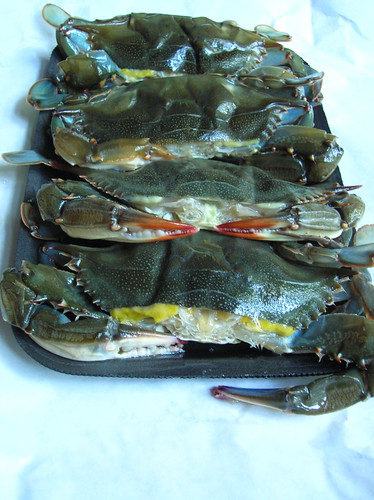
If you had told my 16 year old vegetarian self that I would one day participate in removing the lungs from a living being, I don't think I would have believed you. I should say that my teenage vegetarian days were motivated not by any sense of ethical activism but rather by a strong distaste for most meats. As a child I recoiled from the steaks and chicken my mother tried to feed me, and even today I only eat meat about once or twice a month. However, I love seafood and will happily gobble down any creature of the sea, including spindly legged soft-shell crabs.

Soft-shelled crabs are not a kid-friendly food. There's the whole legginess of them, and then there's the issue of how they crunch. For any child reading Charlotte's Web, watching your parent crunch into a sandwich with legs hanging out of it can be a disturbing experience. Also, they are a bit confusing, something you normally eat only the inside of, it's kind of like being told to eat a banana with its peel. I grew up in crab-central Maryland and I can pick a crab like a pro, but I never had a soft-shell crab until a couple years ago. Now, of course, I love them. All the things that once seemed unappealing are part of their delight: the crunch that releases their salty brine, the sweet meat inside.

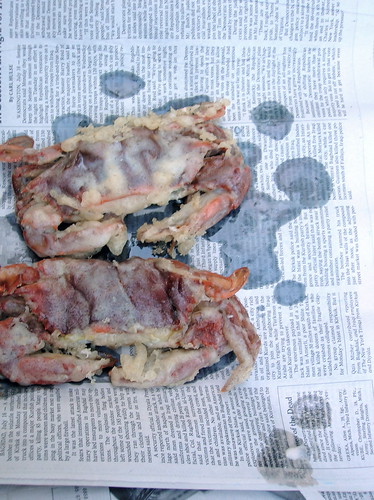
pan-fried soft shell crab

Usually, we just pan fry our soft shells with a little cornmeal coating (see above photo), but I got the idea for a tempura-fried soft shelled crab, and scuttled myself over to the grocery. "Do you have any soft-shells," I asked, not seeing any in the display. "Actually, we just got some in," the fish guy said with genuine enthusiasm, "but it will be a few minutes, I have to clean them." Having recently heard a friend talking about this rather tortuous process, I asked if I could watch how he did it. Now, the fish guy knows me, but he raised his eyebrow curiously, and that's how I found myself, a petite girl, behind the counter with a bunch of large men in butcher's aprons.

The crabs were still visibly alive, and we picked out four large males. "First, I cut off the eyes," he explained, as he took a large pair of scissors, and to my horror, did exactly that. Before I had recovered from that shock, he expertly lifted the shell edge and dug around and pulled out the crab lungs. "Actually, they're called gills," he told me. Right. He gave them a quick cleaning, snipped off the apron, and proceeded to the next crab. What was disturbing was that the crabs continued to twitch even after being defaced, much like the proverbial headless chicken. "They need to be alive up until the last minute, that's what keeps the shells soft," he explained.


As a child, we would catch our own crabs and take them home and steam them for dinner. The live crabs were put in a large pot and you had to hold the lid down firmly for the first minute as their claws banged on the pan trying to escape. One time a crab managed to get out and scurried after me, angrily pinching my toes as I ran circles in the kitchen until my mother plunked it back in the pot. This is all to say that I'm pretty comfortable with the idea that cooking involves a little gore. However, I did flinch when the crabs twitched again when I went to prepare them that evening. There is something about battering and deep-frying something that just adds insult to injury. Nonetheless, I proceeded.

As soon as the crabs were on the plate, I knew they were worth every flinch. The crabs were divine. Each crunchy bite is an explosion of salty brine combined with buttery-sweet meat. There's just no other way to put it, this has to be one of the best meals of the summer. They were so good, I wasn't going to write anything about the process of prepping them for fear it would scare someone away from making them. I was just going to write about how good these are, you have to make them. Luckily, if you have access to soft-shells, they may be sold already cleaned or your fish monger will clean them for you, sparing you any gore. But somehow, I think learning about them made me appreciate each bite even more. All you have to do is cook them up, which makes this one of the best 10-minute meals I can think of.


Tempura Soft-Shell Crabs
Crunchy, salty, sweet, soft-shell crabs are a special delight. Your fish monger will clean the crabs for you, but you may also want to reach under the shell and scrape out the bright yellow crab guts, called the tomalley. Soft-shells are in season May-July.

4 soft shell crabs, cleaned
1 cup very cold mineral water
1 cup flour (preferably rice or cake flour, but all-purpose is fine)
pinch each of salt and Old Bay seasoning
oil, for deep frying

1. Heat the oil in a large, deep pot. Combine the flour in a bowl with the salt and seasonings. Add the water all at once and stir just to combine. The batter should still remain slightly lumpy, do not overmix.
2. Test that the oil is hot enough by drizzling a little of the batter into it, it should bubble up and fry. Dredge the crabs in the batter, then add to the hot oil. Fry until golden and crispy, about 3-5 minutes. Remove with a slotted spoon and drain on paper towels. Serve immediately.
Gild the Lily: Serve the crabs with a little aioli or mayonnaise sauce drizzled on top.
See also:
French Laundry at Home cooks soft shells.
Cleaning Soft Shell Crabs
_____________________