Showing posts with label Spring. Show all posts

14 April 2012

Easy Weeknight Dinner

DSC_0020

-- Bulgur Salad with Ramps, Cilantro, and Pecans
-- Roast Beets with Orange Dressing
-- Black Bean Cakes (pictured before frying)

Here's an easy weeknight dinner we made recently that makes good use of those early spring ramps. Just slice the ramps (white and green parts) and saute until softened and use in a grain salad. Our market hasn't yet had asparagus or artichokes or morels or any of those harbingers of spring, but ramps at least are here.

For salad: cooked bulgur, sauteed ramps, chopped cilantro (could also use parsley), sliced scallions (light and dark green parts), toasted pecans or almonds, olive oil, lemon juice, salt and pepper

For beets: roast and peel with beets, toss with olive oil, orange juice, orange zest, and salt

For black bean cakes: one drained can of black beans - mash the beans with a fork, mix in one egg white, a handful of panko breadcrumbs, season with salt, Aleppo pepper, diced cilantro. Form into cakes- if you have time, refrigerate the cakes to firm up. Pan fry in vegetable oil until crispy on both sides. Tasty with a yogurt dipping sauce.

12 May 2010

Artichokes with Saffron, Orange, Olives, and Almonds


Orange salads are something unique to Moroccan cuisine, and though it may sound odd to Western ears, the sweet juicy, slightly chewy segments of orange make for a great basis for a salad. They are commonly paired with a sprinkling of hot pepper and salty chopped olives, but you'll also find orange, radish, and cinnamon salad, or oranges with dates and slivered almonds, the varieties go on and on. (For recipes, check out Paula Wolfert's "Couscous and Other Good Food from Morocco.")

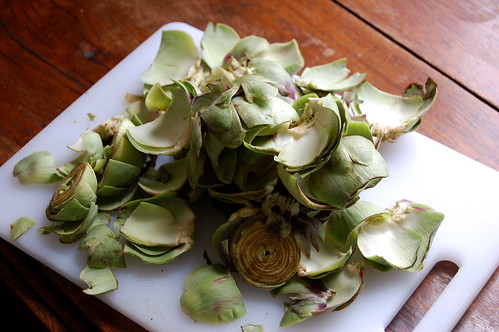
This recipe for baby artichokes braised with saffron, oranges, olives, and almonds is one I cobbled together from many sources. It would be at home almost anywhere in the Mediterranean, from Sicily to Cyprus, where all these ingredients are native. I have to say, I hate prepping artichokes, so it has to be a pretty good recipe for me to even go to the trouble. But the nice thing about baby artichokes (besides the fact that they're so cute. Really, just look at those little things). The best part is that baby artichokes really cook all the way through, so you have less concern about tough chewy leaves or spiky centers.

Other than the time it takes to prep the artichokes and the oranges, the recipe is a snap. You do a quick braise of the artichokes with a bit or orange juice, water, and saffron, and when they are tender you sprinkle over them orange segments, olives, almonds, and mint. It's beautiful to serve and full of contrasting sweet/salty/soft/crunchy notes.

Artichokes with Saffron, Orange, Olives, and Almonds

1 lb baby artichokes
a splash of lemon or vinegar
1 large orange or 2 small (I used Mineola)
a pinch of saffron
2 tablespoons chopped black olives
2 tablespoons slivered almonds
a few leaves of mint, slivered

1. Prepare a large bowl of water with a splash of lemon or vinegar. Prep the artichokes (see tutorial here). First slice off about an inch of the top. Then, remove the tough outer leaves. Finally, trim the bottoms and slice the hearts in half. Place prepped artichokes in acidulated water to prevent discoloring.
2. Section the orange by removing the outer pith and then slicing between the membranes to remove the sections (see tutorial here). Squeeze the remaining membrane part over a bowl to extract the juice and set aside the sections.
3. Add the saffron and about 1/2 cup of warm water to the bowl with the orange juice.
4. Heat some olive oil in a pan, drain the artichokes, and saute them briefly over medium heat. After a minute or so, add in the saffron water. Make sure the liquid cover the artichokes halfway up their sides. Cover the pan and let simmer for 15 minutes, or until tender when pierced with a knife.
5. Uncover the pan and let simmer until the sauce reduces to just a glaze. Remove from heat.
6. Meanwhile toast the almonds.
7. Sprinkle orange segments, chopped olives, almonds, and mint over artichokes. Serve slightly warm or at room temperature.

08 May 2010

Watercress Soup


My mother always waxed rhapsodic about watercress, she'd tell tales of how she and my grandmother would gather watercress in the creeks around their home, of the peppery flavor added to tea sandwiches and salads. Now, my grandmother was a tenacious woman, not afraid to get her hands dirty, but somehow I have a hard time picturing my grandmother's Chanel lapel pins tromping around in a stream.

Nonetheless, I always pick up some watercress when it's in season as if compelled by my mother's tales, but I have often found the leaves were thick and tough, or far too peppery to eat as part of a salad. But this year I spied in my grocery a delicate plant of tiny green leaves, with its root ball preserved in a small container of water. Watercress is a fascinating organism- it thrives on the edge of streams, where it has to have constantly flowing water to protect it from parasite and snails. Watercress can quickly become wilted and bitter once removed from fresh water, which explains those many unappetizing specimens I'd had in the past.

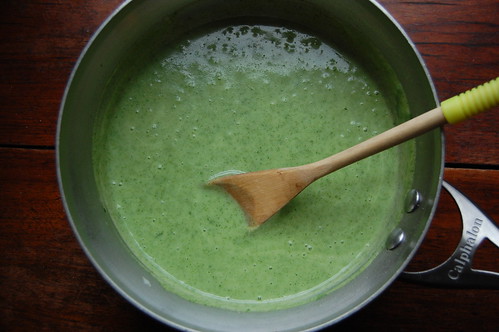
After a few pleasing crunchy salads, I turned the rest of the watercress into a pleasingly simple soup, one thickened with potato and a splash of cream, and bright green like a Shrek cartoon. It's simple in the way many good things are, you could serve it cold like a vichysoisse, or I like it warm with a nice hunk of toast.

Watercress Soup

olive oil, salt
1 large bunch watercress, leaves only, discard the stems
1 medium sweet yellow onion, peeled and diced
1 medium russet potato, peeled and roughly chopped
water or vegetable stock, about 4 cups
splash of heavy cream, optional

1. In a large saucepan, heat the olive oil over medium high-heat. Cook the onions, stirring until browned and caramelized, at least 15 minutes.
2. Pour in the water or stock, add the potatoes, season with salt, and bring to a boil. Let simmer until the potatoes are tender when pierced with a fork. If the water level gets low, add some more. When the potatoes are tender, toss in the watercress leaves and stir until wilted and bright green, a few minutes.
3. Remove the pot from the heat and allow to cool slightly. Place in a blender (or using an immersion blender), blend until very smooth. Add the cream if desired, and taste for seasoning. Reheat before serving.

17 May 2008

Dinner, at Least


My goodness, has it been so long? I certainly did not mean to leave you for over a week without a recipe. It seems I’ve been spending most of my time at work lately, and while I truly love my job, too much time behind a computer screen makes me less inclined to want to face one during my time off. But I’ve actually missed you all in a funny sort of way, like extended guests at my own little table.

I’m afraid what I have to offer you as consulation isn’t anything that’s unique or innovative or something you haven’t seen before. It did, however, make up my much-deserved late night dinner twice this week, and is perhaps one of the better quintessential spring-time dinners I can think of. Best of all the whole thing is ready in about twenty minutes start-to-finish.

Roast asparagus is probably one of my quintessntial spring time dishes. Just like I eat plate after plate of tomatoes in summer and butternut squash in fall, I make roast asparagus for weeks on end when the weather finally warms up. I really never tire of it. Sure, you can dress the asparagus up with splash of balsmaic vinegar or a bit of lemon zest or the tiniest shavings of cheese, but I’m perfectly happy with just good old plain. Sometimes I make roast aspragaus sandwiches with just a smear of spreadable goat cheese and toasted sourdough bread.

The other part of my favorite spring dinner is a soft shelled crab, pan fried. I am lucky enough to live somewhere with access to local fresh seafood and I couldn’t imagine my life without it. I’m a recent convert to soft-shells, though my mom always ate them I only first tried them about a year-ago. But now I love them, and those little crunchy fried legs, they’re my favorite part.

So there you have it, I will offer you dinner at least. But not to worry, I picked up the latest copy of Marth Stewart while traveling this week and there’s an article on pies that I’m dying to tackle. I’ll let you know how it goes.


Roast Asparagus
Preheat the oven to 425 F. Wash asparagus and snap off the woody ends. Drizzle some olive oil on a baking sheet and roll the asparagus around to coat. Sprinkle with salt. Roast in the center of the oven for about 12 minutes, shaking the pan once or twice to ensure even cooking. Time may vary slightly depending how thick/thin your spears are. Serve, with a squeeze of lemon juice, if desired. (You can also use the same process to make roast green beans, time will be closer to 18-20 minutes.)

Pan-Fried Soft Shelled Crab
Your fish monger should have prepared the crabs by removing the lungs and eyes. I like to also reach under the shell and scrape out the yellow tomalley. Get two shallow plates, place a couple spoonfuls of plain yogurt in one and thin it with some water until it is the consistency of cream (you could also use buttermilk, but I'm more likely to have yogurt on hand). Place equal amounts flour and cornmeal in the other plate and season with some salt and red pepper. Heat about half an inch of oil in a cast iron skillet. Dredge crabs in yogurt, then in flour mixture. Add crabs to hot oil, pan fry about 3 minutes on each side, until golden. Drain on paper towels, serve immedately.

03 August 2007

A Soup Made of Ladies

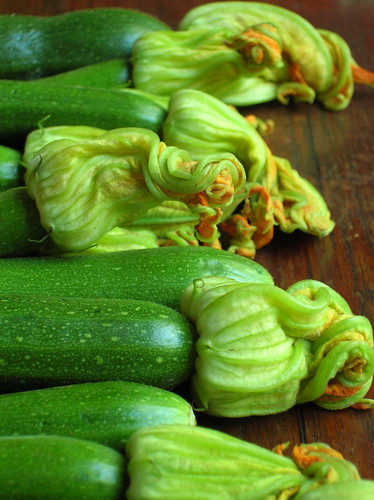
female zucchinis
Title IX: We are female zucchinis, we demand equal rights!

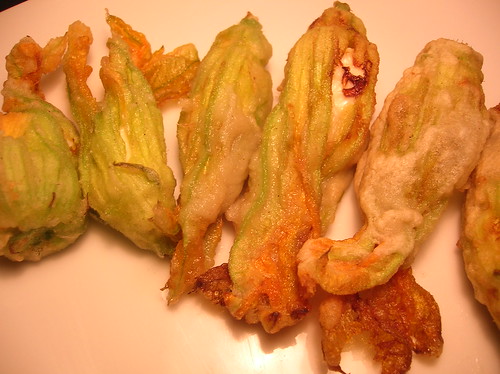
I’ve been pining away for weeks now for a good squash blossom fritter. It’s one of the things I love this time of year, when everyone else is going zucchini-crazy, I’m foraging for the blossoms. Since I don’t grow my own squash, I don’t have my own blossoms to pick, and I haven’t found any at the market yet that look viable (like this). I always stuff them with a little cheese-egg mixture (Boursin cheese works well), then batter and fry them.

Dear M., who’s been hearing me go on about the squash blossoms I cannot find, sweetly brought me some squash from the market the other day. They were beautiful, but I quickly recognized they weren’t the kind I use for stuffing. Then I remembered: squash are male and female. The large male blossoms are the ones used for stuffing, while the female blossoms grow attached to the little squashes. Today’s anatomy lesson.


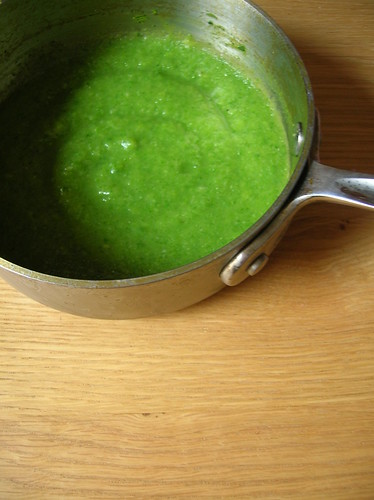
Here’s a tip from our farmer: start picking your zucchini as soon as possible. Picking your zucchini early will prevent the glut of baseball-bat-sized zucchini later in the season. And not only will you have fewer zucchini to deal with, but the tiny zucchini are the most flavorful, tender, and beautifully green. Small squash with their flowers still attached are often used in cooking, in Greece they might be folded whole into an omelet, or used in Mexico as a filling for quesadillas. I made simple soup that is really just a purée of baby (female) zucchinis and their flowers. It’s simple in the way that summer food can be: bursting with flavor and color. I like to call this a soup made of ladies, or a soup for ladies, but I think both sexes will enjoy it.

After making the soup, I finally got hold of those blossoms I was coveting, so I made a little composed dish: purée of (female) zucchinis topped with (male) blossom fritters. Both components are delicious on their own, but they also go together perfectly. Equality of the sexes and all.

Eeek, I know, horrible picture, but check out that oozy cheese.

Purée of Female Zucchini
Squash blossoms are both male and female, the females produce fruits, while the male do not. Whole female zucchini, with both squash and blossoms, are puréed together in this simple but wonderful summer soup. Adding a few fresh basil leaves is also a nice touch.

10-12 baby female zucchini with their blossoms still attached
2 tbl olive oil
water or stock
salt to taste

1. Slice the zucchini, discard the nubby top piece, and dice the flowers. Heat the olive oil in a wide saucepan and sauté the zucchini rounds over medium heat, until they begin the soften and have some brown spots. Add the zucchini flowers and toss just to combine. Immediately add just enough water or stock to cover the bottom of the pan by about one inch and season with salt. Bring the mixture to a boil, then simmer until everything is soft and combined, only about 3-5 minutes. Let the mixture cool slightly, then purée in a blender until smooth.

Male and Female: Purée of Zucchini Topped with Squash Blossom Fritters
Whole female squash are used in the purée, while male squash blossoms are used to make delectable fritters.

purée of female zucchini, as above
for the fritters:
4 large male squash blossoms
1/4 cup Boursin cheese
1 egg
1 cup flour
1 cup very cold mineral water
oil, for deep frying

1. Prepare the zucchini purée as directed above.
2. Heat the oil in a deep pot. In a small bowl, beat together the egg and the Boursin cheese. Stuff each blossom with about a tablespoon of cheese mixture. In another bowl, combine the flour and the cold water in a few swift strokes (it’s ok if it’s lumpy). Dredge the flowers in the batter, then fry in the hot oil for a few minutes until crisp and browned. Drain fritters on paper towels.
3. Ladle the purée in four shallow bowls. Top each bowl with a squash blossom fritter, serve immediately.
________________________________________

19 June 2007

The Positive Side of Traffic Jams

Last Sunday threatened to be bad. We awoke early after a night of celebrating and champagne, slightly bleary eyed but relatively cheery, if that word can ever be applied to me and morning hours. I suggested we walk down to the Dupont Circle farmers market, remembering my Sunday summer routine when I had lived in Washington. However, it turned out to be further from the apartment where we were staying then I thought, as we trudged the many blocks in coffee-less silence I tried optimistically to point out that at least it was easy to take the subway back. Only a few steps from the market we stopped for that much needed caffeine only to wait for what had to be the longest to-go cup ever. The morning threatened to devolve as the coffee-devoid minutes ticked by, we exchanged terse words over breakfast pastries. Luckily, the coffees finally arrived (Italian espresso + french press!) and were delicious enough to revive us.


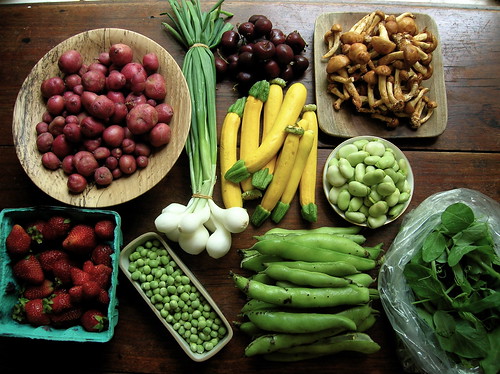
The selection at the market was beautiful, there was the same man with the gorgeous lettuces, the beautiful French tarts, the baskets of glorious strawberries. We gathered up what we could carry, and then rain threatened and we dashed to the subway. After a trip to the Corcoran, it was time to head home. Comfortably in the car, we dodged a protest and thought we’d escaped the worst traffic when, at the edge of the beltway, we came to a stand still. We inched along, realizing it would be a long trip home.

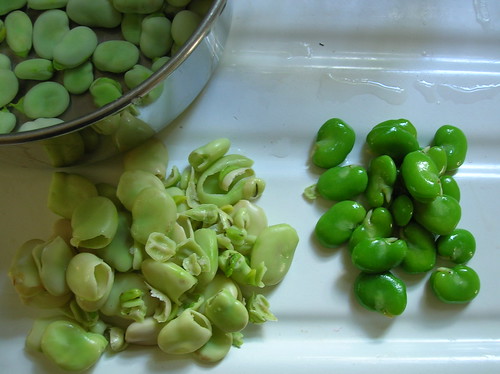
When the traffic threatened our sanity, we pulled into a strip mall for a cup of coffee, and I wandered into the neighboring shoe store and emerged with a pair of rock-bottom priced green sneakers. Back in the car, I decided to pass the time shelling the fava beans I’d purchased, pulling them from their soft green pods. I adore favas but they are a major pain, you have to shell them not once but twice, first out of their pods, then blanching them and slipping each bean out of it’s individual casing.


A few shortcuts later, we made it home, spirits and lettuce intact. As I unloaded our purchases, I realized we’d been a little overzealous in our grocery shopping as the refrigerator threatened to burst at the seams. While many people may welcome a full fridge, I see it as one big burden: all those things to be prepared, cooked, eaten! I immediately began culling through recipes, looking for a way to combine a lot of our produce into one dish. That was when I found scaffata.

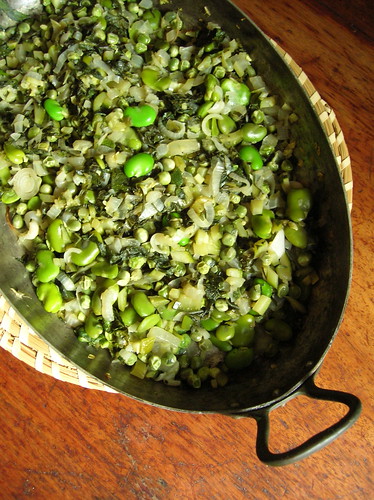
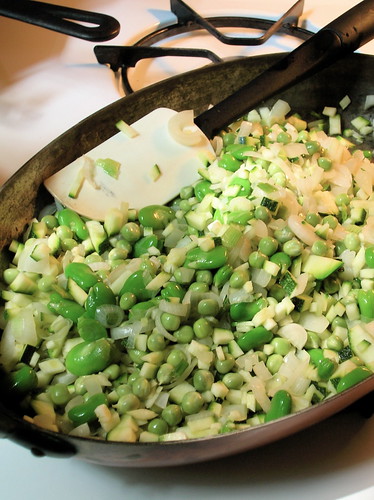
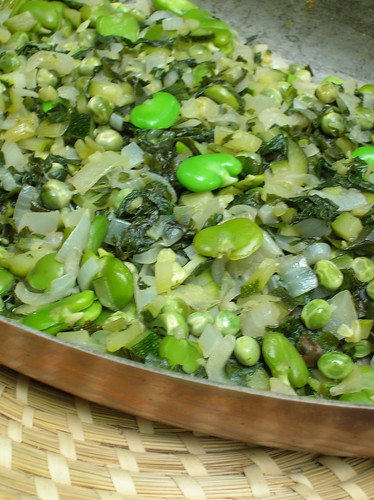
When it comes to recipes for spring produce, simple asparagus or that old Roman recipe vignarola always steal the show, but I’ll admit I’m always terribly underwhelmed by vignarola. But scaffata, where have you been all my life, because I’m infatuated. I even like saying it, scaffata, your slow-cooked tangle of peas, beans, and onions with slivers of greens and zucchini. Like many vegetable dishes, there was a good bit of prep work involved, though nothing more complex than chopping, and I had already done most of my shelling in the car. Scaffata has already been deemed ‘a keeper’ in our house, and I can foresee a shortcut version using frozen peas and edamame in our future. With all those threats of Sunday dissipated, the potential negatives evolved to positives (good coffee, a refreshing walk, new shoes!), and we sat down to a pleasant evening and a new favorite dish.


Scaffata (Braised Spring Vegetables)
The name of this Ligurian dish comes from the Italian verb scaffare, to shell.The outermost, less tender leaves of a head of greens, which you may not want to use in a salad, are perfect for this dish. If fresh favas are unavailable, substitute frozen baby lima beans or edamame. Adapted from Lidia Bastianich

3 tablespoons extra virgin olive oil
1 cup chopped scallions (white and tender parts; about 6 scallions)
1/2 cup chopped onions
2 1/2 pounds fresh peas in the pod, shelled (about 2 cups)
1 1/4 pounds fresh fava beans in pod, shelled, blanched, and peeled (about 1 cup fava beans)
1 1/2 cups finely diced zucchini
2 cups thinly shredded escarole or romaine leaves
1 tablespoon finely shredded fresh mint leaves

1. In a large, heavy casserole, heat the olive oil over medium heat. Add the scallions and onions and cook, stirring, until softened, about 10 minutes. Add the peas, fava beans, zucchini, and season lightly with salt and pepper. Stir well, reduce the heat to very low, and cover the casserole tightly with a lid or aluminum foil. Cook for 15 minutes, stirring once or twice.
2. Add the romaine and mint, cover the casserole tightly and cook, stirring occasionally, until the vegetables are very tender, about 25 minutes more. (The vegetables should give off enough moisture during cooking to prevent sticking or burning. If you find they are sticking, you can add a few tablespoons of water. Make sure the heat is very low and the pot is tightly covered before continuing to cook. It is fine, however, if the vegetables do brown a little.) Season to taste with salt and serve hot.
________

03 May 2007

Artichokey


The first time I saw an artichoke growing in its natural form was driving through the Bekaa Valley of Lebanon. It had been a confusing day: touring a vineyard and a wine tasting that could have been in France, an annoying Hezbollah checkpoint, passing the odd Roman ruin in the desert. Driving through the semi-arid landscape, there was a whole field of large spiky-leaved plants with tall stalks, “artichokey” said my seat-partner as I looked wide-eyed at the giant thistle-like plants. It is thought the Arabs were the first to cultivate the artichoke while trying to copy Italian cardoons (though Italians, I am sure, would claim primacy). Minutes later, our bus made a crashing turn off the highway and barreled down a dirt road, stirring up dust in a landscape of fields and farms and which was alarmingly devoid of any buildings as far as the eye could see. That is, until we pulled up to a long low restaurant. Situated amongst the artichoke fields, it’s interior revealed bubbling fountains and a packed house of patrons at 3 in the afternoon. Like any good adventurous traveler, I knew I was in for a delicious and lengthy meal.

Previously, my acquaintance with artichokes had been every spring, when my mother would buy artichokes and steam them and we would peel the leaves and dip them in a big bowl of clarified butter, the tooth-torn leaves piling up on our plates as we ate our way towards the meaty heart. Now, half-way around the world, along with the plates of hummus and tabboule, came big steaming platters of artichokes with nutty butter for dipping: the same preparation, only with the odor of nargileh swirling and the strains of Amr Diab overhead. That afternoon there were also artichoke-bottoms, deftly scooped out and filled with a meat and pine nut stuffing, then covered in tomatoes and béchamel sauce and baked, but it was those leaves I savored the most.

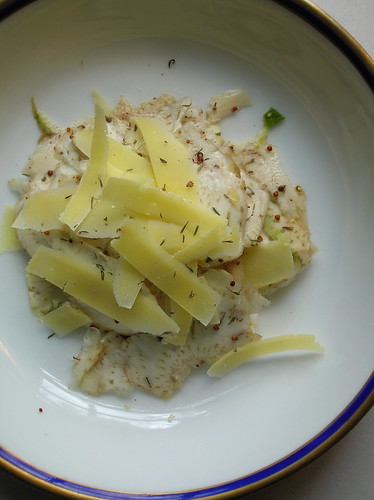
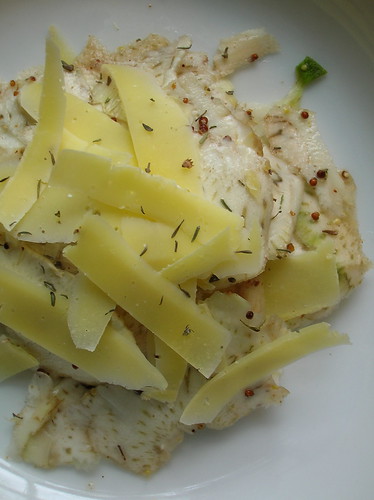
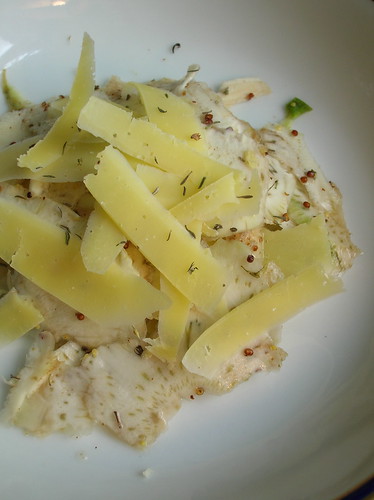
A friend of mine has long-praised a shaved artichoke salad, and this season I decided to give it a go. Just like seeing those artichokes in the field, this salad was a whole new perspective on the vegetable. Like a high school reunion where the dorky kid with the braces and thick glasses returns tall, blonde and enviously successful, so my artichoke transformed into elegant crunchy slivers layered with sharp cheese.

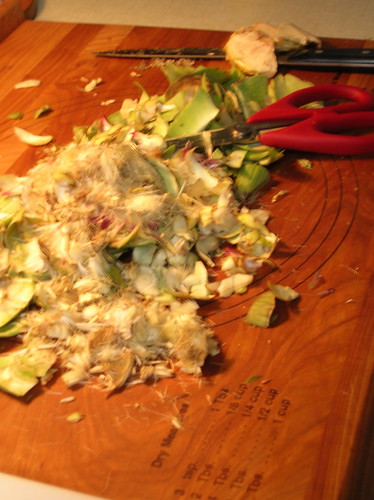
There’s no getting around the fact that trimming the artichokes is a major pain, something to be done only when the season inspires or when enough time has passed that you’ve forgotten the curses you uttered the last time you did it. My own messy process looked much like a a child in a chicken coop, knives and feathers flying. However, you really shouldn’t let that dissuade you, because this salad is truly delicious. It has me wishing (once again) that American markets sold pre-prepped artichokes. I happened to have an asian pear laying around, and a few sweet slices of it paired wonderfully well with the salad, but I imagine some slivers of peppery fennel would also work well. Either way, I hope you are enjoying springs bounty in artichokes and otherwise.


Shaved Artichoke Salad
This flavorful crunchy salad is worth the annoyance of prepping the artichokes. Serves 2-3.

3 artichokes
4 oz parmiggiano-reggiano cheese
1 asian pear (optional)
3 tbl lemon juice
3 tbl olive oil
1 tsp mustard
pinch salt
2 tbl finely chopped parsley

1. Fill a shallow bowl with water and add 1 tablespoon of lemon juice.
2. Pull off the external leaves of the artichoke and cut off most off the top. Pull away the leaves and use the knife to pare away everything but the meaty bottom of the artichoke, scooping out and discarding the fuzzy choke. Place the artichoke bottom in the acidulated water to prevent browning and repeat with remaining artichokes.
3. Using a mandoline or a sturdy vegetable peeler, shave the artichoke bottoms over the bowl, letting the shavings drop into the acidulated water.
2. In a small bowl, whisk together the remaining 2 tablespoons lemon juice, olive oil, mustard, and salt. Drain the artichoke slivers and toss with the dressing to coat. Thinly slice some of the asian pear (I usually only use about half), and add to the bowl with the chopped parsley, toss everything to combine.
3. Place half the artichoke mixture on a serving platter. Shave some of the cheese over the artichokes to cover in a thin layer. Cover with the remaining artichoke mixture, then shave more cheese over top. Serve immediately.

__