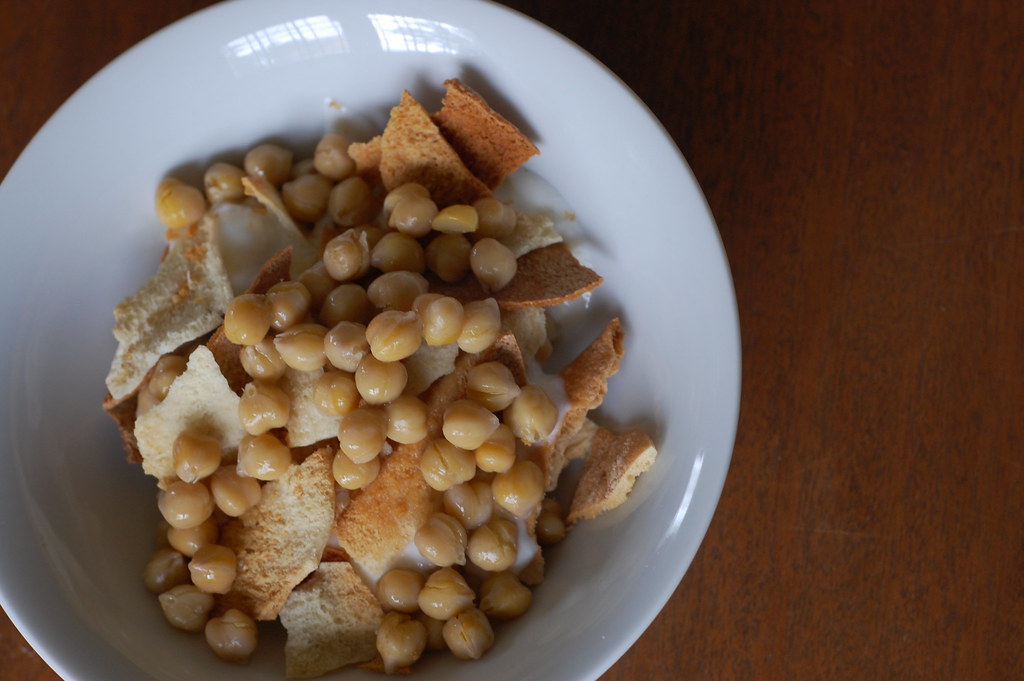
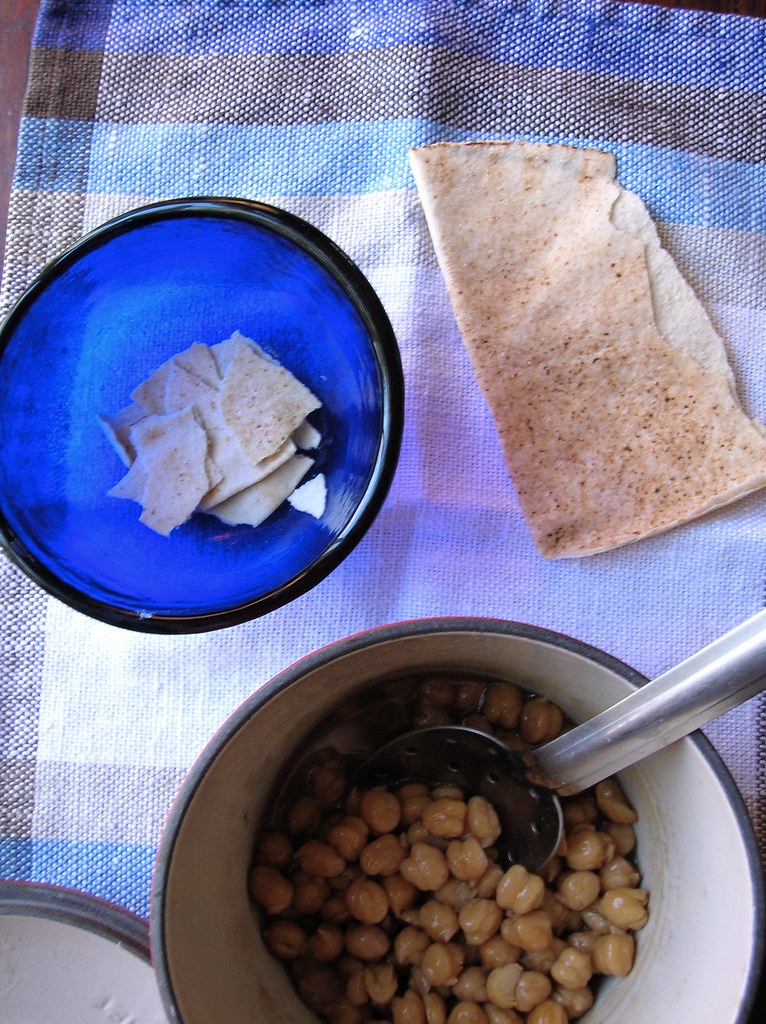
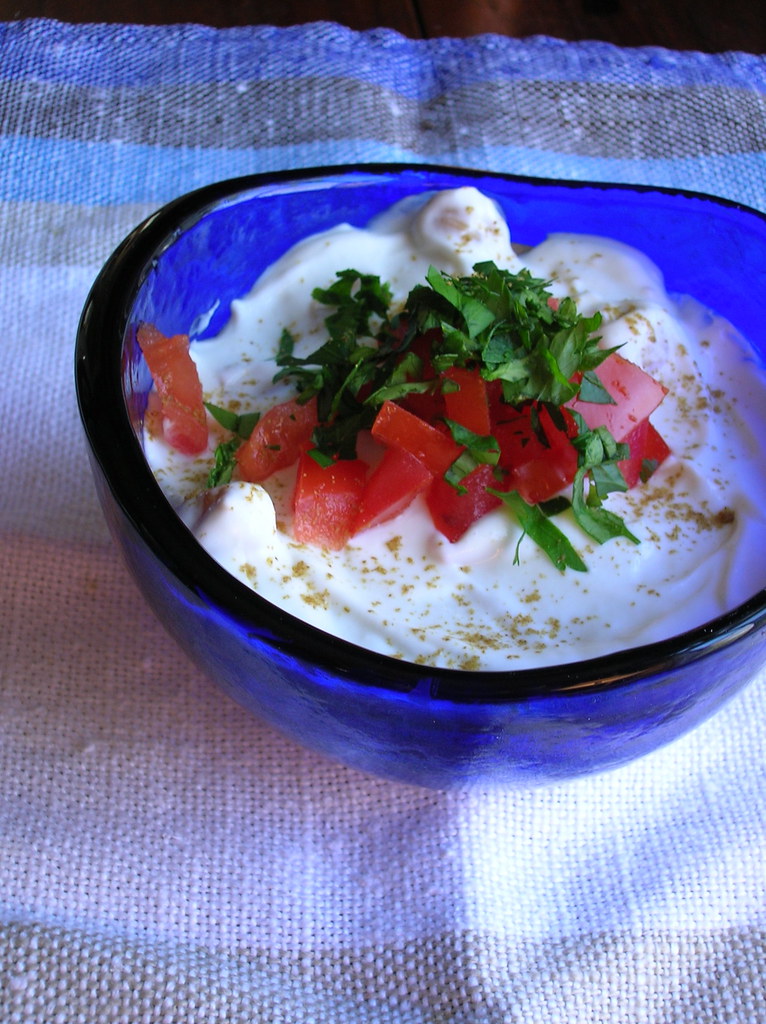
Showing posts with label Syrian. Show all posts

28 May 2011

Tasty Beef

DSC_0020

Yes indeed, today's recipe really is called "tasty beef rolls." I'm sure it has a real name, but the family that taught me to make this dish called it that, so that's what I call it too.

But first, I want to talk about the Italian-Syrian connection. Between 828 and the early 1700's Italy, specifically Venice, acted as a bridge between the East and West. A robust trading relationship existed, with trade with the Mamluk empire (at that time ruling Damascus and Egypt) counting for 45% of Venetian maritime trade. The relationship is depicted in a few famous paintings, including "The Reception of the Ambassadors in Damascus," 1511. Though that relationship petered out with the rule of the Ottoman empire and the boom of the American new world, remnants of the relationship are seen throughout Syria. There's the large number of Italian students crowding the halls of University of Damascus, mortadella is one of the most popular choices for a Syrian sandwich, and many similarities are seen between traditional Syrian and Italian woodwork and other crafts.

DSC_0021

So, you won't be surprised when this dish looks a little bit Italian, it even looks like it could be a distant cousin of that Italian-American classic the braciole. I don't know the origins of this dish, heck I don't even know its real name. But it is indeed tasty (laziza, in Arabic).

Basically you take some meat, pound it out into thin little squares, and you stuff them with a mixture of garlic, herbs, really whatever you'd like. In this one I've added in some diced up dried apricots, which is traditional in some Syrian families. I also added a diced up carrot, because I felt I was needing my vegetables, which is not traditional, but I think it's a nice addition. Then you roll up the beef into little rolls. Traditionally this is tied with a needle and thread, but I just used a toothpick (easier to make and to eat!). The beef is then simmered in a simple tomato sauce until tender. Yes, it's a little tedious to make the rolls, but it's really delicious, and manages to be both hearty and light at the same time. So there you go, tasty beef rolls.

DSC_0022

Syrian Style Beef Rolls
If using fresh tomatoes that are very watery, drain the watery seed part and use only the flesh (in which case you may need more tomatoes). You could probably do this with a different cut of beef, I've just never tried it. Also, if you have a bit of leftover filling after stuffing the rolls, you can just saute it with the onion when making the tomato sauce, as I did in the photo above.

1/2 lb sirloin steak, sliced
3 garlic cloves
1/2 cup chopped parsley
1/2 cup chopped cilantro
1/4 cup finely diced dried apricot
1 carrot, cut into very fine dice
1/4 teaspoon each cumin, allspice
juice of 1 lemon
1 onion, chopped
24 oz chopped tomatoes (fresh or canned)
olive oil, salt, and pepper to taste

1. Smash garlic in a mortar and pestle to a paste. Place garlic in a bowl with parsley, cilantro, apricot, carrot, cumin, and allspice. Season with salt and pepper. Add lemon juice and olive oil, dressing the mixture as if it were a salad.
2. With the spiky side of a meat mallet, pound out the steak squares. Place a bit of filing on each square, roll up, and secure with a toothpick. Place the rolls on a tray as you work, then sprinkle them lightly with salt.
3. Heat some olive oil in a large wide pan. Saute the chopped onion until translucent. Add the beef rolls to the pan, searing until lightly browned on all sides. Add the tomatoes and season with salt and pepper as necessary.
4. Bring to a simmer, loosely cover the pan, and let simmer for about 30 minutes. Check the pan occasionally to make sure it is not dry. Cooking time will depend on how thinly you cut the beef and how big your rolls were. The best way to test for doneness is just taste a bit of one of the rolls.
5. Serve beef with tomato sauce over rice or as desired.

17 May 2011

Apricot Ma'amoul

apricot ma'amoul
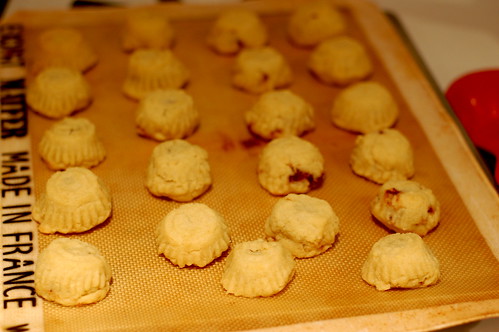
There is a beautiful pastry shop in the bottom of one of the hotels in Damascus, I can't remember its name but somewhere near Sepky Park, that sells the most refined versions of Arab sweets. The tiniest baklava you've ever seen, cookies filled with date puree so light it was almost like custard, and the most elegant ma'amoul in a variety of seasonal flavors - plum, peach, apricot, fig. I was inspired by those to make my own apricot ma'amoul, though much more rustic and humbling in appearance.

But the flavor is there, tart, tangy. I miss good fresh apricots, the kind that would arrive in Damascus on trucks everyday, just picked, dripping the moment you bite into them. They are hard to find like that farther away from the Mediterranean (goal: move back closer to to the Med). So this time I used dried apricots, just re-hydrated and simmered in a bit of honey and cinnamon and allspice. I'm pretty sure Paul ate most of them, which has to be a good sign.
apricot ma'amoul

Apricot Ma'amoul

Ma'amoul molds, like the one pictured above, are available at Middle Eastern groceries or can be ordered online. Depending on the size and style of your mold, you may need more or less filling for the recipe (it depends on how thin you make the crust). Makes about 40 small size cookies.

crust:
1/2 cup solid shortening
8 tablespoons or 4 ounces butter
1 cup flour, all purpose
2 cups semolina
1/4 teaspoon salt
1/4 teaspoon baking power
1/4 cup granulated sugar
1 teaspoon rose flower water and
1 teaspoon orange flower water
7 tablespoons water

filling:
1 cup chopped dried apricot (chop into small pieces)
4 tablespoons honey
1/4 teaspoon each cinnamon, allspice

1. Bring 2 cups of water to a boil, pour over apricots, let stand to soften while you prepare the crust.
2. Prepare crust: Melt the shortening and butter in the microwave in a large bowl. Add the flour, semolina, salt baking powder and sugar and stir to combine. Add the rose and orange flower waters and gradually add the water, stirring to make a crumbly dough. Put the dough in the fridge to rest while you make the filling.
2. Filling: Scoop out apricots and place them in a sauce pan with about 2 tablespoons of their water (reserve remainder of soaking water in case needed). Ad remaining filling ingredients in a saucepan and cook over low heat for 10-15 minutes, adding water as necessary, until the apricots are very soft and mashed together.
3. Preheat oven to 325 F. Flatten a tablespoon of the semolina dough in the palm of your hand. Add a small amount of filling. Fold up the semolina around the filling, adding a little more dough to enclose the ball. Roll into a ball and press into a mold, or simply place on a greased baking sheet and decorate the top with the tines of a fork.
4. Bake 12-15 minutes until solid but not darkened in color. Let cool, then shift powdered sugar over top.

26 April 2011

Fakhda bil Furn: Roast Leg of Lamb

DSC_0207
I hope everyone had a happy Easter (or Passover) holiday. I've been spending a lot of time following the recent events in Syria and wondering what I should say here in this space. Some good friends of mine traveled to Syria in early March, before any hint of crisis, and sent me the most wonderful letter. In it he writes,

"and then the men's club always loud with talk as the men play backgammon or cards in clouds of cigarette smoke on wooden tables in wooden chairs. It is the same quality sound I heard outside a Czech men's bar before the wall fell, hearty unabashed civilized man buzz, a beautiful song of comradery, and I'm not talking NFL fanny patting."

It is such a beautiful letter, and that image, the image of Syria like East Germany before the wall fell, is one that rings true for me now. I've been closely following blogs and facebook, checking in with my Syrian friends, reading the nuanced reporting of Anthony Shadid and Cal Perry. I have much to say, perhaps too much to say, but all I will say now is that I hope all the Syrians I've known, kind, generous, welcoming people, are staying safe and out of harms way.

DSC_0220

For Easter (or really any holiday), we have a very festive dish called fakhda bil furn, which translates to leg of lamb in the oven. The lamb is very simple, marinated with garlic and spices and roasted in the oven until just done. But it's the pilaf that accompanies the lamb that makes this a full dish. Here I've made the pilaf with freekia (roast green wheat) but it is often made with rice. The pilaf is studded with ground meat and onions and not. Often, this dish is a meat festival, the pilaf packed with pounds of ground meat. But I like to make the meat merely an accent in my pilaf, letting the spices and nuts come through as well (and also making the dish a tad lighter!).

DSC_0221

The carving job we did in these photos is atrocious, but this can really be a beautiful dish. Present the carved lamb on top of the pilaf and toss some sauteed almonds and pistachios on top.

DSC_0225
Fakhda bil Furn Roast Leg of Lamb with Pilaf

for roasting:
1 6-pound bone-in leg of lamb
2 carrots, roughly chopped
6-8 pearl onions, peeled

marinade:
2 garlic cloves
pinch salt
2 tbl olive oil
2 tbl white vinegar (or lemon juice)
1 tbl oregano
1/2 tsp each allspice, cinnamon, cumin
a few grinds of fresh black pepper

pilaf:
2 tablespoons butter
2 cups freekia or rice
1 large onion, diced
1/2 lb ground lamb
1/2 teaspoon cinnamon
12 teaspoon cumin
1/3 cup pine nuts
1/3 cup blanched almonds
1/3 cup blanched pistachios
salt to taste


1. Trim all visible fat from the leg of lamb. Crush the garlic in a mortar and pestle with the salt. Mix in the remaining marinade ingredients and rub over lamb. Cover and refrigerate overnight.
2. Preheat oven to 425F. Straddle a large roasting pan over two burners. Sear the lamb on medium-high heat until browned on all sides. Transfer to the oven and roast for 20 minutes. Lower the heat to 325F, add the carrots and onions, and roast for an additional 45-60 minutes. The lamb should read about 130F on an instant-read thermometer for medium rare. (Time will vary depending on weight of lamb). Remove, tent with foil, and let rest before carving.
3. While the lamb is cooking make the pilaf. In a large pot, melt 1 tablespoon butter over medium-high heat. Saute the onion until translucent, then add the ground lamb and saute, breaking up into bits, until nicely brown. Add the freekia and spices and stir for a minute to toast. Add 4 cups of water, bring to a simmer, then cover the pot and cook on low heat. Cook until freekia (or rice) is tender, about 20-25 minutes.
4. In a small pan, melt the remaining butter, add the nuts and toast until golden.
5. Carve the lamb. Arrange the pilaf on a platter, place the lamb over top, arrange the roast carrots and onions around the lamb. Sprinkle the toasted nuts over the top and serve.

01 March 2011

Currently Eating: Manoushe bi Kishik


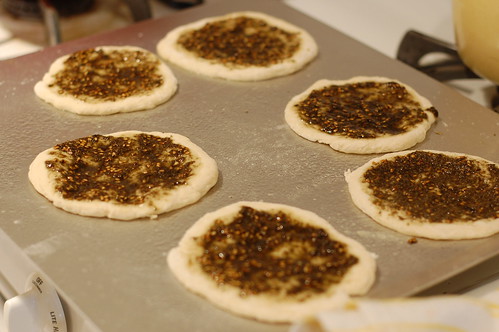
This is manoushe bi kishik, or a flatbread with kishik. Kishik is made by mixing yogurt and bulgur and letting it ferment. Kishik can be served fresh (mixed fresh and only a few days old, which you'll find in Middle Eastern cheese shops). Or kishik can be dried completely in the sun, and then ground to a powder. This powder is then rehydrated as a soup or sauce and has a very distinctive sour taste.

Pictured is a very traditional kishik flatbread, where kishik powder is mixed with tomato paste, olive oil, and sesame seeds and spread on bread. It's very mild and quite delicious.

26 January 2011

Potato Kibbeh

DSC_0146
I'm trying to up my kibbeh quotient on this site, and given that there are a myriad types of kibbeh that shouldn't be so hard to do. (For a review on kibbeh 101, check out this post.) Though the dumpling-shape type of kibbeh is the most famous, I thought it would be good to share one of the types of kibbeh made in a tray (kibbeh b'il sayniayah). Kibbeh in a tray can be made with meat or in several vegetarian variations including pumpkin, lentil, and potato. Today we're making the potato version, which I've heard referred to as the Middle Eastern equivalent of shepherd's pie, a comparison not undeserved.

DSC_0149DSC_0144

Potato kibbeh is basically a mashed potato casserole stuffed with caramelized onions and pine nuts. Meat can be added, but I often leave it out because I like to use the potato kibbeh as a side dish, especially for roast meats. The potatoes are made unique by the addition of traditional kibbeh spices and the use of bulgur, which gives the potatoes a slight nubby texture. It is very important to use the finest grade bulgur (it looks almost as fine as couscous or semolina), you may need to visit a Middle Eastern grocery for that. Potato kibbeh is a remarkably comforting dish, and unlike many kibbeh dishes that can seem delicate, fussy, or heavy with meat, it's one that you want on your table often, especially in these cold dark winter months.

DSC_0151DSC_0150

Potato Kibbeh
For some extra luxury, top the dish with pats of butter before baking. Many stores sell a kibbeh spice mix but you can mix your own spices per the instructions below.

1 cup of fine grade bulgur
boiling water
4 medium size potatoes (should equal 3 to 3 1/2 cups cooked mashed potato)
2 tablespoons butter
a splash of milk, cream, or ashta if available
salt
1 teaspoon kibbeh spices or baharat

2 large onions, halved and thinly sliced
1 teaspoon sugar
1/4 cup pine nuts
1 tablespoon butter
1/2 lb ground beef or lamb (optional)

For filling:
1. Heat some olive oil in a saute pan, add the onions and a pinch of salt and saute over medium-low heat. Cook they onions until they are well caramelized, this could take as long as 45 minutes. Add the sugar towards the end to enhance the onions' sweetness. Set aside.
2. If using, saute the ground meat in the pan until well-browned, add to the onions.
3. Saute the pine nuts in the butter until golden brown (watch them carefully). Add the pine nuts to the onion mixture.

For outer shell:
1. Peel and cube potatoes and set to boil in salted water until tender. Meanwhile, pour boiling water over blgur until it is just saturated (you don't want the bulgur to be drowning). Let bulgur sit for 10 minutes, then fluff with a fork, if it still feels dry you can add a bit more boiling water.
2. Drain the potatoes well and put them back in the pot. Add the butter, salt and spices and mash until roughly mashed. Add the bulgur (drained of any excess liquid) and mix together. Gradually add the milk/cream until the texture is like that of firm mashed potatoes.

Bake:
1. Preheat oven the 350 F. Spread half the potato mixture evenly in an 8x8 inch baking dish. Spread the onion mixture evenly over top. Spread the remaining potato mixture over top. Use a wet spatula to press out the potato mixture evenly. If desired, use a sharp damp knife the score a decorative cross watch pattern on the surface. Place the dish in the oven and bake until warmed through and just a tiny bit golden on the top, about 20 minutes. Serve immediately.

08 October 2010

Meatballs in Swiss Chard and Tahini Sauce

swiss chard, tahini, meatballs
I'm going to start this off by saying, I don't think this recipe really worked. In fact, it seems almost cruel to be posting this now - I'm in Paris oggling the beautiful markets, the abundance of fall squashes, and remembering back to this recipe made on a dark night in my poorly-lit kitchen with a recipe that only half-way worked.

swiss chard

This is an uncommon but not unusual recipe in the Levant, pairing a garlicky swiss chard and tahini sauce with meatballs. Sometimes the meatballs are plain, sometimes they are more fancy, made with kibbeh instead of meatballs. And sometimes this dish can be vegetarian, with chickpeas replacing the meatballs.

tomatoes cookingmeatballs

But here's the deal, I love the swiss chard and tahini sauce, it' the bright spot in this recipe. Friends, this part is a "put-it-in-the-recipe-file" keeper, it's garlicky and creamy and crunchy, and best of all good for you. I also like the meatballs, and really, who doesn't love a good meatball? But together, I just think this combination doesn't work. Maybe if you cooked the meatballs together with the chard for longer, maybe then the flavors would blend. But as it stands it's like two clashing armies battling it out for your taste buds.

So take my advice and just make the swiss chard sauce. Add in some chickpeas if you want the heft of a vegetarian main course. Serve it warm or cold, serve it over couscous or bulgur. Make some meatballs another time.

swiss chard, tahini, meatballs

Meatballs in Swiss Chard and Tahini Sauce

Adapted from various sources. Please read the above post for recommendations.
1 lb ground lamb
1 tablespoon salt
1 tablespoon baharat
1 onion, divided in half
olive oil salt
2 cups chopped tomatoes (canned or fresh)
2 gloves garlic, minced
1 bunch swiss chard
1.2 teaspooon Aleppo pepper
1/2 cup walnuts, toasted
1 recipe tahini sauce (see previous)

1. Grate half of the onion on the holes of a box grater. Mix together the meat, onion, salt, and seasoning, kneading the mixture with your hands until it is smooth and sticky. (Alternately, you can grind the onion in the food processor, then add the remaining ingredients, pulsing to combine.) Roll into meatballs about 1 inch in diameter and refrigerate.
2. Dice the remaining onion and mice the garlic. Heat some olive oil in a saute pan, then saute the onion and garlic until softened. Add the tomatoes, season with salt, and cook until slightly broken down and saucey, about 15-20 minutes. Set aside.
3. Meanwhile, set a pot of water to boil. Remove the ribs from the swiss chard and roughly chop. Add to the boiling water and blanch the chard to soften. Remove with a slotted spoon and chop finely. Add the chard and Aleppo pepper to the tomato sauce, return to heat, and cook until the chard is soft and cooked through. Set tomato sauce aside to cool down.
4. Heat up some oil in a very large frying pan, add the meatballs and cook the meatballs until well browned and cooked through (this may take quite a while). Work in batches if necessary.
5. Stir the half the tahini sauce into the now-cool swiss chard, and stir in the walnuts. Place the warm meatballs on top. Sprinkle with cilantro. Serve.

16 September 2010

Kebab Karaz (Cherry Kebabs)

DSC_0268

This dish is a specialty of Aleppo, Syria, where sour cherries are prevalent. I ate this dish for the first time at the famous Beit Sissi in Aleppo, a must-visit for anyone interested in Levantine cuisine. I'd never made kebab karaz because sour cherries are very hard to come by in my neighborhood. But if you're determined, possessing of friends from Michigan, or willing to order frozen or canned cherries, it is possible to get your fix. You can check out Middle Eastern or Persian/Pakistani groceries too.

At its simplest version, kebab karaz involves stringing sour cherries and little meatballs on a stick and grilling them. The idea is always to have the cherries and the meatballs approximately the same size. In a slightly more complicated version, you make a sauce with the cherries and add the grilled meatballs to it afterwards, and in the most complex version, you make kibbeh (follow this recipe) and then add it to the cherry sauce.

DSC_0260DSC_0263

I prefer the middle version, since it's easy and the cherry sauce that coats the meatballs is a beautiful glistening red, and delicious. The photo here really does not do it justice. I'm not a big eater of red meat, and yet I made sure I got the last portion of this to take for my lunch the next day. I think that says a lot.

DSC_0266

Kebab Karaz (Cherry Kebabs)

Be sure to serve this over flattened pieces of pita bread, or over rice, to absorb the juices.

1/2 an onion, finely diced
4 cups sour cherries, pitted
2 generous tablespoons pomegranate molasses
2 tablespoons sugar, or to taste
1 pound ground lamb or beef
2 teaspoons baharat
1/2 teaspoon cinnamon
1/2 teaspoon cumin
2 teaspoons salt
black pepper to taste
cilantro, pine nuts, for garnish

1. Prepare meatballs: knead the meat and remaining ingredients together until the mixture is smooth and sticky (you can also pulse it in the food processor if you want. Shape the mixture into balls the same size as large cherries and string onto kebab skewers. Refrigerate.
2. Preheat grill.
3. Saute the onion in some olive oil in a large skillet until it is translucent and tender. Add in the cherries, pomegranate molasses, and sugar and stir to combine. Simmer for 5-10 minutes, just to combine.
4. Grill the meatballs until nicely browned on the outside and cooked through. Add meatballs to the cherry sauce. Garnish with cilantro and pine nuts as desired. Serve immediately over rice or bread.

01 January 2010

New Year Vegetable Plate


This year was my first time spending the holidays without my mother, and I'll admit I was terrified. I pictured myself, the child with no parents, no siblings, no grandparents, lonely and sad on the holidays. And you know what? It was fine. There was Thanksgiving in Texas with my uncle, and Christmas with wonderful friends, and someone even made me a stocking, and gifts of cookbooks, and kobenstyle pans, and novels and jewelry. And it all went by, and I have to say it was pretty fun.

And at the same time I was stuck with this nagging feeling, the feeling that it just wasn't the same. That without my mom, Christmas will never feel like it used to, there will never be all those presents with her handwriting under the tree, or her silly wearing of the those crowns that come with firecrackers at Christmas dinner. And what I felt wasn't so much sadness, but rather this clear delineation between childhood and adulthood. This stark black line between 2008 and 2009 that said now you have to fend for yourself. Some people never have this line, some people slip between childhood and adulthood in a series of slow transitions, they go from spending Christmas with their parents to spending Christmas with their own children and a slow natural progression. They do not have the black line.

I think of 2009 as the year I spent mirred amidst the headlines. As the news droned on about the housing crisis, I fought with mortgage companies to sell my mother's house, perplexed at how the act of giving them their money could be so confoundingly complex. I filed claims with health insurance companies while 3 blocks away the House and Senate debated much needed health care reform. And in the midst of all this, I packed pounds of body armor into my car, and sent the boy I love off to Afghanistan. I think we need some better headlines.

I'm glad 2009 is over. For the new year, it would be traditional for me to make hoppin' john, and greens, and cornbread. But I went to the store yesterday, and I just bought all sort of vegetables, because I thought this year needs a new start. A healthy, vitamin-enriched way to begin the year. And so I present to you, the new year vegetable plate.

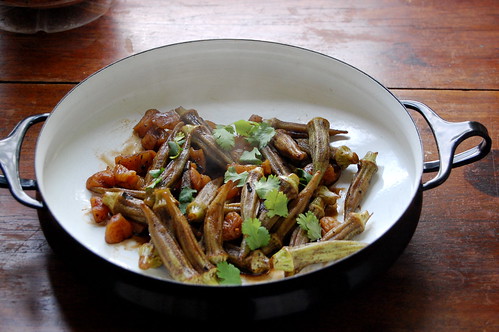
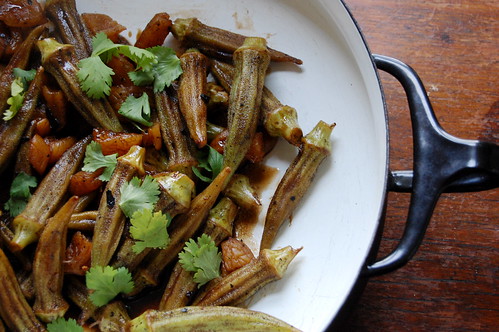
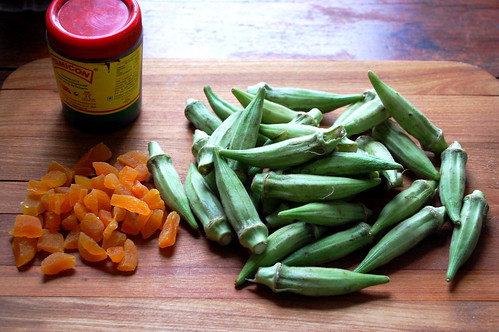
We have pan-roasted brussel sprouts, mashed carrot salad with feta and coriander, braised red cabbage, and okra with apricots and prunes. The okra is a traditional Syrian recipe from Aleppo, a place where ingredients like apricots and tamarind paste are common fare. The most popular Syrian preparation for okra is a simple stew with tomatoes and olive oil (bamia b'il zeit), but I like the sweet-sour profile or this recipe. I chose the tiniest okra possible, which I think reduces sliminess and helps them cook quickly. It's a nice compliment to a plateful of vegetables.

Hello 2010. I'm looking forward to it.


Okra with Apricot and Prunes
The okra you get in Syria are so tiny they can be the size of the tip of your pinky, so we never trimmed the ends. However, if your okra are larger the ends may be tougher, you can trim the tips before cooking, or I prefer to leave them on and just trim them as I'm eating. This is definitely a recipe for okra-lovers, so just keep that in mind.

12 oz whole baby okra, as small as possible
splash of olive oil
1 tablespoon tomato paste
1 teaspoon tamarind paste
juice of half a lemon
1/2 cup water
1/8 teaspoon salt
1 pinch sugar
1/2 cup chopped dried apricots
1/2 cup chopped prunes

1. Combine the tomato paste, tamarind, lemon juice, water, sugar, and salt in a small bowl
2. Heat the olive oil in a saute pan over medium-high heat. Add the okra, tossing to coat, and saute until the okra is browned in spots and beginning to soften.
3. Add the water mixture and add the apricots and prunes. Bring to a boil, and then simmer for 15-20 minutes, until the sauce has formed a thin glaze and the okra are cooked through.
4. Serve immediately, perhaps over rice.

13 December 2009

Ma'amoul

It is time, my friends, for that time of year. The time for cookie baking. There are currently boxes for 3 pounds of butter and 2 pounds of powdered sugar sitting in my recycling bin. The time for powdered sugar to fly and to use butter as a moisturizer, hand salve, packing material, and maybe for all those baked goods.

I've got bourbon balls and of course my mom's sugar cookies, and currently sitting on my counter are a lovely batch of ma'amoul. Ma'amoul are one of the most traditional of Middle Eastern cookies, made of a buttery semolina exterior and a date filling, they are shaped by pressing them into decorative molds. They are traditional for both Ramadan and Easter, and great for Christmas too.

The recipe comes together very quickly, with a dough with those whiffs of rose water and spices. The problem, at least in my case, was the molds. The first four or five cookies came out perfectly, and then they started to stick. I mean really stick, and fall apart, and there was a lot of damning and cursing and things that should not be said in the spirit of baking. Eventually I figured out that forming a ball of dough, filling it with the stuffing mixture, and then pressing it into the mold was the best technique. And if you don't have molds, you can always just use mini-muffin cups or simply do without.

So in addition to the family traditions, the requisite doses of chocolate and alcohol, my cookie assortment with have a little Middle Eastern flair this year.

Ma'amoul
While dates are traditional, you can experiment with different dried fruits. In this particular batch I used a mix of dates, dried figs, and hazelnuts for some added texture.

crust:
1/2 cup solid shortening (preferably a non-hydrogenated variety)
8 tablespoons or 4 ounces butter
1 cup flour, all purpose
2 cups semolina
1/4 teaspoon salt
1/4 teaspoon baking power
1/4 cup granulated sugar
1 teaspoon rose flower water and
1 teaspoon orange flower water
7 tablespoons water

filling:
1 1/2 cups chopped dates (or other mixed dried fruit)
4 tablespoons butter

1. Prepare crust: Melt the shortening and butter in the microwave in a large bowl. Add the flour, semolina, salt baking powder and sugar and stir to combine. Add the rose and orange flower waters and gradually add the water, stirring to make a crumbly dough. Put the dough in the fridge to rest while you make the filling.
2. Place dates and butter in a saucepan and cook over low heat, mashing the dates with a fork. Cook about ten minuted, until dates are soft and mashed together. If the pan gets dry then add a splash of water.
3. Preheat oven to 325 F. Flatten a tablespoon of the semolina dough in the palm of your hand. Add a small amount of date filling. Fold up the semolina around the filling, adding a little more dough to enclose the ball. Roll into a ball and press into a mold, or simply place on a greased baking sheet and decorate the top with the tines of a fork.
4. Bake 12-15 minutes until solid but not darkened in color. Let cool, then shift powdered sugar over top.

18 October 2009

Musakhan - Bread-Wrapped Roast Chicken

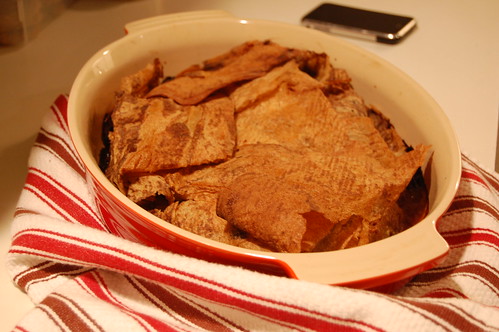
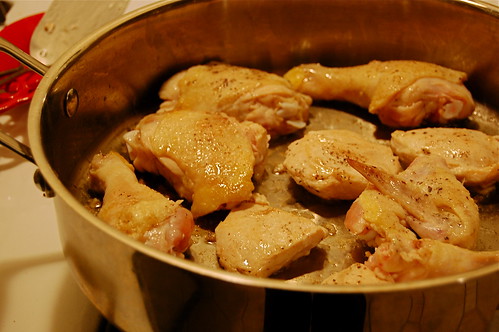
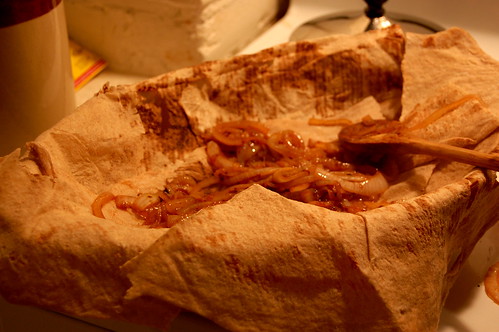
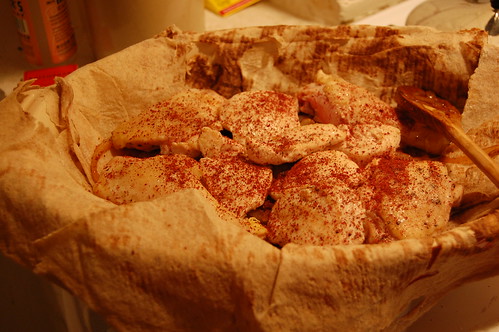
There is a chicken carcass simmering in a pot of water on my stove and my house smells wonderfully of burgeoning chicken stock. But the cause of this smell is something even more excellent and tasty - bread-wrapped roast chicken. This is a Palestinian dish found across the Levant called musakhan. Musakhan, which literally means "warmed," consists of chicken pieces and caramelized onions wrapped up in swaths of of flatbread and baked until the chicken falls off the bone and the bread absorbs all those good chicken juices.

You'll see many different versions of this across the Middle East, including fast food versions that include flatbread dough with onions and chicken baked on top. But the traditional version wraps the chicken in a kind of bread called marquq, a very thin flatbread made on a saj grill. A good Middle Eastern grocery will have marquq, but other thin flatbreads, like shraq or lavash will also work.

When I once described this dish to a friend, she exclaimed, "bread-wrapped roast chicken, that sounds like a dream!" And indeed, it is excellent. The bread, which is soft and full of chickeny juices on the bottom and crisp and crackly no top, the deep flavor of caramelized onions, the fleck of sumac, the tender meat. It's the sort of weeknight comfort food you can eat all week long.

Musakhan
While you can include the chicken wings in the pan, I find the wings are boney and take up too much space in the pan, so I usually set them aside from another use. I like to double or triple the bread on the bottom, so that it absorbs chicken and onion juices, but I like only one layer of crispy bread on the top.

1 chicken (about 3 1/2 lbs), butchered into 2 legs, 2 thighs, 2 breasts
good quality olive oil
2 large sweet onions, or 3 medium size ones
1/4 cup sumac
3-4 sheets marquq bread
salt, pepper

1. In a large, wide skillet, heat a small glug of the olive oil, then lightly brown the chicken on all sides over medium heat, removing to a plate as they brown. Remove and set aside. Add some more olive oil to the skillet and cook the onions until translucent, about 35 minutes, stirring occasionally. Add the sumac and cook for 2 minutes to mix.

2. Preheat the oven to 325F. Grease an 8x8 inch baking dish or large casserole, then line with two or three stacked sheets of marquq bread, or two halves of Arabic-style bread. Spoon half the onions over each, then arrange the chicken on top of the onions and cover with the remaining onions and the juices from the casserole. (You want the chicken and onion to be crowded in the pan, this prevents the bread from burning.) Cover with a single sheet of marquq bread or halves of Arabic bread, tucking in the sides crusty side up and sprinkling some water over top. Place into the oven.

3. After the first 20 minutes, cover the dish with aluminum foil. Bake until the chicken is very tender and almost falling off the bone, a total of about 1 1/ 2 hours. Keep an eye on the bottom of the pan, if you see juices bubbling in the bottom of the pan add some water to the bottom of the pan so they don't burn.

3. Let rest a few minutes, then serve. Makes good leftovers.

Note: The size of marquq bread varies, so use common sense.

19 September 2009

Muhammara


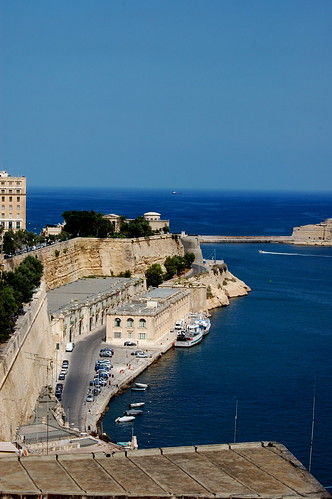
We returned from a lovely (if hot) vacation in Malta, spent a day in DC, and then left the following evening for Seattle for a wedding, plenty of good food, and some kayaking. And then I came back to DC and went back to work, and I'm still trying to sort through the massive pile of mail, catch up on bills and emails, and mainly just figure out what time zone I'm in.

Oh, and I need to update the blog.

And of course the one recipe I want to tell you about, the recipe just waiting in the queue wondering when, oh when, will she finally get home from vacation so I can get posted? Well, what happened is what often happens, I made the recipe for a party, everyone loved it and devoured it, and I forgot to take a picture of it until the next day, when all was left was this measly little dab. See:


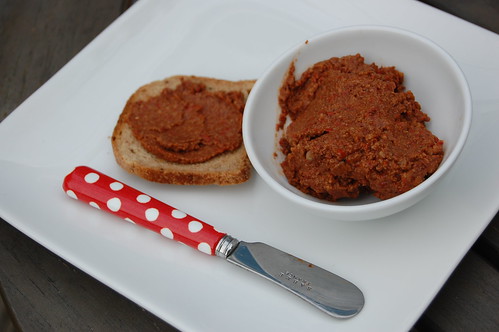
So, pathetic pictures aside, that's muhammara up there, and you should really get to know her. Muhammara, the word coming from the Arabic for red, is a spicy dip made of roasted red peppers, walnuts, and chile flakes. It has this sort of amazing dense nutty texture that comes from the walnuts and the handful of breadcrumbs that are added to the dip. Muhammara is a specialty of Aleppo, Syria, which is unique among Middle Eastern cuisines for it's use of fiery spices, especially the famous Aleppo pepper. If you don't have Aleppo pepper I'd really recommend you seek it out, as it is both spicy and subtly smoky. But if you don't have any, a mix of half paprika, half red chile flakes will do in a pinch.

The nice thing about muhammara is that while it's excellent spread on bread, it has a myriad of other uses too. Add it to a sandwich with some sliced avocado and baby lettuces, slather it on top of pan-roasted chicken, or use it as a sauce for fish.

So, at least I've gotten you this recipe, and I've also figured out today is Saturday. I hope to get around to telling you about the delicious eats of our trips, as soon as I figure out what time zone it is again.

Muhammara
Pomegranate molasses and Aleppo pepper are available at Middle Eastern groceries.

1/2 cup walnuts, toasted
2 tbl tomato paste
1 1/2 tbl pomegranate molasses
1 teaspoon Aleppo pepper
2 medium or 3 large roasted red peppers
1 teaspoon cumin
3/4 cup bread crumbs
pinch each sugar and salt

1. If you are roasting the peppers yourself, roast them, then peel off the skins, core and remove the seeds. You can also use jarred roasted peppers
2. Pulse the walnuts in a food processor until the resemble the texture of coarse meal. Add the tomato paste, pomegranate molasses, Aleppo pepper, roasted peppers, and cumin and process until yo achieve a relatively smooth mixture. Add in the bread crumbs and season to taste with sugar and salt. Pulse everything to combine.
3. Refrigerate at least two hours before using to allow the favors to meld and the red crumbs to soak into the dip. Serve at room temperature with pita bread or as desired.
18 January 2009

Baba Ghanoush (Moutabal)


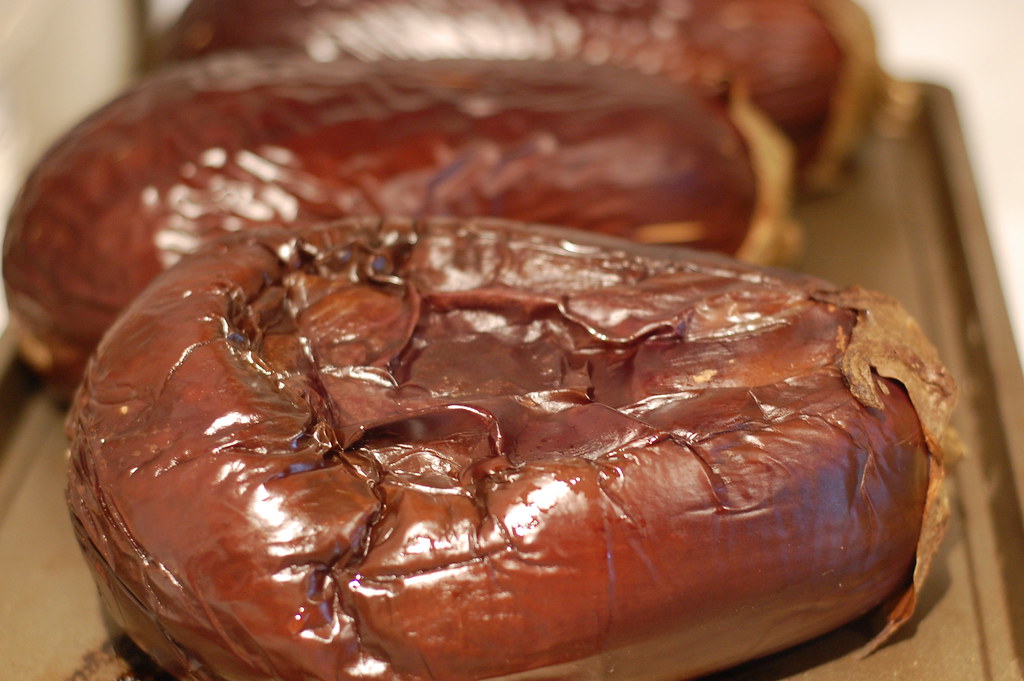
One of the questions I get asked most often is, "how do you make baba ghanoush?" I always reply, "well, in Syria, it's called moutabal." In one of the culinary curiosities of the Middle East, eggplant and tahini dip is called baba ghanoush all over Lebanon, and as soon as you cross the border into Syria it's called moutabal. Even more confounding, if you order baba ghanoush in Syria, you will get a plate of chunky eggplant dip studded with tomatoes and sauteed green peppers, the identity of which has confused many a tourist seeking that smooth smoky eggplant dip.

The second thing I always tell people is that you have to roast your eggplants- whether under the broiler, in the oven (my preferred method), or over a good smoky grill (the best, if not always most convenient way), it's the roasted eggplant that gives the dip the characteristic smoky flavor. From there on out it's mainly a question of taste- a good mixture of tahini, lemon, and garlic, along with some salt, are really all you need. Usually that answers most of the questions on how to make the dip, what you call it is up to you.


Baba Ghanoush (Moutabal)
While small, slender eggplants are often preferred in cooking, baba ghanoush makes use of those huge oversize eggplants with all their flesh. Using a food processor to puree the eggplant helps crush any seeds.

2 large eggplants (about 2 lbs), pricked all over with a fork
2 garlic cloves
3/4 teaspoon sea salt
1/4 cup fresh squeezed lemon juice
1/4 cup tahini
for garnish: olive oil, chopped parsley, red pepper flakes, pomegranate seeds, etc.

1. Preheat a grill or preheat the oven to 450 F and roast the eggplants for 40-45 minutes, until the skins are black and the flesh is soft and collapsed.
2. Meanwhile, smash the garlic with the salt in a mortar and pestle until paste-like. In a large bowl, whisk together the lemon juice and tahini until thick and lighter in color. Add the garlic paste.
3. When the roast eggplants are cool enough to handle, split them in half and scoop out the soft flesh. Puree the eggplant flesh in a food processor until smooth.
4. Add the eggplant puree to the garlic/tahini mixture. Taste for seasoning. Allow to rest until cool.
5. To serve, spread in a platter and drizzle with olive oil and any of your desired toppings.

11 November 2008

Za'atar Flatbreads and Spiced Lamb Flatbreads

Well, this is embarrassing, isn't it? A full 6 months ago, I told you all about the Middle Eastern herb mixture za'atar, made from a special kind of thyme combined with sesame seeds. And while I meant full well to follow up with a recipe for using za'atar, well, here we are half a year later, and I'm just getting around to it. I know, I'm a terrible friend.

But here we are nonetheless, and you're going to get not just one but two recipes, to make up for lost time. Flatbreads with savory toppings (mana'eesh مناقيش) are a classic across the Middle East- they were my office's go-to take out item, and they're sold at stands on every corner and present at every buffet. Basically, the simplest pizza dough is topped with a variety of classic toppings: za'atar mixed with oil, a spicy tomato paste, a cheese-parsley mixture, spinach, and varieties made with ground beef or lamb. The types of flatbreads are so codified that they are always made the same shape: round for the zaatar and tomato ones, boat-shaped for cheese, folded turnovers for spinach.

The zenith of these flatbreads is a lamb version known as either sfiha صفيحة or lahm bi ajeen لحم بعجين (or lahmajoun). Ground lamb is seasoned with the quintessential Levantine ingredients of sweet-tart pomegranate molasses, warm cinnamon, smoky Aleppo pepper, and sprinkled with toasty pine nuts. Recipes vary slightly, you might see tamarind paste used in Aleppo, and some use fresh tomatoes while I prefer the more concentrated taste of tomato paste (which also holds true to the Armenian influences in this dish).

Mana'eesh (also manaoshe or fata'ir) are the perfect meal-on-the-go type item, but they're also really great for feeding crowds and a fun addition to a party (I like to make them at the holidays, when their red and green colors are particularly festive). You can even start with purchased pizza dough, which will make them that much easier. So I hope you'll take both these recipes as a belated peace offering, and that we can still be friends.


Manaoushe bi Za'atar and Sfiha
Za'atar Flatbreads and Spiced Lamb Flatbreads. Makes 16-24 flatbreads, depending on their size.

for the dough (can substitute purchased pizza dough):
2 1/4 teaspoons active dry yeast
pinch sugar
1 1/4 cups lukewarm water
4 cups flour
3 tablespoons olive oil

for the za'atar topping:
1 cup za'atar
1 cup olive oil

for the lamb topping (sfiha):
1 small onion, finely chopped
2 tbl tomato paste
2 tbl pomegranate molasses
1 lb ground lamb
1/2 teaspoon aleppo pepper (or sub half cayenne pepper and half paprika)
1/2 teaspoon cinnamon
1/2 teaspoon allspice
pine nuts, for topping

For lamb topping:
Heat a splash of olive oil in a large skillet. Saute the onions until softened and translucent. Add the tomato paste, pomegranate molasses and stir everything round so that it toasts for about a minute, then add a splash of water (about2-3 tbl) to dilute the mixture. Crumble the ground lamb into the skillet and sprinkle with aleppo pepper, cinnamon and allspice. Cook, stirring, until the lamb is browned and cooked through, 10-15 minutes. Taste for seasoning (salt is not added because of the tomato paste, but use your judgement).

For the dough:
1. In a deep bowl, combine the sugar, yeast, and warm water and allow to proof for 5-10 minutes, until foamy. Add the olive oil and gradually add the flour and salt, stirring with a wooden spoon, until a dough forms. Knead the dough in the bowl, adding flour as necessary to keep from being sticky, until smooth and elastic, about 10 minutes. Rinse out the bowl, lightly oil, and return dough to the bowl. Allow to rise in a warm place until doubled in volume, about 1 hour.
2. Punch down the dough and divide into 16 balls (for medium sized flatbreads, you can divide into 24 balls for smaller flatbreads). Roll out each piece into a circle, let rest for 15-30 minutes, loosely covered with a towel.

Bake the breads
Preheat oven to 350F. Top the breads with desired toppings, transfer to a baking sheet. Bake for about 20 minutes (more or less, depending on the size/thickness of your breads), or until lightly golden on the edges. Do not overbake. Serve warm or at room temperature.

09 July 2008

Eggplant Fetteh


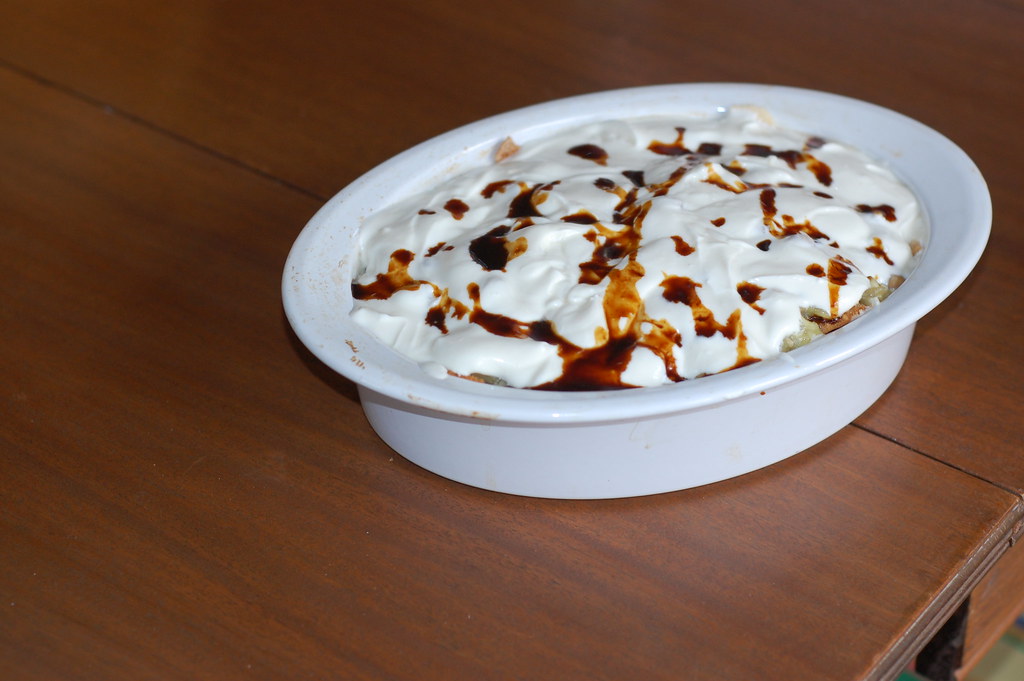
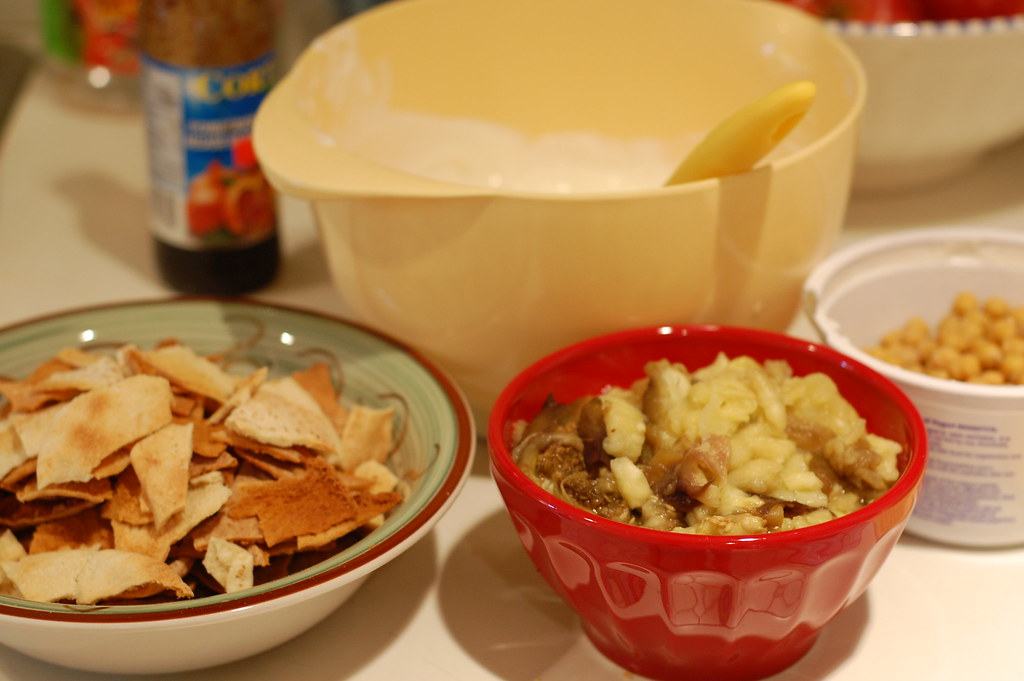
Ah-he-hem, where were we now? I hope you all had a nice holiday, with fireworks and plenty of grilling. Last time, we talked a little about one of my favorite dishes of all time, fetteh. I gave a basic recipe for the Middle Eastern combination of yogurt, chickpeas, and pita bread, but now it's time to delve a bit more into the dish fetteh, and try one of my favorite variations of fetteh with eggplant and pomegranate molasses.

While the history of fetteh is undocumented, it likely finds its roots in the ancient Middle Eastern dish tharida. Food historians Clifford Wright and Charles Perry have written that tharida (from the word tharada, to crumble bread into broth) involves bread moistened with stock and various meats, often layered with legumes and vegetables. Tharida historically included eggs rather than the yogurt used in fetteh. Today tharida no longer exists but fetteh is popular throughout the Arab world, and shops selling fetteh can be found on nearly every street of Damascus and across Syria, Lebanon, and Jordan.

The word fetteh means to crumble, and it comes from the crumbled pita pieces used to make the dish. I think there's a pantheon of great dishes made from stale bread: pappa e pomodoro, ribollita, tostadas, stuffing, gazpacho, and I think fetteh gets a star in that walk of fame. It's a classic peasant dish made of leftovers and staples. I once saw "fetteh" translated as "Middle Eastern panade," and while not exactly accurate, it is an interesting comparison as both Mediterranean dishes rely on a layering of stale bread, dairy, broth, and legumes.

These days, we're more likely to make fetteh by toasting or frying the pita pieces instead of waiting for them to get stale, and there are a myriad of variations made rich with poached chicken or lamb, even a favorite rural version involving a sheep's hoof served on top (I was served it once, and I'll admit totally turned off by the jelly-like quality that comes from the gelatin in the hoof).

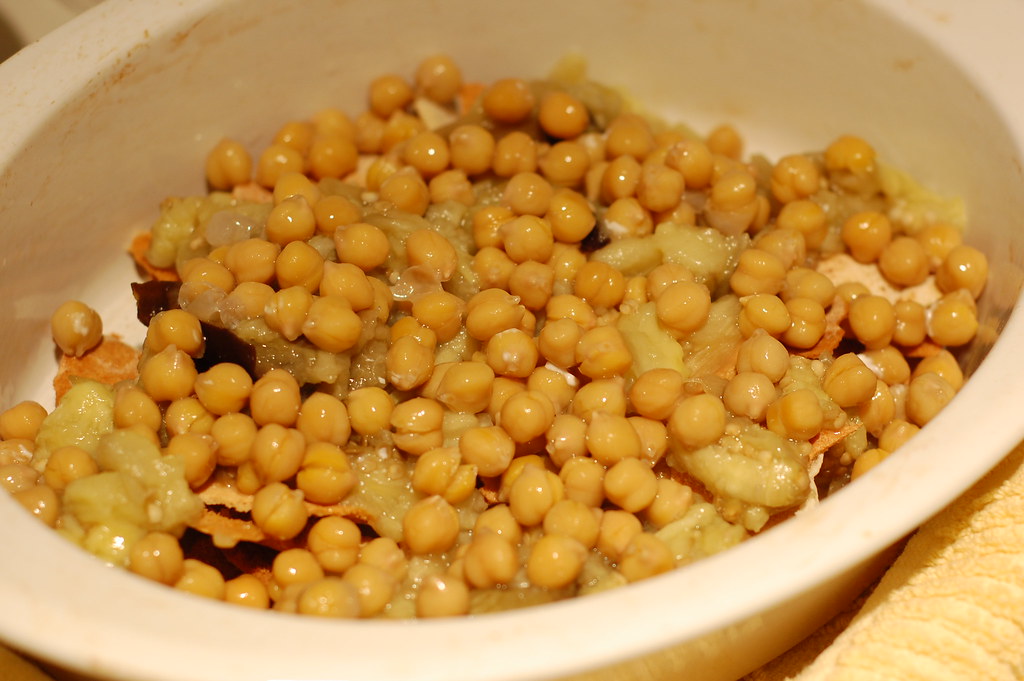
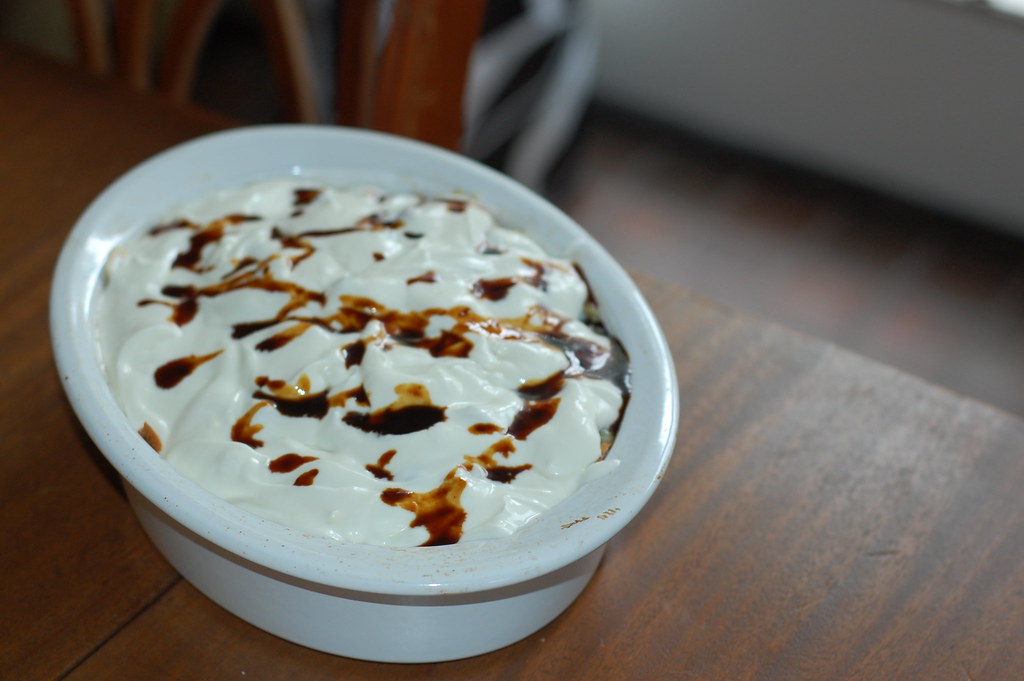
Here's where we'll get into fetteh technique a little, and like I said before, there are a million different ways to make fetteh. First, fetteh is served warm, but the whole dish is not heated or baked. Rather, the heat comes from the freshly toasted bread and steaming hot chickpeas. By the time you take the yogurt out of the fridge and stir up the yogurt mixture, it should have come to room temperature so that it doesn't cool the dish off too much. Second, the fetteh dish should melt into a cohesive-almost-stew-like consistency. I choose either a large pyrex bowl or casserole dish, and the key to the consistency is to drizzle a little of the chickpea liquid over the pita pieces to encourage them to warm and soften into the dish, without making them soggy. If you include meat in your fetteh, like poached chicken breasts or lamb, you can drizzle that nice flavorful stock over the bread.

Fetteh should be served as soon as it's prepared, and purists will tell you it should never be kept as leftovers, when it gets soggy and cold, though I've eaten my fairshare of it (it's just too good to let go). That said, it's an easily portable dish, simply carry the components separately and assemble on site. My version of eggplant fetteh is admittedly a cheaters version. The fanciest versions start with lamb-stuffed eggplants (bathinjan mehshi), and other versions involve slow simmering of lamb and slicing and frying eggplants. Me, I usually skip the lamb altogether and just toss the eggplant in the oven to roast, then scoop out the flesh. It's a working girls short cut eggplant fetteh, but one I've made so many times I could do it in my sleep. And if you've taken the time to read all this about fetteh, well, you might need a short-cut too.

Eggplant, Yogurt and Bread Casserole with Pomegranate (Fetteh Bathinjan)
The amounts of yogurt may seem a bit odd, but I find buying the two containers of Greek-style and regular yogurt produces just the right amount and consistency for the yogurt sauce, without any odd leftovers.

1 very large or 2 medium sized pita breads
1 can chickpeas, or 1 1/2 cups cooked from scratch, with their liquid
2 medium sized eggplant
1 18-ounce container full fat Greek-style yogurt
1 6-ounce container regular plain yogurt
1 clove garlic
2 tablespoons lemon juice
2 tablespoons tahini
1/4 teaspoon salt
optional: shredded cooked lamb
pomegranate molasses, for drizzling
for garnish: pomegranate molasses, or pomegranate seeds, or pine nuts sauteed in butter

1. Preheat oven to 450F. Pierce eggplant with a knife in several places, place on a baking sheet and roast in the oven until tender and collapsed, about 45 minutes.
2. Meanwhile, separate the pita breads in half and toast in the oven until golden brown and firm (watch carefully that they don't burn). Break pita into approximately 1-2 inch pieces and set aside.
3. In the bottom of a large bowl, smash the garlic clove with the salt with a fork until the garlic is pulpy. Add the lemon juice and tahini and stir to combine. Stir in both containers of yogurt.
4. Empty chickpeas with their liquid into a pan and bring to a simmer. Simmer chickpeas until they are tender and smush easily between your fingers, this often takes as long as 20 minutes.
5. When the eggplant has cooled slightly, slit open the eggplant and scoop out the flesh into a bowl, discarding the skin. Slightly crush the eggplant flesh with a fork.
6. Get out a casserole dish or large pyrex bowl. Spread some of the pita pieces over the bottom of the dish, ladle some of the chickpeas over top, along with some of the chickpea liquid so that the liquid softens the bread. Top with some of the eggplant. Drizzle yogurt mixture over top so that the surface is completely covered. Drizzle just a tiny bit of pomegranate molasses over top. Repeat layering (I find a casserole only needs two layers, while a bowl usually three), finishing with the yogurt over top. Finish with a drizzle of pomegranate molasses, or pomegranate seeds or pine nuts. Serve immediately.
30 June 2008

Fetteh and Friends

Ask any ex-pat living in Syria (or Lebanon, Jordan, etc.) what they would miss the most about the Middle East and the answer will always be “the food.” We would gladly leave behind the dusty weather or the irreliable electricity, and though we may love our friends, it is the food and the culture around Middle Eastern food which will put that far-away dreamy look in our eyes.

Ah, the food, we reminisce, but which foods? Immediately, the list-making begins: wonderfully smooth hummus, green lemony taboule, the freshest pita breads, salty cheeses, maqloubeh, and of course, the baklava. The baklava that we will cart boxes of back to our homes and the zaatar spices and rose jam we tuck into our suitcases. And just when we think we are all packed and ready to go, a friend will come by with a box of beautifully arranged dates, which we will cram into the last remaining centimeter of our carry-on, lest we starve on the long plane ride home.


“What I’ll miss most is the stuff I just can’t get back home, like that greasy bowl of foul,” said my Brooklyn-born friend Alex, whose small frame belies a legendary appetite. Alex can regularly be found eating foul, a simple stew of brown fava beans drowned in oil and lemon juice, in the little eateries in Saahat Bab Touma. These are the kind of places with only three items on their menus, all variations on stewed beans. I like the Damascene specialty of beans in hummus sauce- hummus has been thinned and warmed to make a sauce for the foul beans, topped with a showering of the reddest tomatoes, to be scooped up with pita bread, with pickles and hot glasses of tea on the side.

It occurs to me that what we will miss is not just the food, but the culture of food. In a place where so much of the society revolves around cooking and eating, the food serves as our cultural anchor. It’s going to the market and bargaining for vegetables, it’s eating everything in season, tucking into the little hummus shop for a quick lunch or sitting for hours over tea.


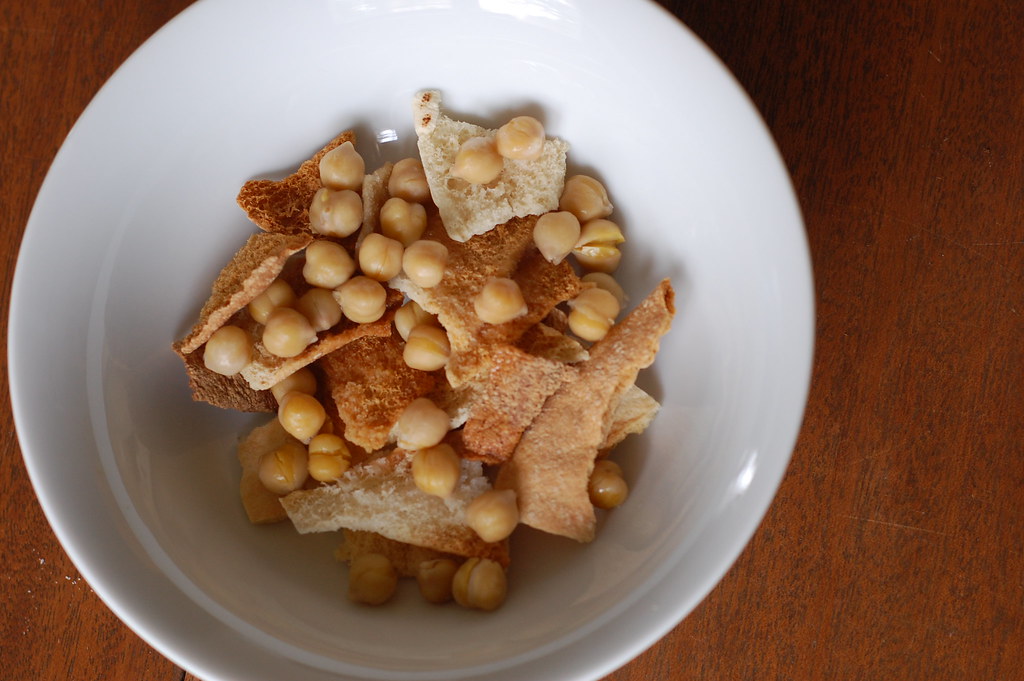
This is probably why I don’t make Middle Eastern food very often at home. Somehow, the same recipes, when prepared in a tiny New York apartment, just aren’t the same as the huge platters of beautifully arranged dishes, the hundreds of appetizers, the groups of friends. What I miss most is fetteh, a dish in which toasted pita bread and chickpeas are layered in a dish with a warm yogurt sauce to make a soft, thick stew. Served at breakfast or lunch, it is the ultimate comfort food and probably one of my all time favorite dishes. But what I really miss are the big glass bowls fetteh is served in, and Mahmoud standing over our office stove teaching me to make fetteh for the first time, and scooping it up with spoons with a group of good friends, the call to prayer and honking horns in the background. Sometimes I make it home for myself, but it won’t taste the same until I’m in the Middle East again.

There are as many versions of fetteh as there are cooks in the Middle East. Sometimes it's served in a wide flat tray, other times in deep glass bowls; some people fry the pita chips while others toast them; some add chicken, lamb, eggplant, and even rice. The simplest version, given below, always involves bread, yogurt, and chickpeas. Next time I'll give my recipe for one of my favorite versions of fetteh, and talk about the history of the dish, so stay tuned.


Fetteh (Chickpea, Yogurt, and Bread Casserole)
Fetteh is traditionally topped with a big slick of pine nuts sauteed in clarified butter, or with a douse of olive oil. However, the person who taught me to make fetteh often topped it with a huge showering of chopped tomatoes and parsley, and I prefer this slightly healthier version. Of course, if you cook the chickpeas from scratch all the better. Makes two-individual size bowls.

1 large thin pita bread
1 clove garlic
a squeeze of fresh lemon juice
12 ounces plain good quality plain yogurt, full fat or 2%, not fat free, at room temperature
1 can chickpeas
pinch of cumin
chopped tomatoes and parsley, for serving

1. Preheat oven to 450 F. Seperate the pita bread in half and toast in the oven until golden brown and toasted, but not burned. Set aside until cool enough to handle, then break into bite-size pieces.
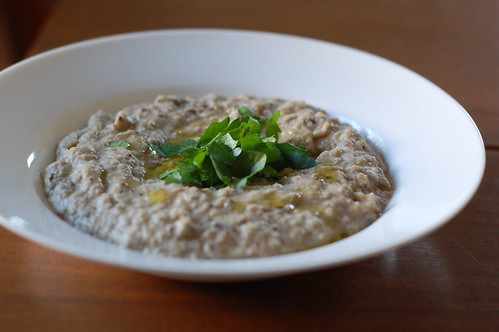
2. Meanwhile, empty chickpeas into a saucepan with their liquid and bring to a simmer. Cook chickpeas until completely tender- most canned chickpeas are too firm and I find they take about 15-20 minutes of simmering before they are tender enough to smush easily between your fingers.
3. Place yogurt in a bowl. Crush garlic in a mortar and pestle or press garlic through a garlic press. Add the garlic to the yogurt along with a pinch of salt and a squeeze of lemon juice. Stir to combine. If your yogurt is on the thick side, add a touch of water to make your yogurt pourable consistency.
4. Divide half the crumbled pita between two individual-size bowls. Spoon half the chickpeas over the pita pieces, allowing a little of the warm chickpea liquid to soak the bread pieces. Pour half the yogurt mixture over the bread and chickpeas, sprinkle with a pinch of cumin. Repeat the layering in the bowls: bread, chickpeas, yogurt, pinch of cumin. Top with chopped tomatoes and parsley (or sauteed pine nuts, if you prefer). Serve immediately.